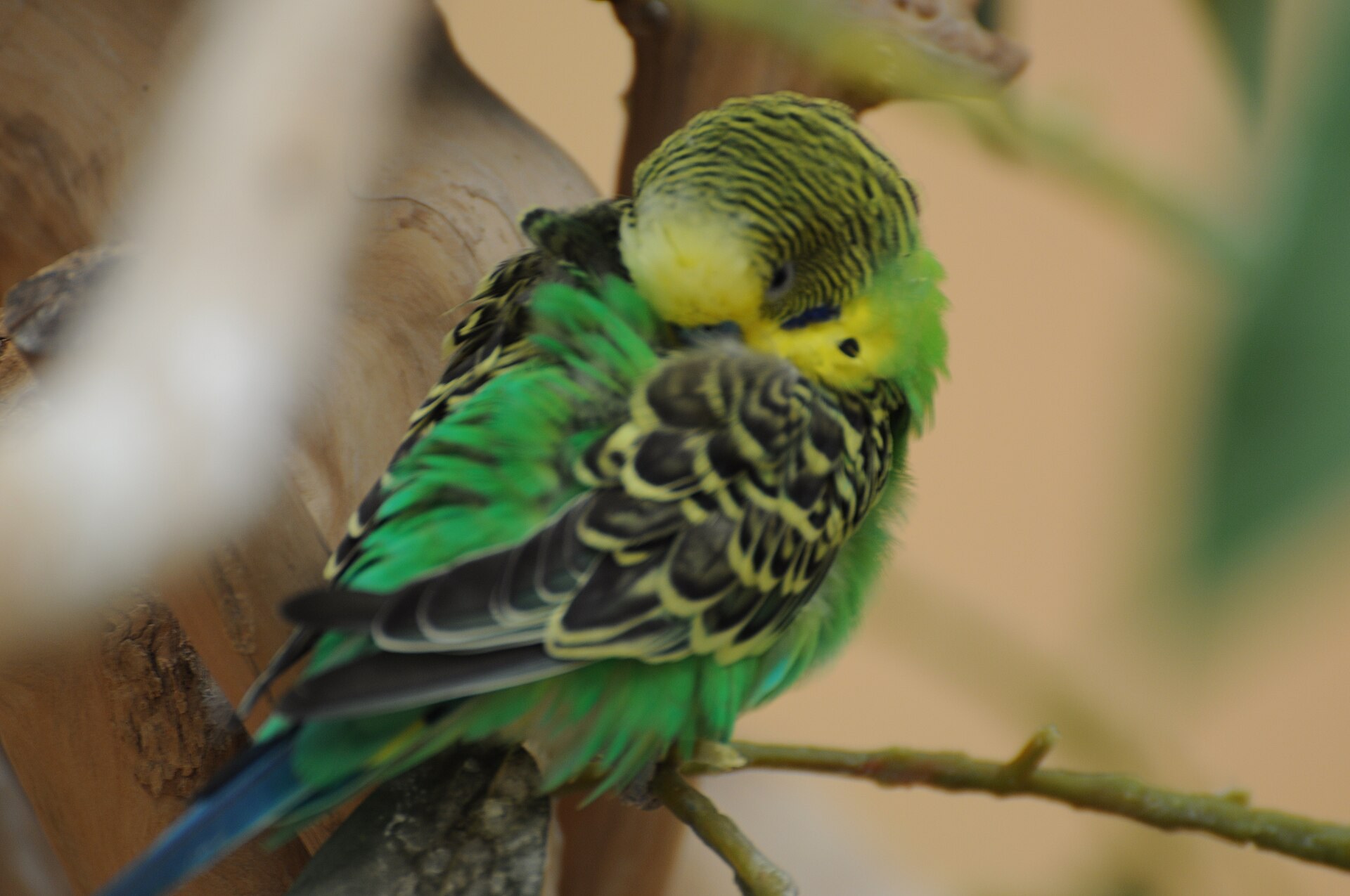
Budgies usually sleep perched upright. A resting bird may lift one foot into its feathers and turn its head back into its shoulder feathers; it may also rest with both feet on the perch. A posture on its own cannot tell you whether a bird is comfortable or ill. Compare it with your budgie’s usual behaviour, especially when it is awake.
What does a normal sleeping budgie look like?
A budgie may settle on a perch, become quieter, close its eyes and tuck its head. Some rest on one foot; others keep both feet down. A brief daytime nap can also be normal. Look at the whole bird once it wakes: is it alert, moving around, eating and balancing as it normally does? The Lafeber pet bird health guide describes one-foot resting as a relaxed posture and explains why a change in the bird’s usual attitude matters.
A bird holding its head upright is not necessarily anxious. Nor does a tucked head prove that it feels safe. A single pose has no fixed meaning; notice whether your budgie resumes its normal activity after resting.
Does sleeping on the cage floor matter?
If an adult budgie that normally perches starts spending time asleep on the cage floor, treat it as a possible warning sign. Check for reduced activity, fluffed feathers that persist while awake, difficulty balancing, changes in eating or droppings, and breathing effort. The Merck Veterinary Manual’s illness guide includes sleeping more than usual, sitting low or on the cage bottom, weakness and breathing changes among reasons to see a vet.
Contact an avian vet promptly when a new sleeping position comes with those changes. If your budgie cannot perch, is struggling to breathe or seems severely weak, seek urgent veterinary help. Do not wait several days for it to return to its usual perch.
What if it sleeps against the bars or on a toy?
First check whether the cage offers a stable, clean perch high enough for the bird to choose, with room for every budgie to settle. Watch for competition over a favourite spot and for anything that makes the perch awkward to reach. The Lafeber guide to a pet bird’s home recommends a variety of clean perches, including a suitable higher perch for rest.
Sleeping against bars or on a toy does not automatically mean illness, cold or a wish to breed. If it is a new behaviour, keep watching how the bird moves and behaves during the day.
How can you help a budgie sleep?
Give it a regular quiet period. Keep a steady evening and morning routine and reduce late-night disturbance. Lafeber recommends an uninterrupted period of sleep and notes that individual birds vary.
Make the resting place usable. Offer stable perches of suitable sizes and textures, keep them clean and leave enough space for birds sharing a cage.
Check before changing the setup. If covering the cage helps block activity, allow ventilation and watch the bird’s response. A cover is optional, and a frightened bird needs a gentler arrangement. Keep the cage away from draughts and sudden disturbance.
Tonight’s quick check
Note where your budgie settles, then check its balance, appetite and activity after it wakes. A new floor-sleeping habit together with weakness or breathing changes needs prompt avian veterinary advice.
Look for any changes in how your bird acts, eats, or drinks, how much energy it has, or its overall appearance.
Sources & further reading
Lafeber Co. — Your Bird’s Health (undated), https://lafeber.com/pet-birds/your-birds-health/ (checked 27 September 2026).
Laurie Hess, DVM, DABVP — “Illness in Pet Birds”, Merck Veterinary Manual (reviewed April 2025), https://www.merckvetmanual.com/bird-owners/routine-care-and-safety-of-birds/illness-in-pet-birds (checked 27 September 2026).
Lafeber Co. — Your Bird’s Home (undated), https://lafeber.com/pet-birds/your-birds-home/ (checked 27 September 2026).