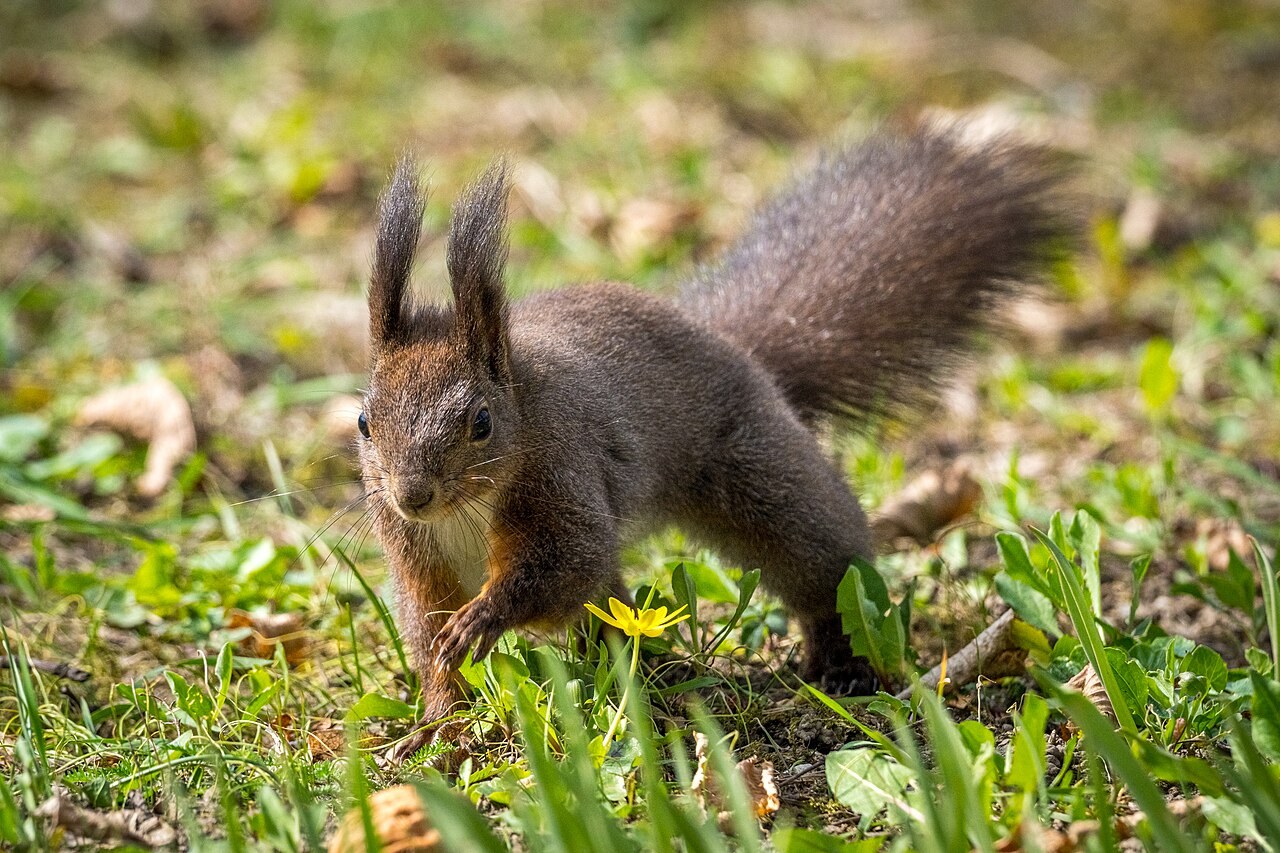
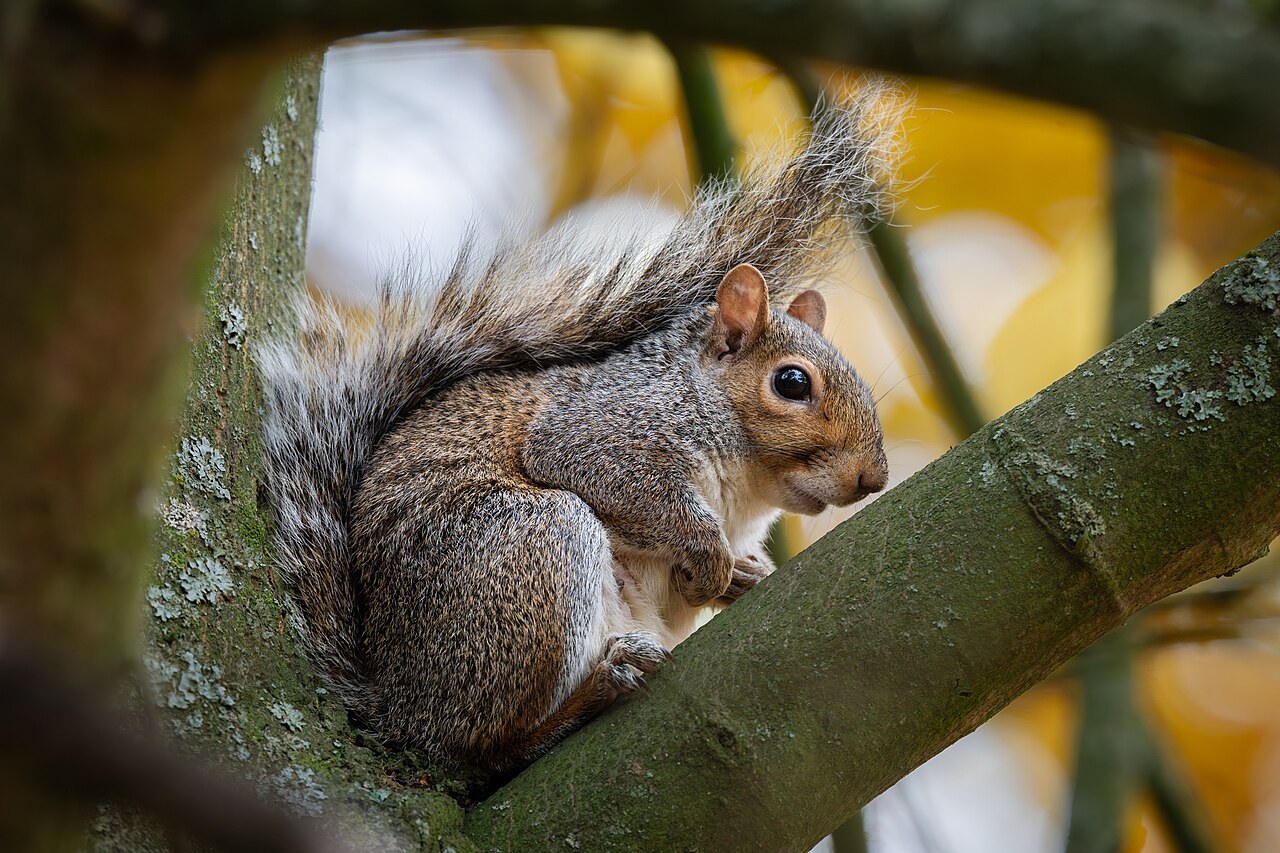
In the UK, a red squirrel is the native Sciurus vulgaris; the familiar grey is the introduced eastern grey squirrel, Sciurus carolinensis. To tell them apart, check the tail first: a grey often has a pale, silver-looking fringe, while a red’s tail looks more even in colour. Then compare body size and ear tufts. Fur colour alone can fool you.
A quick sighting check
Look for a pale fringe around the tail, then check the ears and overall build. If you only saw a flash of colour, take a photograph if you can and record the place and date; leave the identification as uncertain until you have a clearer view.
Red or grey: the visible differences
Tail: A red’s tail is usually more even in colour. A grey’s often has mixed shades and a pale outer fringe or “halo”.
Ears: Red squirrels develop obvious ear tufts in winter; they can be hard to see in summer. Greys do not have long ear tufts.
Build: An adult red is generally slimmer and lighter (around 300 g); an adult grey is stockier (around 540–550 g).
Coat: Reds range from ginger to dark brown or grey-tinged. Greys may have reddish-brown patches.
These are Woodland Trust red-squirrel and grey-squirrel identification features. Weight helps explain the size difference but is not something you can measure during a woodland sighting. A juvenile grey may also look smaller than an adult.

Can a red squirrel look grey?
Yes. A Eurasian red squirrel can have dark or grey-tinged fur, especially in its winter coat. A grey squirrel may show warm red-brown patches on its face or legs. That is why the red squirrel in the lead photograph is useful: its coat is dark, but the long winter ear tufts and more evenly coloured tail point to a red. Check several features together instead of deciding from one patch of fur.
“Remember not all red squirrels are red, nor are all greys grey – colour alone is not sufficient to distinguish them.”
What if you could not see the tail?
Ear tufts can help in winter, and an adult grey usually looks heavier. If the ears are bare and you have no clear size comparison, “squirrel species uncertain” is the honest answer. The Forestry Commission advises recording the location and date of a sighting; it also warns that dreys and feeding remains cannot reliably separate red from grey squirrels. A clear photograph is more useful than a guess based on a nest or chewed cone.
Why does the distinction matter?
The Eurasian red squirrel is native to the UK; the eastern grey was introduced from North America. They can use some of the same woodland, but accurate identification helps people understand which species they have actually seen. If you plan to pass a sighting to a local wildlife group, include the photograph, date and place, and say which features you could see. There is no need to handle or approach the animal to identify it.
Related reading: What Is the Best Food for Wild Squirrels? A UK Guide; Do Squirrels Come Back to the Same Nest? A UK Drey Guide.
Sources & further reading
Woodland Trust, Red Squirrel (Sciurus vulgaris), checked 25 September 2026: https://www.woodlandtrust.org.uk/trees-woods-and-wildlife/animals/mammals/red-squirrel/
Woodland Trust, Grey Squirrel (Sciurus carolinensis), checked 25 September 2026: https://www.woodlandtrust.org.uk/trees-woods-and-wildlife/animals/mammals/grey-squirrel/
Forestry Commission, Red squirrels and forestry operations in England, operations note 65, checked 25 September 2026: https://www.gov.uk/government/publications/red-squirrels-and-forestry-operations-in-england-operations-note-65/red-squirrels-and-forestry-operations-in-england-operations-note-65