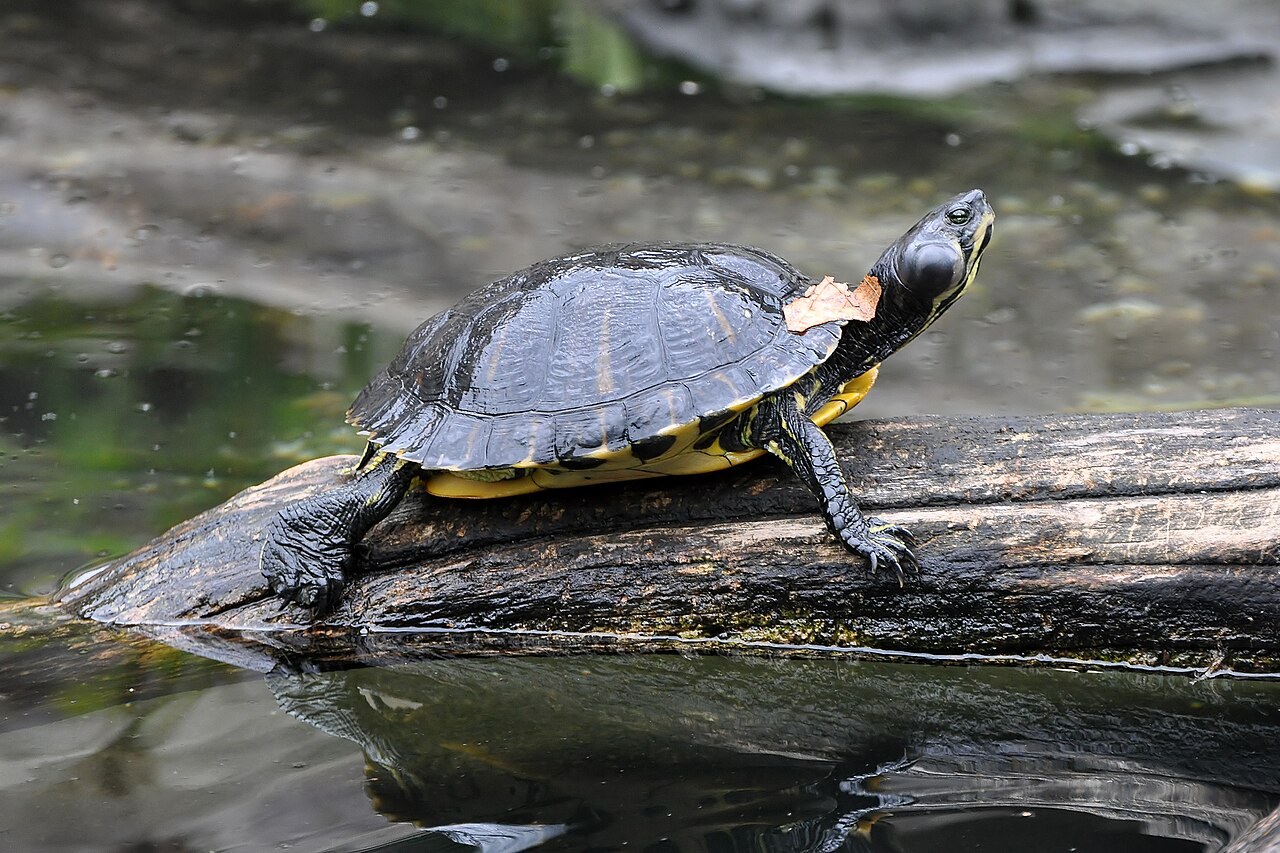
Yes. Turtles can experience pain and stress. Research on reptiles also supports the possibility of other feelings, although it cannot tell us exactly what a turtle feels in a particular moment. A pet turtle swimming towards you may have learned that you bring food; it does not, by itself, prove love or affection. For a keeper, its usual feeding, basking, swimming and hiding pattern is more useful than guessing a human emotion.
What does research actually show?
A 2019 review of reptile sentience research found that pain, fear and stress are recognised in scientific studies. It also found that direct evidence about positive feelings in reptiles remains limited. That is a reason to take their welfare seriously and to avoid confident claims about human-like emotions.
“These findings show that reptiles are considered to be capable of experiencing a range of emotions and states.”
— Helen Lambert, Gemma Carder and Neil D’Cruze, Given the Cold Shoulder (2019)
That evidence does not settle whether turtles feel love, sadness or happiness in the human sense. It is equally unsound to say they definitely cannot. Their behaviour and welfare matter even when we cannot give a feeling a precise name.
Intelligence is a separate question. In a 2023 experiment with red-eared sliders, turtles learned to choose visual patterns associated with a food reward and could use the relative number of coloured markers in a new choice. That shows learning in this species; it does not show that a turtle loves a person.
Does a turtle that comes towards you like you?
It may be responding to a familiar feeding routine, investigating movement or seeking something in its surroundings. You cannot identify a feeling from one approach. Look at the whole situation: was food expected, did the animal have room to retreat, and does it return to its usual swimming, basking and feeding afterwards?
Likewise, hiding when you approach does not prove your turtle dislikes you. Sliders naturally retreat into water when disturbed. The RSPCA’s slider care guidance recommends cover and privacy, and warns against treating terrapins as pets to stroke. Let the turtle choose whether to remain visible; use handling when needed for care rather than to test a bond.
What should you watch for instead?
Learn your own turtle’s usual pattern over several days. Note when it eats, basks, swims and hides. A single behaviour has several possible causes, including the environment or illness. For a pet slider, the RSPCA advises checking the enclosure’s heat, UVB lighting, clean water and access to a dry basking area, as well as watching appetite and the condition of the eyes, skin and shell. Its specific setup advice is for pond terrapins; other turtle species need their own care guidance.
Keep a simple baseline: note your slider’s normal feeding and basking pattern, and check its temperatures and water quality as part of routine care. If it stops eating as usual or you notice sores, swollen eyes or a changing shell, contact a reptile vet rather than labelling it “sad” or “bored”.
A turtle that seems unusually quiet may be unwell, too cool, disturbed or behaving normally for its species and circumstances. Check its setup and compare with its usual pattern. If you are concerned, ask a reptile vet to assess it; do not diagnose depression or dismiss a possible health problem as a mood.
Can you build a good relationship with a pet turtle?
You can make daily care more predictable and less stressful: provide a suitable habitat, move calmly, allow hiding places and avoid unnecessary handling. A turtle may learn a routine and become less likely to retreat when you arrive. Enjoy that familiarity without needing to call it love. Its health and freedom to choose what it does are better guides to your care than whether it appears to “cuddle”.
Related reading: Do Tortoises Get Lonely? Should Your Pet Have a Companion?.
Sources & further reading
Lambert, H., Carder, G. and D’Cruze, N. (2019), “Given the Cold Shoulder: A Review of the Scientific Literature for Evidence of Reptile Sentience”, Animals 9(10), 821. https://doi.org/10.3390/ani9100821 (checked 25 September 2026).
Sun, X. et al. (2023), “Keep numbers in view: red-eared sliders learn to discriminate relative quantities”, Biology Letters 19, 20230203. https://doi.org/10.1098/rsbl.2023.0203 (checked 25 September 2026).
RSPCA, “Caring for a terrapin”, https://www.rspca.org.uk/adviceandwelfare/pets/other/terrapin (checked 25 September 2026; page publication date not stated).