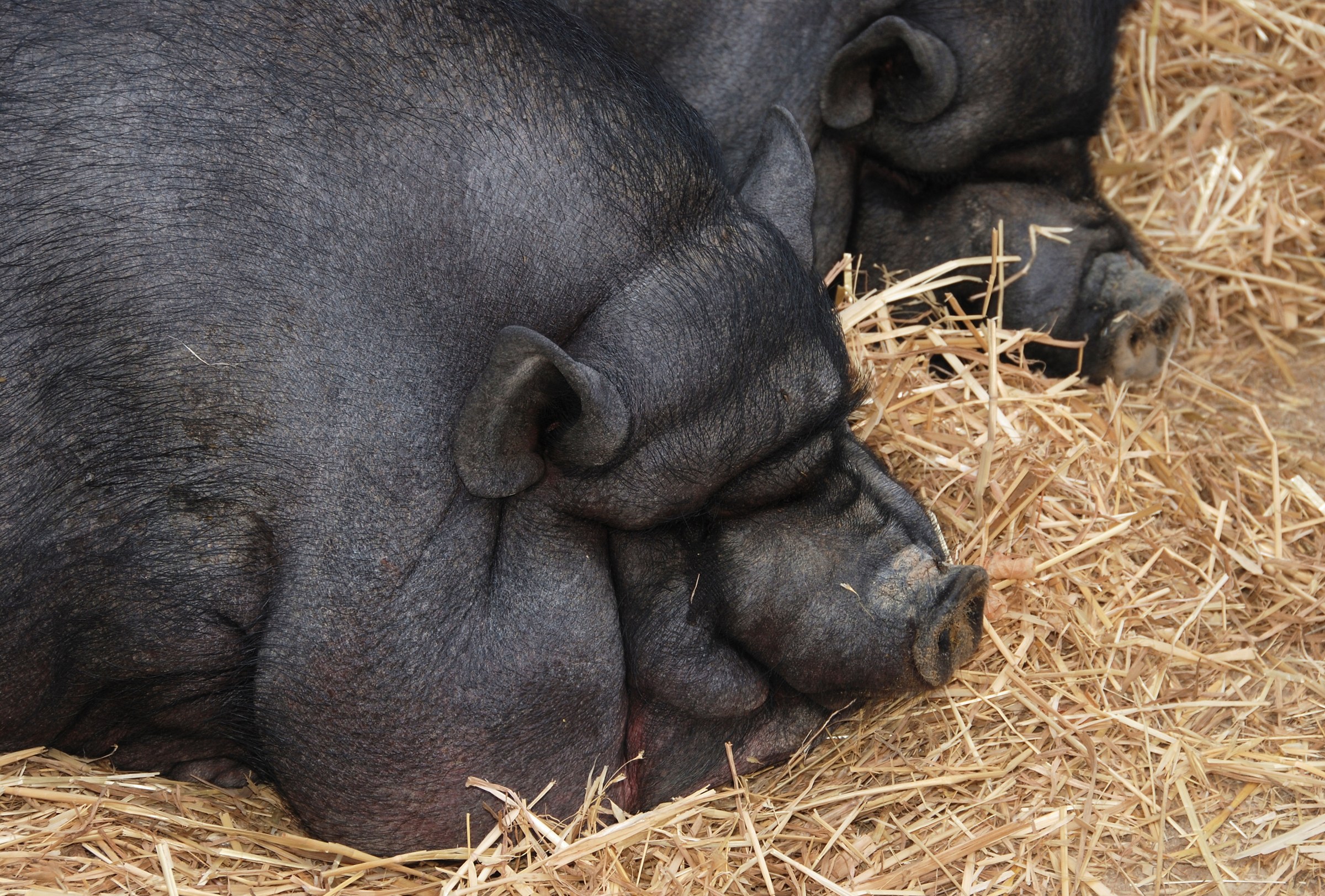
The veterinary sources reviewed for this guide do not give a normal daily range for mini pigs. Monitor your pig’s usual pattern alongside appetite, comfort and stool consistency. Straining or becoming unwell matters more than meeting a target number.
This guide covers companion mini pigs, drawing on veterinary guidance for pot-bellied pigs. It explains what to observe, when to call the vet and how to organise everyday toileting and cleaning.
How can you tell what is usual for your pig?
Our practical suggestion is to keep a simple record while your pig is well, then use it when discussing changes with the vet. Note:
When you actually see each pig pass droppings, rather than only counting piles at clean-up.
Whether the droppings look different from usual, including unusually hard, loose or watery output.
Any straining, repeated attempts or signs of discomfort.
Appetite, water intake, activity, recent feed changes and medicines.
These observations are useful history, not a way to diagnose a condition at home. A 2021 study of 24 pet pigs with severe constipation (obstipation) recommends reviewing diet, drinking, activity and medications. The study examined sick pigs referred to hospitals; it did not measure normal daily frequency in healthy pets.
Check the pig, not just the pen. If pigs share an enclosure, a fresh pile does not tell you that every pig has passed droppings. Record which animal you saw and tell the vet when you are unsure. Do not delay a call about an unwell pig while trying to complete a diary.
What do normal mini-pig droppings look like?
The Merck Veterinary Manual’s pot-bellied pig guidance describes a typical bowel movement as a cylindrical shape made up of smaller joined balls of faeces. That segmented appearance can be normal and does not, by itself, mean constipation.
Use this as a comparison, not proof that your pig is healthy. Check for changes from its usual output and consider appetite, activity and any difficulty passing droppings. Suspected constipation needs veterinary assessment.
What if your mini pig is not pooping?
Contact a pig-experienced vet promptly if your pig stops passing droppings or repeatedly strains. If this comes with vomiting, a painful or swollen abdomen, poor appetite or marked lethargy, call urgently. Those signs occurred in the hospital study of obstipated pigs and warrant assessment rather than a home diagnosis.
The study used more than 24 hours without faecal output as part of its case definition. That is a research criterion, not an instruction to wait 24 hours before seeking help. Tell the vet when you last definitely saw droppings and whether your pig is passing urine.
The Merck Veterinary Manual’s emergency guidance warns that prolonged straining to urinate or defecate can indicate serious problems and needs a prompt examination. Straining is not necessarily constipation: urinary problems also need attention.
Ask the vet what to do while awaiting assessment. Do not start laxatives, enemas or a home-remedy feeding plan without their direction; treatment depends on the cause. If a fresh stool sample is available, ask how to collect and bring it.
What about diarrhoea or blood?
Contact the vet about new diarrhoea, particularly in a piglet or when the pig is weak, off its food or passing blood. Merck describes infectious digestive diseases that can cause diarrhoea, including illnesses affecting young pot-bellied pigs. Appearance alone cannot identify the cause.
A photograph and a description of the change can help you explain what happened. Note when it started and whether other pigs are affected. Do not use a stool-colour chart or an online photograph as proof of a particular disease.
Can mini pigs be toilet trained?
Yes. Veterinary guidance describes training pigs to use an outdoor toilet area or an indoor litter pan. Gregory Rich and Laurie Hess explain:
“Pet pigs can be trained to eliminate both inside and outside.”
Keep the toilet area separate from eating and sleeping spaces, and make it easy to reach. VCA notes that household changes and bad weather can disrupt established training. If accidents begin, check both access and health; do not assume deliberate misbehaviour.
For a practical routine, agree a consistent toilet location and regular opportunities with everyone caring for the pig. A low entrance helps access to a litter pan. Avoid turning temporary training arrangements into permanent cramped housing.
How much cleaning should you expect?
Plan for daily removal of droppings. The Merck guide to housing pot-bellied pigs calls for daily faeces removal and separation of toileting from sleeping and feeding areas. It also describes an easy-entry litter box with non-toxic material, such as dry dirt or pine shavings. Fresh drinking water should always be available.
Build cleaning into the care schedule, including days when you work away from home. Our guide to planning time away from mini pigs covers arranging a sitter and reliable cover.
For hygiene, the US Centers for Disease Control and Prevention recommends washing hands with soap and running water after cleaning animal waste or handling equipment. Use suitable protective equipment for cleaning, keep dedicated outdoor footwear outside the home and supervise young children’s handwashing. Animals can carry germs even when they look clean and healthy.
A useful routine combines observation, accessible toileting and daily cleaning. Learn what is usual for each pig, and respond to changes without waiting for a particular number of droppings.
Related reading: What Do Kunekune Pigs Eat? A Practical UK Feeding Guide.
Sources & further reading
Kallie J. Hobbs and colleagues, Obstipation in pet pigs: 24 cases, Canadian Veterinary Journal 62(8), 843–848 (August 2021). D. Bruce Lawhorn, DVM, MS, Merck Veterinary Manual: Disorders and Diseases of Potbellied Pigs (review July 2020; updated September 2024) and Providing a Home for a Potbellied Pig (review July 2020; updated June 2026). Gregory Rich, DVM, and Laurie Hess, DVM, VCA Animal Hospitals: Housing and Environment for Your Mini-Pig (updated 11 March 2025). US CDC: Farm Animals (15 June 2026). All checked 25 September 2026; links appear beside the relevant guidance. The observation record and carer routine are editorial suggestions based on these sources. These sources do not establish a universal daily stool count.