Yes. Birds eat cicadas, especially when a local brood emerges in huge numbers. During the 2021 Brood X emergence, researchers recorded more than 80 bird species adding periodical cicadas to their diet. That describes a temporary feeding opportunity, not a permanent preference for cicadas.
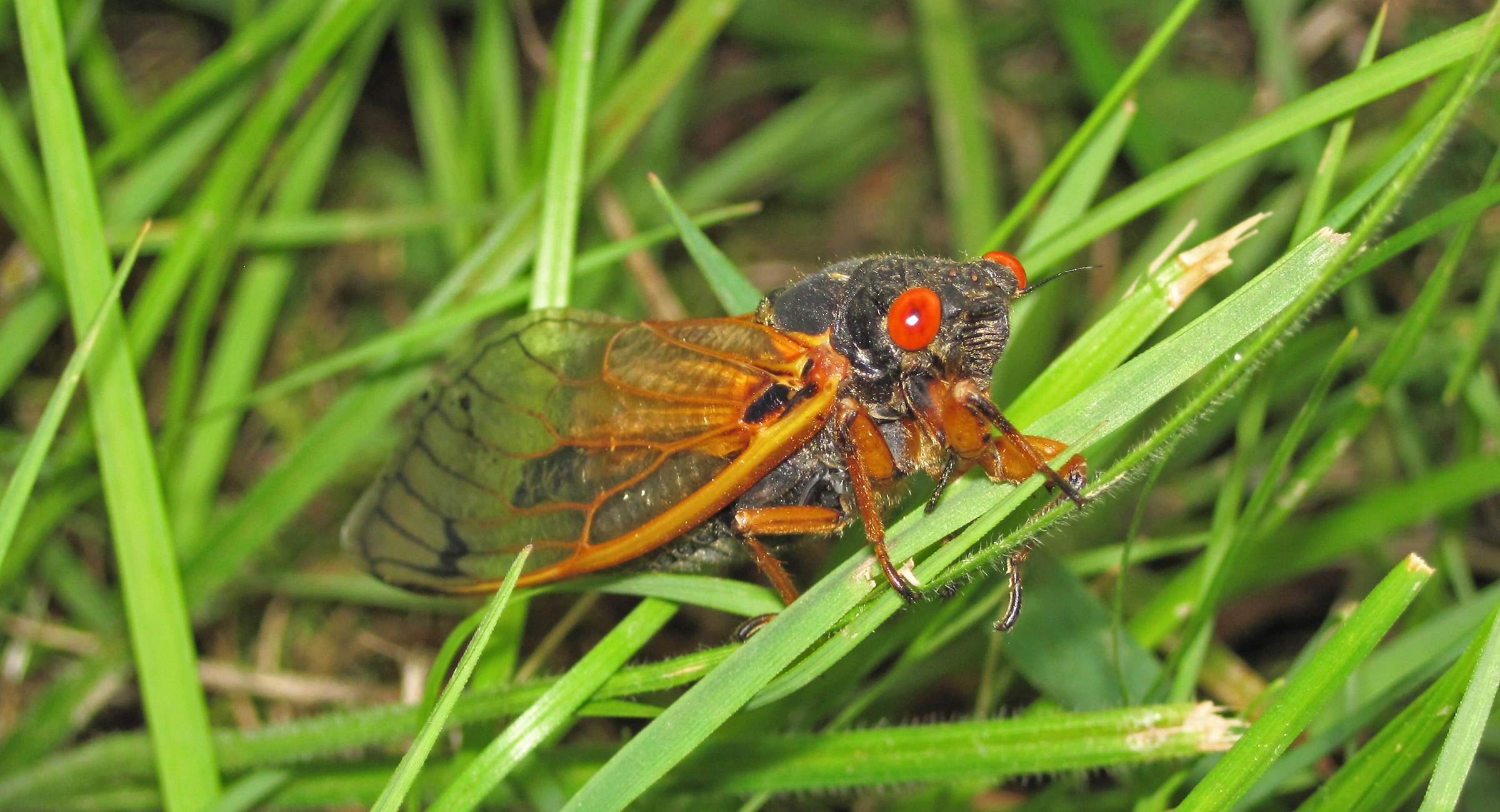
Lead photograph: a periodical cicada in Ohio, photographed by James St. John, CC BY 2.0.
_(Flint_Ridge,_Ohio,_USA)_(27294270804).jpg)
Which birds have been recorded eating cicadas?
Maryland Bird Conservation Partnership’s 2021 review of earlier records named these North American examples:
Blue Jay, American Crow and Red-headed Woodpecker.
American Robin, Wood Thrush, Tufted Titmouse and Red-eyed Vireo.
Red-winged Blackbird, Common Grackle, Brown-headed Cowbird, European Starling and House Sparrow.
American Kestrel, Black-billed Cuckoo and Yellow-billed Cuckoo.
That is a documented list, not a ranking of favourite prey. The same review described Carolina Chickadee and Northern Cardinal as likely to forage on cicadas, rather than placing them in its documented list. Smithsonian also named chickadees, bluebirds and cardinals as local birds expected to benefit from Brood X. A sighting still depends on the species being present where cicadas have emerged.
more than 80 bird species opportunistically switched their foraging to include cicadas
When are cicadas available to birds?
Annual cicadas appear in eastern North America each year and tend to peak later in summer. Periodical cicadas spend 13 or 17 years underground, then emerge together for a brief adult season. In the Washington, D.C. area, the 17-year Brood X had a May to early June peak. That timing is specific to this brood and region; another locality or brood may differ.
During a mass emergence, birds can switch to the abundant cicadas. The 2021 study also found that birds took fewer oak-feeding caterpillars at that time. A bird photographed with one cicada has not demonstrated that it normally eats cicadas or prefers them to other prey.
How can you spot cicada feeding?
Listen for calling adults to find an active site. Watch from a distance, and note the bird species, date and location. If you can see a cicada in its bill or see it swallow one, record that feeding event. If you cannot identify the prey clearly, mark the observation uncertain.
What one sighting tells you
A clear sighting of prey in the bill confirms one feeding event. It cannot show how often that species eats cicadas or whether it prefers them to other insects.
There is no need to offer cicadas or interrupt the bird. Its natural feeding behaviour is the observation worth keeping.
Sources & further reading
Getman-Pickering, Z. L. et al., “Periodical cicadas disrupt trophic dynamics through community-level shifts in avian foraging”, Science 382 (2023), 320–324. Checked 27 September 2026 — https://pubmed.ncbi.nlm.nih.gov/37856588/
Maryland Bird Conservation Partnership, “Maryland Bird Conservation Update - April 2021”, section “17-Year Periodical Cicada & the Breeding Bird Atlas”, April 2021. Checked 27 September 2026 — https://marylandbirds.org/enews-2021-04
Smithsonian National Zoo and Conservation Biology Institute, “17-year Cicadas: Bird Buffet or Big Disturbance?”, Amy Enchelmeyer, 18 May 2021. Checked 27 September 2026 — https://nationalzoo.si.edu/migratory-birds/news/17-year-cicadas-bird-buffet-or-big-disturbance