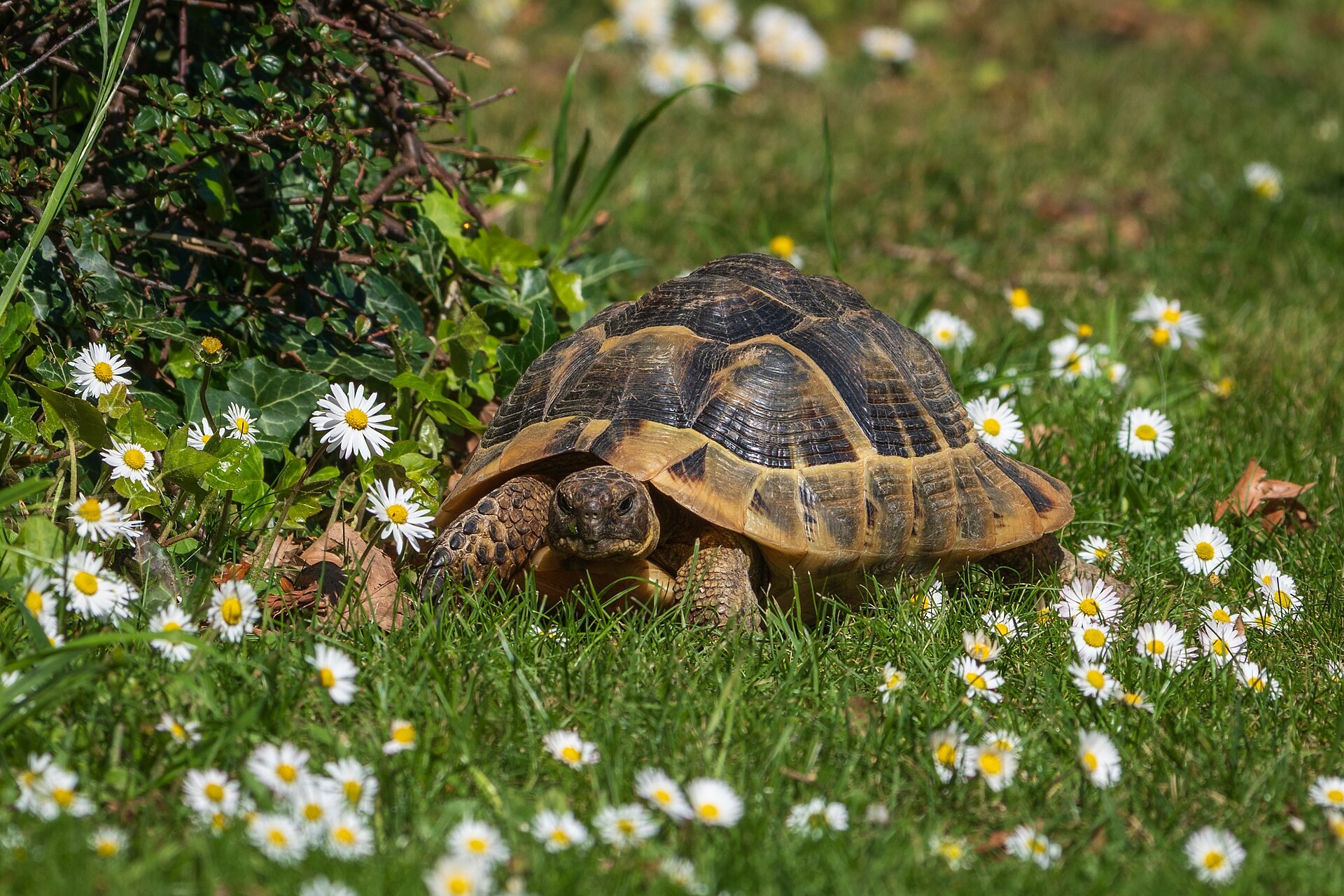
Not in complete darkness. A tortoise may detect some light at dusk, but there is no good basis for saying it sees clearly at night or better than a person. If you keep a pet tortoise, the practical question is whether its enclosure has a suitable day–night cycle and whether it can find its way around when the daytime lights are on.
At lights-out: Keep the enclosure dark. Check the overnight temperature against guidance for your tortoise’s species. If it needs extra warmth, use a correctly installed, thermostatically controlled heat source that gives off no light, with advice from a reptile-experienced vet.
Can a tortoise see in dim light?
Dim light and total darkness are different. In dim light there is still light for the eye to detect; in pitch darkness there is none. Veterinary ophthalmologist David Williams describes rods and cones in the chelonian retina, but also explains how difficult it is to establish exactly what a tortoise sees. That anatomy does not tell us that every tortoise can navigate at night as easily as it does by day.
A tortoise walking after dusk may still be using the available light. Its movement alone cannot show how much detail it sees, and it is no reason to keep a lamp on overnight.
“It is notoriously difficult to assess what any animal actually sees.”
— David Williams, The Chelonian Eye in Health and Disease
Does a pet tortoise need a night light?
Usually, no. For indoor husbandry, The Tortoise Table recommends a daily light and warmth period followed by darkness and a cooler night. Leave the daytime basking and UVB lights off overnight. Its guidance also makes clear that overnight warmth depends on the species: a Mediterranean tortoise in a heated home may need a different setup from a tropical species.
If the enclosure gets too cold for your species, solve the temperature problem without leaving a visible lamp on. Measure the temperature where the tortoise rests, and ask a reptile-experienced vet to check the setup if you are unsure. Do not apply one overnight temperature to every tortoise.
When might poor vision need a vet?
Notice the difference between a tortoise resting at night and one that seems unable to find food or navigate its familiar enclosure in appropriate daytime light and warmth. An eye that stays shut, looks swollen or develops a white or cloudy area also deserves veterinary assessment. Williams describes several eye disorders that can affect sight; appearance alone cannot identify the cause.
Arrange a reptile-vet appointment promptly if you see those signs, especially a sudden change. Do not force an eyelid open or put drops or supplements in the eye without veterinary advice. The useful next step is to note when the change began and check the enclosure’s light and temperature settings for the vet.
Sources & further reading
David Williams, “The Chelonian Eye in Health and Disease”, British Chelonia Group, 2010; checked 27 September 2026: https://archive.britishcheloniagroup.org.uk/testudo/v7/v7n3williams
The Tortoise Table, “Routine Care (Husbandry)”, date not stated; checked 27 September 2026: https://www.thetortoisetable.org.uk/tortoise-care/routine-care/