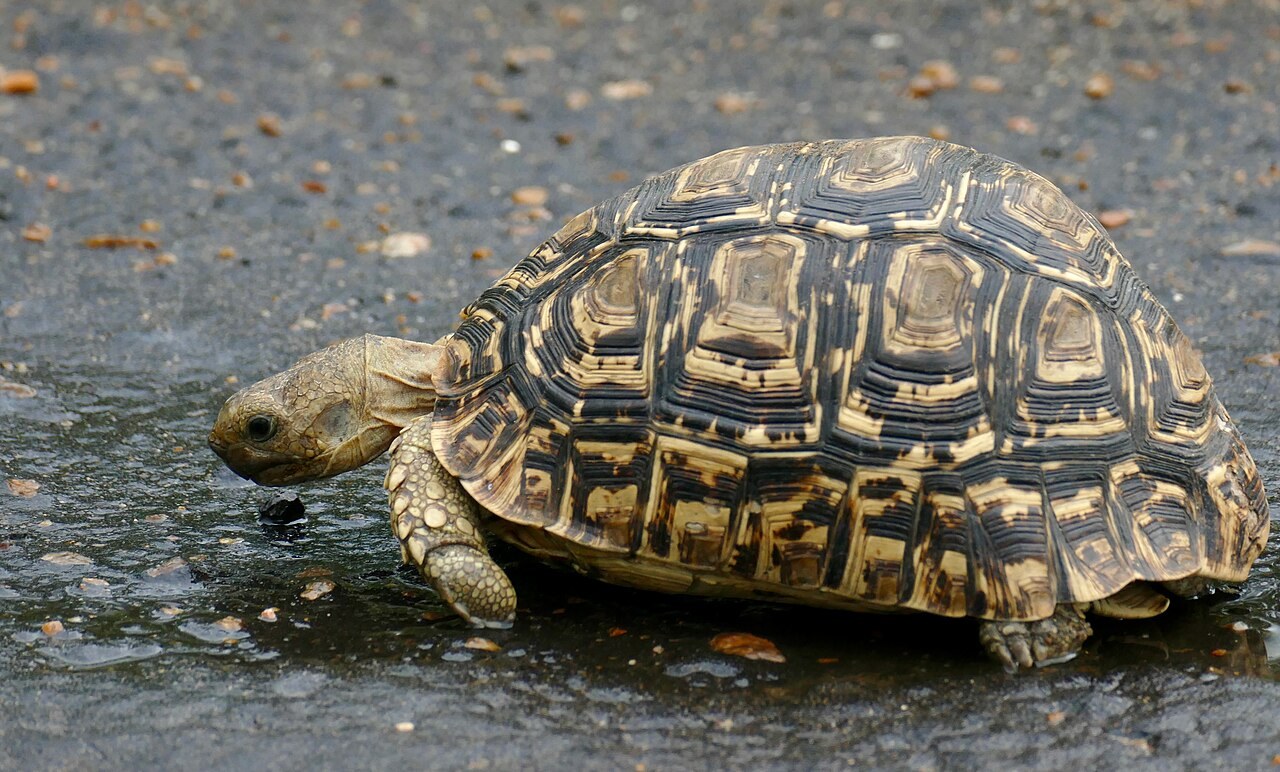
Many tortoises will drink from or sit in shallow water, but we cannot know from that alone whether they enjoy it. They need fresh water to drink, and some will step into a shallow dish to bathe. That does not make deep water safe. Many familiar pet tortoises are land animals; for Mediterranean species, an open pond or pool is a serious drowning hazard. Give a tortoise clean water it can reach and leave easily, rather than putting it in a pool to see whether it can swim.
Check the water before you leave it: Use a stable, shallow dish that your tortoise can walk into and out of. Keep the water shallow enough for it to stand with its head clear, and replace it at least daily or promptly if soiled. Make ponds and pools inaccessible.
Do tortoises drink water?
Yes. The Tortoise Trust's Mediterranean tortoise guidance says tortoises drink in the wild and in captivity, and recommends offering fresh water every day. A tortoise entering a shallow dish may be drinking, bathing or both. It is impossible to tell from that alone whether it “likes” water in the way a person might mean.
The RSPCA's reptile water advice recommends a large, shallow dish for most reptiles, with water replaced at least once a day. For tortoises, it says the bowl should also be big enough to allow bathing. Place it where the animal can access it easily, check that the dish does not tip, and clean it if the water becomes dirty.
Can a tortoise swim?
Do not treat a tortoise like an aquatic turtle. The University of Illinois College of Veterinary Medicine explains that tortoises are adapted to life on land, while turtles are generally better suited to spending time in water. Species differ, so a single “all tortoises can” or “all tortoises cannot” claim is too broad. For ordinary pet care, do not put a tortoise in deep water to test whether it can swim.
“Mediterranean tortoises cannot swim, and any open pool or pond should be considered as a major hazard.”
— Tortoise Trust, Basic care of Mediterranean tortoises
For a Mediterranean pet tortoise in a garden, secure or exclude access to ponds, pools and other deep containers. A shallow drinking dish is a different situation: the animal can stand and get out.
Are baths and soaks safe?
A shallow bath can be part of tortoise care, but the right routine depends on the species, age, enclosure and the animal's health. The University of Illinois veterinarian notes that some tortoises may need regular soaking to stay hydrated; that is not a fixed schedule for every tortoise. If you are unsure how often to soak yours, ask a reptile-experienced vet for advice tailored to its species.
Never use a deep bath as a swimming test. If your tortoise appears unwell, weak or has changed its drinking or activity habits, arrange veterinary advice rather than relying on extra soaking to solve the problem.
The simple rule
Offer fresh water every day in a shallow, accessible dish. Let the tortoise drink or bathe without forcing it into deep water. Keep ponds and pools out of reach, especially for Mediterranean species. Whether a tortoise chooses to sit in its dish matters less than whether it can drink safely and leave when it wants.
Sources & further reading
RSPCA, “Reptiles and water”, checked 25 September 2026: https://www.rspca.org.uk/en/adviceandwelfare/pets/other/water
Tortoise Trust, “Basic care of Mediterranean tortoises”, checked 25 September 2026: https://www.tortoisetrust.org/articles/Basicmedcare.htm
University of Illinois College of Veterinary Medicine, “The Tortoise and Its Care”, checked 25 September 2026: https://vetmed.illinois.edu/pet-health-columns/the-tortoise-and-its-care/