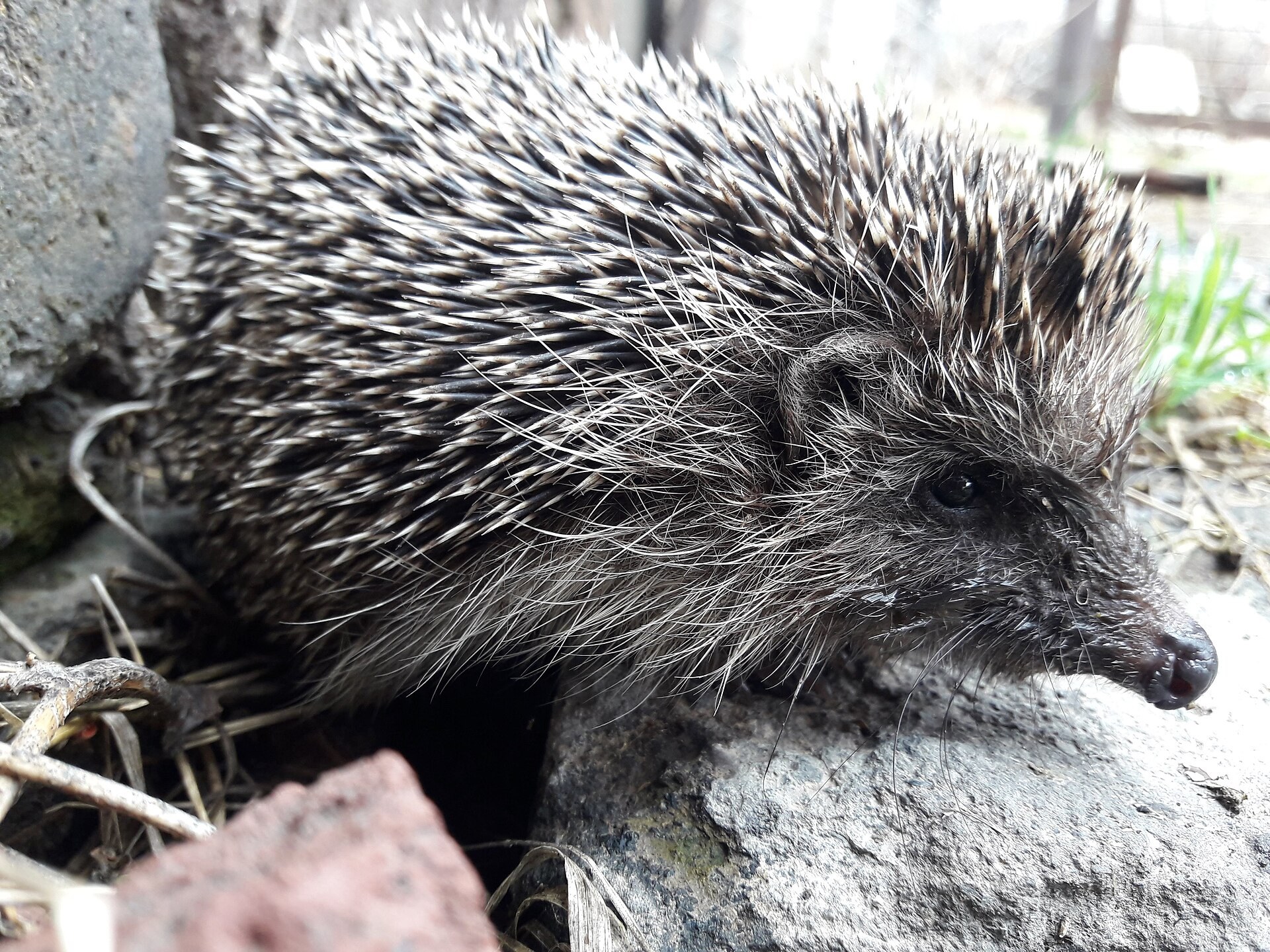
In a UK garden, hedgehog droppings are usually dark, firm and roughly cylindrical, sometimes with a tapered end. They can contain shiny pieces of insect shell. A likely dropping is a clue, not proof on its own: check it against the photograph below, then look for footprints or camera footage before deciding a hedgehog visits.
These signs describe the European hedgehog found in Britain. They should not be used to identify droppings from pet hedgehogs or other species elsewhere.
What does hedgehog poo look like?
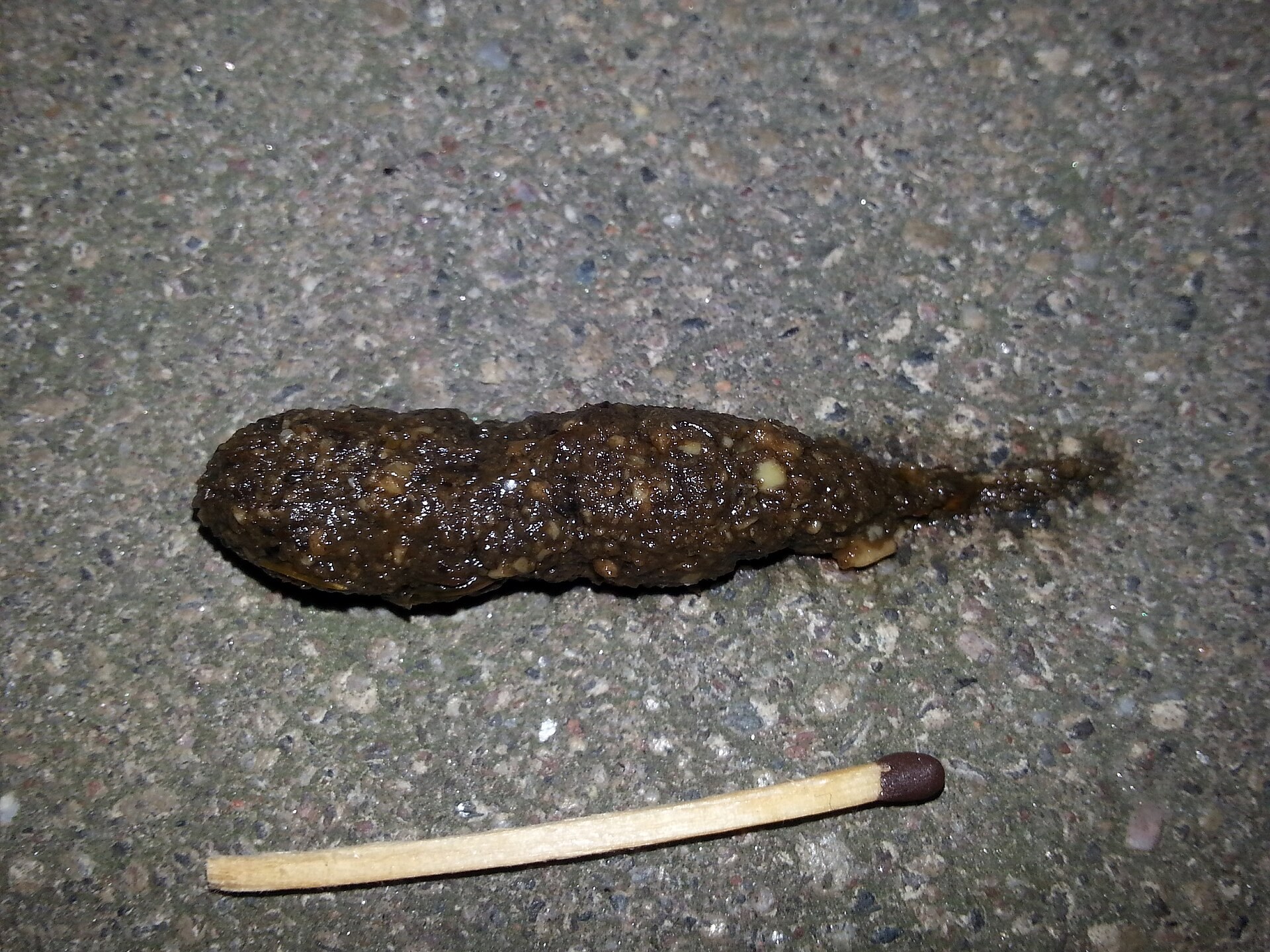
Hedgehog Street’s identification guidance describes droppings as dark brown-grey or black, firm and often packed with insect remains. They are usually found singly, measure about 15–50 mm long and may look like a dark slug at first glance. The shape, size and contents vary with diet, so no single feature settles an uncertain identification.
_feces_-_Siilin_uloste_C20170805_082336.jpg)
If you find an unfamiliar dropping, take a clear photograph where it lies, with a ruler or another scale beside it. Compare its shape and visible contents with a verified reference; avoid handling it. A similar-looking dropping could belong to another animal, so keep the identification tentative if the details do not match.
What do hedgehog footprints look like?
Hedgehog front prints are broader and hand-like; the hind prints are longer and narrower. Each foot has five toes, although a print often shows only four. Mud and wet sand can reveal tracks, but the surface may distort them. Compare several prints rather than relying on one unclear mark.
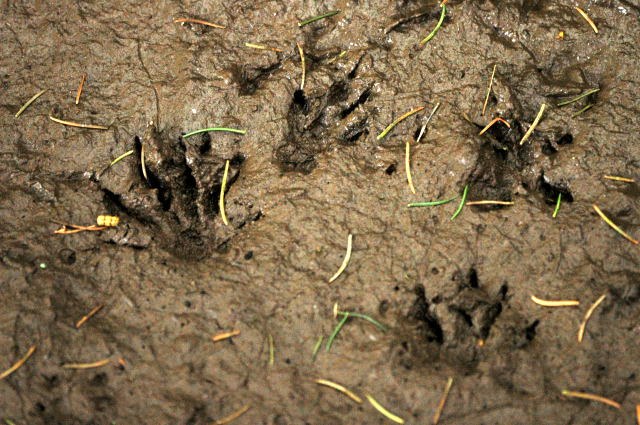

A track is stronger evidence than a disturbed patch of grass or moved leaves, but footprints can still be mistaken for those of another small mammal. The PTES survey guide specifically warns that some other mammals can leave confusing prints.
How can you confirm a garden visit?
Watch a likely route. A wildlife camera aimed at a gap in a fence, path or feeding area can show the animal without a person waiting beside it. Check that any footage actually shows a hedgehog; food disappearing alone does not identify the visitor.
Try a footprint tunnel. A tracking tunnel uses paper, a suitable ink pad and a small bait dish to record passing animals. Follow the PTES setup guidance, put it along a likely route and check it daily. A single quiet night is inconclusive; the guide says a garden tunnel may need to remain in place for longer than five days.
Notice possible house activity from outside. Leaves moved near a house entrance can suggest nesting, but other animals or weather may move them. Do not lift the roof or probe an occupied house to check.
They are low-tech but they are an effective and robust way of detecting hedgehogs.
Hedgehog Street’s garden-check guide recommends droppings, prints, house-entrance clues and a wildlife camera as ways to look for visitors. Choose a method that leaves shelter and potential nests undisturbed.
Start with the least intrusive check
Photograph a suspected dropping in place and look for prints on a damp patch or in a properly set tracking tunnel. Use a wildlife camera if the signs remain uncertain. Keep checking over several nights; an empty result on one night does not establish that no hedgehog uses the garden.
What if you find no signs?
No droppings or tracks in one part of the garden do not rule out a visit. Hedgehogs may use another route, and detection can take time. PTES advises leaving a garden footprint tunnel longer than the five days commonly used in a wider site survey. Continue ordinary garden safety checks before strimming, moving log piles or working around possible nests, even when you have seen no evidence.
If you want to make a route and shelter available, read our guide to attracting hedgehogs to your garden safely. For possible nesting sites, see what a hedgehog nest looks like and leave an occupied nest alone.
Sources & further reading
Hedgehog Street (PTES and BHPS), “Hedgehog tracks and signs”. Checked 28 September 2026. https://www.hedgehogstreet.org/about-hedgehogs/tracks-and-signs/
Hedgehog Street (PTES and BHPS), “How do I know if I have hedgehogs in the garden?”. Checked 28 September 2026. https://www.hedgehogstreet.org/how-do-i-know-if-i-have-hedgehogs/
People’s Trust for Endangered Species, “Guidance for surveying hedgehogs”, footprint tunnels section (updated PDF). Checked 28 September 2026. https://www.hedgehogstreet.org/wp-content/uploads/2024/08/Guidance-for-surveying-hedgehogs-updated-FINAL.pdf