
A natural hedgehog nest usually looks like a compact mound of dry leaves, grass and other vegetation tucked beneath a hedge, shrub, log pile, shed or similar cover. The entrance can be difficult to see. A winter hibernation nest is generally denser and more carefully packed than a temporary summer nest.
It is often impossible to identify an occupied nest from the outside without disturbing it. Treat a sheltered pile of leaves or grass as potentially occupied, especially before strimming, moving a compost heap or clearing material from beneath shrubs.
What does a hedgehog nest look like?
The visible part may resemble a small, untidy heap of garden material. Inside, the hedgehog forms a chamber by pushing and arranging leaves, grass, moss and similar dry vegetation around its body. Supporting cover such as tangled roots, bramble, brushwood or the space beneath a structure helps hold the nest together.
A well-built winter nest is called a hibernaculum. The British Hedgehog Preservation Society's hibernation guidance describes it as a compact dome, usually 30–60 cm across, with walls that can be up to 10 cm thick. Although the outside may look ramshackle, the packed layers provide useful insulation and resist rain.
Nest type | What you may notice |
|---|---|
Daytime or summer nest | A less substantial shelter of leaves, grass or other vegetation beneath dense cover |
Breeding nest | A well-hidden, carefully prepared summer nest with enough space for the mother and hoglets |
Hibernation nest | A densely packed, dome-like structure of dry leaves and vegetation in a protected position |
Hedgehog house | A manufactured wooden, brick or plastic shelter that may be filled with leaves by its occupant |
Do not open a nest to identify it. Its entrance may be concealed deliberately, and lifting the covering can expose a sleeping adult, a hibernating hedgehog or a mother with dependent young.
Where do hedgehogs build nests?
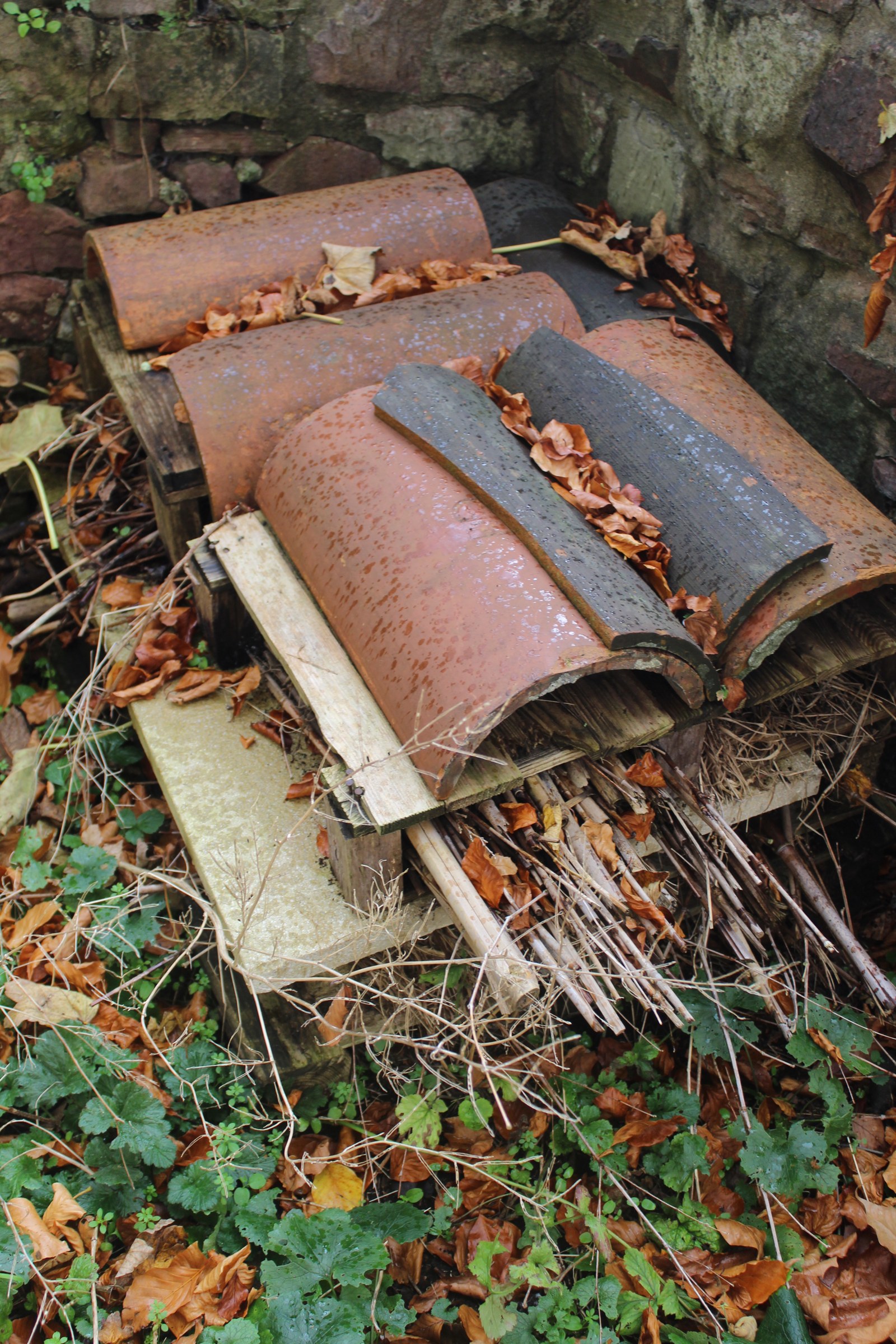
Hedgehogs choose quiet places with overhead cover and nearby nesting material. Common sites include:
beneath hedges, bramble and dense shrubs;
under tree roots, fallen logs and brushwood;
inside compost heaps or deep leaf piles;
beneath sheds, decking or timber buildings;
behind stacked materials in an undisturbed corner; and
inside a purpose-built hedgehog house.
Hedgehogs may use several nests rather than returning to one permanent home. The Natural History Museum's European hedgehog profile notes that a daytime nest may be used for only a few days before the animal moves on. Winter nests can be occupied much longer, although a hedgehog may wake and change nest during hibernation.
How do summer and winter nests differ?
A summer resting nest can be comparatively light and temporary. The hedgehog still needs concealment from weather and disturbance, but the structure does not have to protect it through months of cold conditions.
A female preparing to raise hoglets puts particular effort into a secure breeding nest. The Hedgehog Street nesting guide recommends providing an undisturbed area and plenty of nesting material because summer nests are especially important when young are present. Read our guide to when hedgehogs have babies before carrying out work near a suspected nest.
“Hedgehogs will put special effort into their winter nests for hibernation, but summer nests are also important.”
A hibernaculum is more substantial. Dry leaves are packed together to form insulating layers around a central chamber. Its position beneath roots, brushwood or another stable structure protects the nest as well as the material itself. Hibernation timing responds to weather and the individual animal, so a nest should never be assumed empty simply because the calendar says spring. Our guide to hedgehog hibernation in the UK explains the seasonal pattern.
Signs a hedgehog may be nesting nearby
You might see a hedgehog carrying leaves in its mouth or repeatedly disappearing beneath the same shrub, shed or pile. A trail camera may show purposeful journeys to and from one spot. A small opening through vegetation can also suggest a route, but none of these signs proves that a nest is currently occupied.
Observe from a distance and avoid placing a camera, light or object directly at the entrance. Do not poke into the material or reach inside. Hedgehog droppings nearby show that an animal has visited the area, but not necessarily that it is nesting there.

What should you do if you find a hedgehog nest?
Stop the work. Switch off tools and leave the immediate area quiet.
Keep people and pets away. Give the hedgehog a chance to remain settled.
Do not move the animal or nest. A site that looks inconvenient to us may have been chosen for protection.
If you have only lifted loose material, replace it gently. Then leave the nest alone and monitor from a distance.
Get advice if young are exposed, an animal is injured or the nest cannot be made safe. Contact the British Hedgehog Preservation Society or an experienced local wildlife rescue.
The BHPS guide to gardening with hedgehogs advises replacing nesting material after an accidental disturbance and minimising further handling. If babies are present, repeated disturbance may cause serious harm. Do not uncover the nest again to check whether the mother has returned.
Be particularly careful around stored vegetation and bonfire material. Our Hedgehog Safety Guide explains how to rebuild a bonfire on the day it is lit and check it without relying on a quick visual inspection.
How can you provide nesting space?
Leave a quiet corner with dry leaves, logs, native shrubs and some untidy ground cover. Avoid clearing every leaf from beneath hedges. A hedgehog can then choose its own site and arrange the material it needs.
A hedgehog house can add shelter where natural cover is limited. Put it in a quiet, shady, dry position near a hedge, fence or shed. Leave dry leaves nearby rather than tightly packing the house yourself, and keep food away from the sleeping area so smells do not attract other animals to the nest.
Common questions
Do hedgehogs nest in compost heaps?
Yes. A compost heap can offer cover, warmth and loose nesting material. Check carefully before turning, forking or dismantling it, and postpone the work if you suspect a nest is occupied.
How can I tell a nest from an ordinary leaf pile?
You often cannot tell safely from the outside. A compact mound beneath cover, repeated hedgehog visits or leaves being carried into one point may raise suspicion. Do not pull it apart to confirm; leave it undisturbed.
Do hedgehogs reuse the same nest?
They may reuse a suitable site, but hedgehogs also move between nests. Even an apparently abandoned nest should be checked cautiously before garden work begins.
Sources and editorial notes
UK guidance checked on 24 September 2026. Sources linked beside the relevant information: British Hedgehog Preservation Society, Hedgehog Hibernation and Gardening with hedgehogs; Hedgehog Street, Nesting and gathering leaves; and Natural History Museum, European hedgehog. None of these organisations has reviewed or endorsed this article. If an animal is injured, exposed or behaving unusually, seek current advice from a wildlife rescue rather than relying on general web guidance.