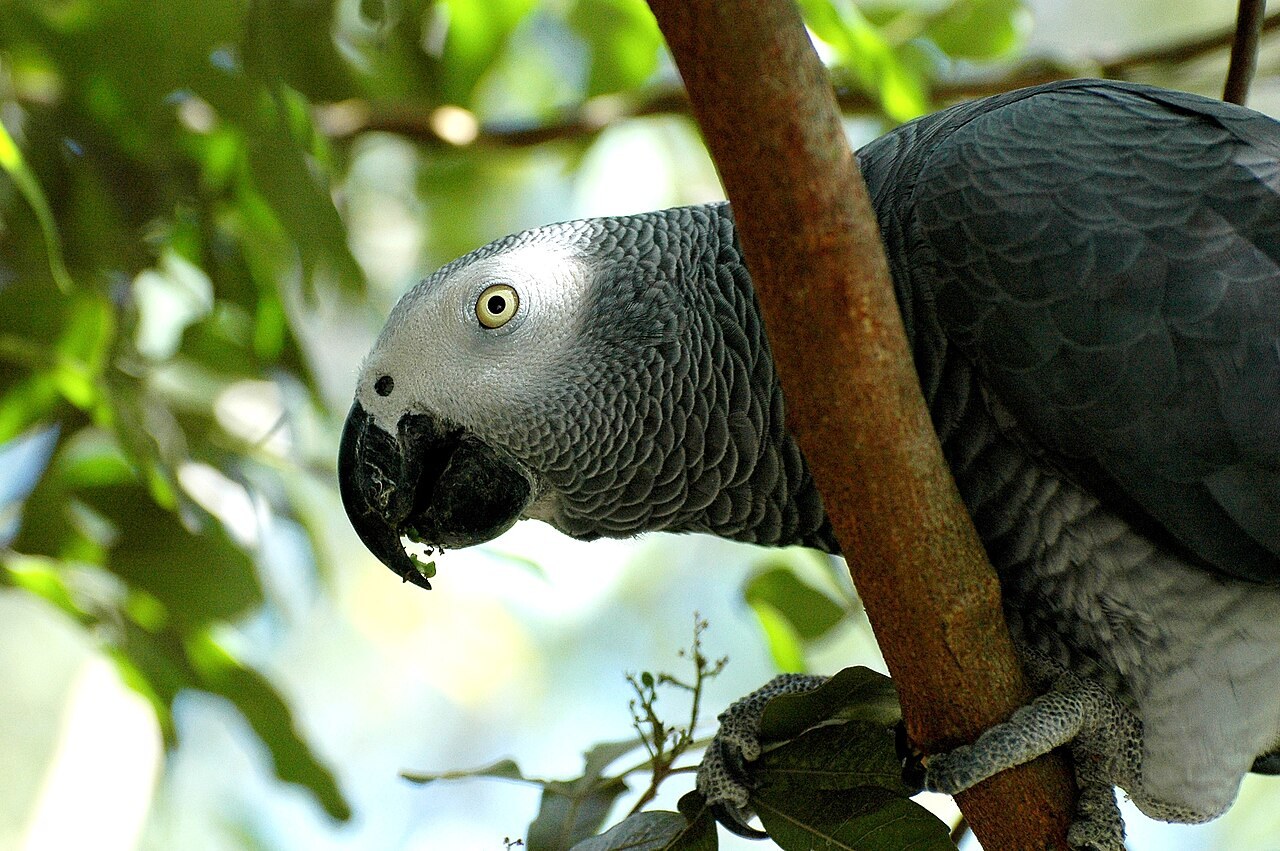
An African grey’s body language offers clues, not a reliable one-signal translation of its mood. Read its eyes, feathers, beak and whole posture together, then consider what happened just before the change. A cue that appears during play can mean something different alongside a stiff body or a sudden change in appetite. The LafeberVet guide to parrot body language stresses that these signs can be misread.
Excited and/or aggressive birds can display similar postures and similar behaviors.
How do you read the whole bird?
Start with what is normal for your companion African grey. Watch from a comfortable distance: is it moving and eating as usual, approaching you, or leaning away? Notice the setting, including a new object, another animal or an attempt to handle it. One still photograph or one movement cannot establish a bird’s feelings or health.
What can a relaxed African grey look like?
Preening, stretching, a soft-looking feather outline and quiet beak grinding can accompany a comfortable parrot. A brief fluff and shake after grooming is different from staying fluffed and inactive. None of these gestures alone proves that your bird is happy or well; compare them with its usual activity and appetite.
What signs mean you should give it space?
Eye pinning is rapid pupil size change. In a light-eyed African grey it may be easy to see, but it signals heightened excitement rather than one fixed emotion. If it comes with a rigid posture, a fanned tail, an open beak or a lunge, pause handling and let the bird settle.
A bird that pulls itself tall and stiff, holds its feathers close to the body or keeps its wings slightly away may be fearful or stressed. Spread wings and a fanned tail can also accompany intense excitement. Do not use a single eye, wing or feather sign as permission to touch the bird.
Pause before handling
If your grey stiffens, holds its beak open or lunges, stop reaching toward it and let it settle before offering contact again. If that change is new or comes with poor appetite, weakness or difficult breathing, contact an avian vet.
Does regurgitation always mean affection?
No. The MSD Veterinary Manual’s regurgitation table lists courtship behaviour towards an owner, toy, mirror or another bird as one possibility, alongside medical causes. So regurgitation is not proof of trust or a reason to ignore other symptoms. If it is new or frequent, or comes with reduced appetite, lethargy or abnormal droppings, contact an avian vet.
When is body language a health warning?
A change from your grey’s normal behaviour deserves attention. The MSD Veterinary Manual’s bird illness guide lists persistent fluffing, sleeping more than usual, less activity or vocalising, poor balance, a bird low on its perch or on the cage floor, changed appetite or droppings, and breathing difficulty such as tail bobbing. These signs need veterinary assessment; do not label them as boredom, sulking or aggression.
If your bird is struggling to breathe, weak or losing balance, seek veterinary help promptly. For any new or persistent change in behaviour or eating, speak to a vet experienced with birds rather than trying to infer the cause from posture alone.
What should you do next?
If a reaction repeats, note what happened just before it, what the bird did, how long it lasted and whether eating, droppings or activity changed. Share that record with an avian vet if you need advice; do not provoke the behaviour to test a theory.
Related reading: African Grey Parrot Care: Housing, Diet and Daily Routine; Why Does My Parrot Bite My Feet? Triggers and What to Do.
Sources & further reading
LafeberVet — Christal Pollock, DVM, DABVP (Avian Practice), “Reading Bird Body Language” (11 July 2019). https://www.lafeber.com/vet/wp-content/uploads/2019/07/Body-LanguageFINAL2.pdf (checked 27 September 2026).
MSD Veterinary Manual — Laurie Hess, DVM, DABVP, “Illness in Pet Birds” (reviewed April 2025). https://www.msdvetmanual.com/bird-owners/routine-care-and-safety-of-birds/illness-in-pet-birds (checked 27 September 2026).
MSD Veterinary Manual — “Differential Diagnoses for Regurgitation in Pet Birds” (date not shown). https://www.msdvetmanual.com/multimedia/table/differential-diagnoses-for-regurgitation-in-pet-birds (checked 27 September 2026).