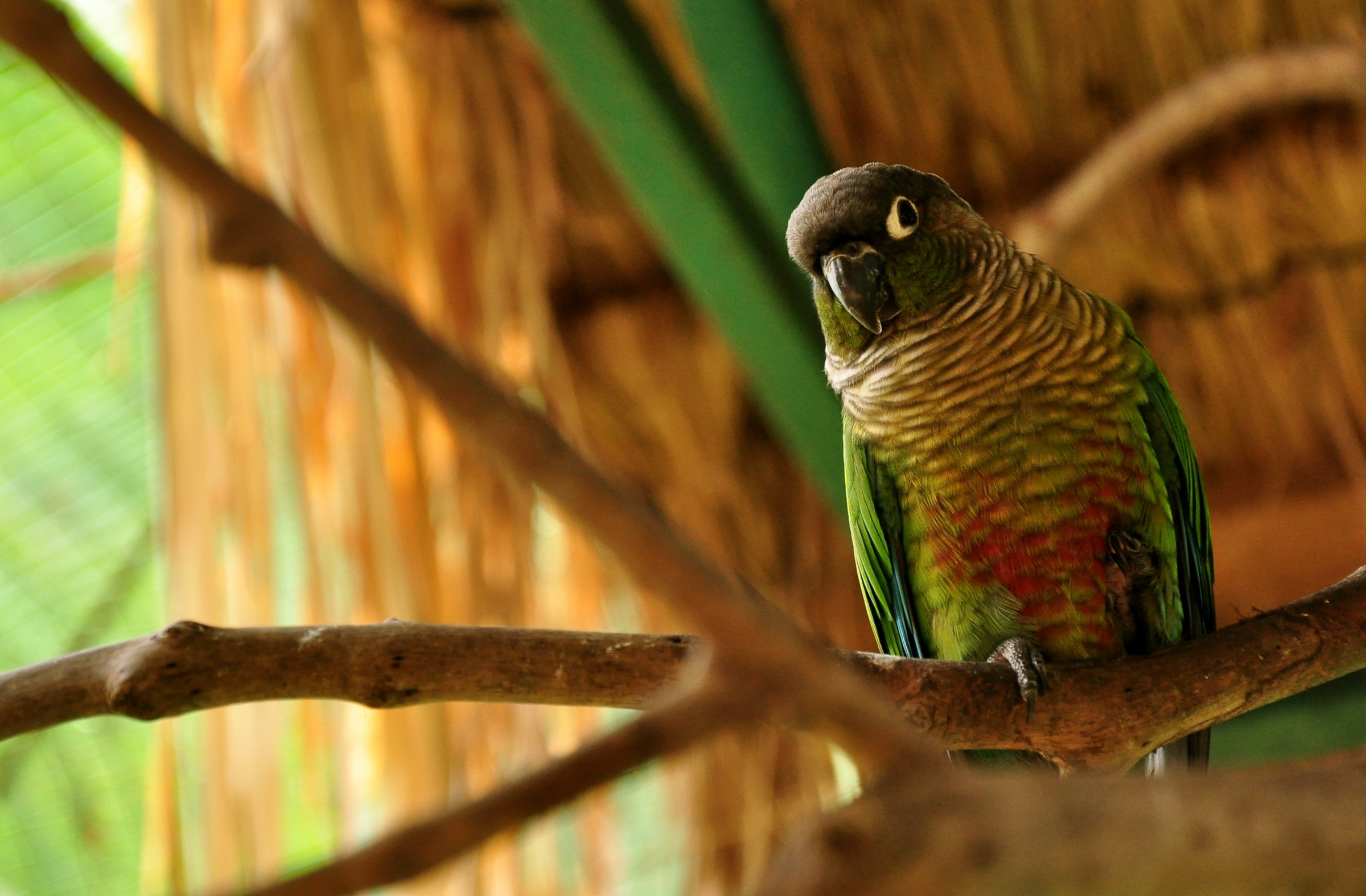
A parrot biting your feet is telling you that something in the situation needs to change, but the bite alone does not tell you why. Moving toes, a close approach or a busy play session may be part of the pattern. First separate the bird from walking feet, then watch what happens just before each bite. Teach and reward a safer place to go instead of punishing the bird.
Lead photograph: a green-cheeked conure on a branch, photographed by Brandon Lim, CC BY 2.0.

Before the next floor-time session
Set out a perch away from walking feet. Practise a calm step-up or “go to perch” cue and reward the bird as soon as it follows. If it seems unsettled, increase the distance and make the next attempt easier.
What happens before your parrot bites?
Look at the whole scene rather than assigning a fixed motive. Was your parrot on the floor as you started to walk, near its cage or favourite object, or already showing signs that it wanted space? Does it go for bare toes, slippers or any moving foot? Does the same thing happen at a particular time or with a particular person? Write down the location, what moved, the bird's body language and what happened immediately afterwards. A repeated pattern gives you something practical to change.
Parrots use their beaks to climb and hold things, so brief beak contact is not always a painful bite. The RSPCA's bird behaviour guidance makes that distinction and recommends a calm response when a bite hurts. Avoid treating every beak touch as an attack.
What should you do when it happens?
Stop moving your feet and give the bird room. If it can step onto a familiar hand-held perch, guide it to a safe stand before anyone walks through the area. If it is too unsettled to step up, pause and give it space; do not chase, grab or shout. Keep the bird away from walking routes while you work out the trigger.
Do not use punishment or a dramatic reaction as a training method. The RSPCA advises calm handling and warns that telling a bird off or other punishment can worsen training problems. Covering your feet may protect your skin briefly, but it does not teach the bird where to go or explain what set the bite off.
How can you prevent the next bite?
Change the setup. Arrange out-of-cage time so the bird has a stand or perch away from moving feet. Pause foot traffic until the bird is safely there.
Teach a useful alternative. In short, relaxed sessions, ask for a step-up onto a hand-held perch or for the bird to go to its stand. Reward the attempt and the completed move with something the bird likes.
Work at the bird's pace. Start at a distance where it remains comfortable. If it hesitates or looks distressed, make the step easier and try again later.
Check the result. If bites still occur, compare your notes: did you change the likely trigger, or only react after the bird reached a foot?
When you start training, make sure your bird is comfortable, and always go at their pace.
The RSPCA's pet-bird training guide supports calm, gradual step-up and “go” training with prompt rewards. If the pattern persists or you cannot handle the bird safely, ask an avian vet or a qualified bird behaviourist to assess the situation.
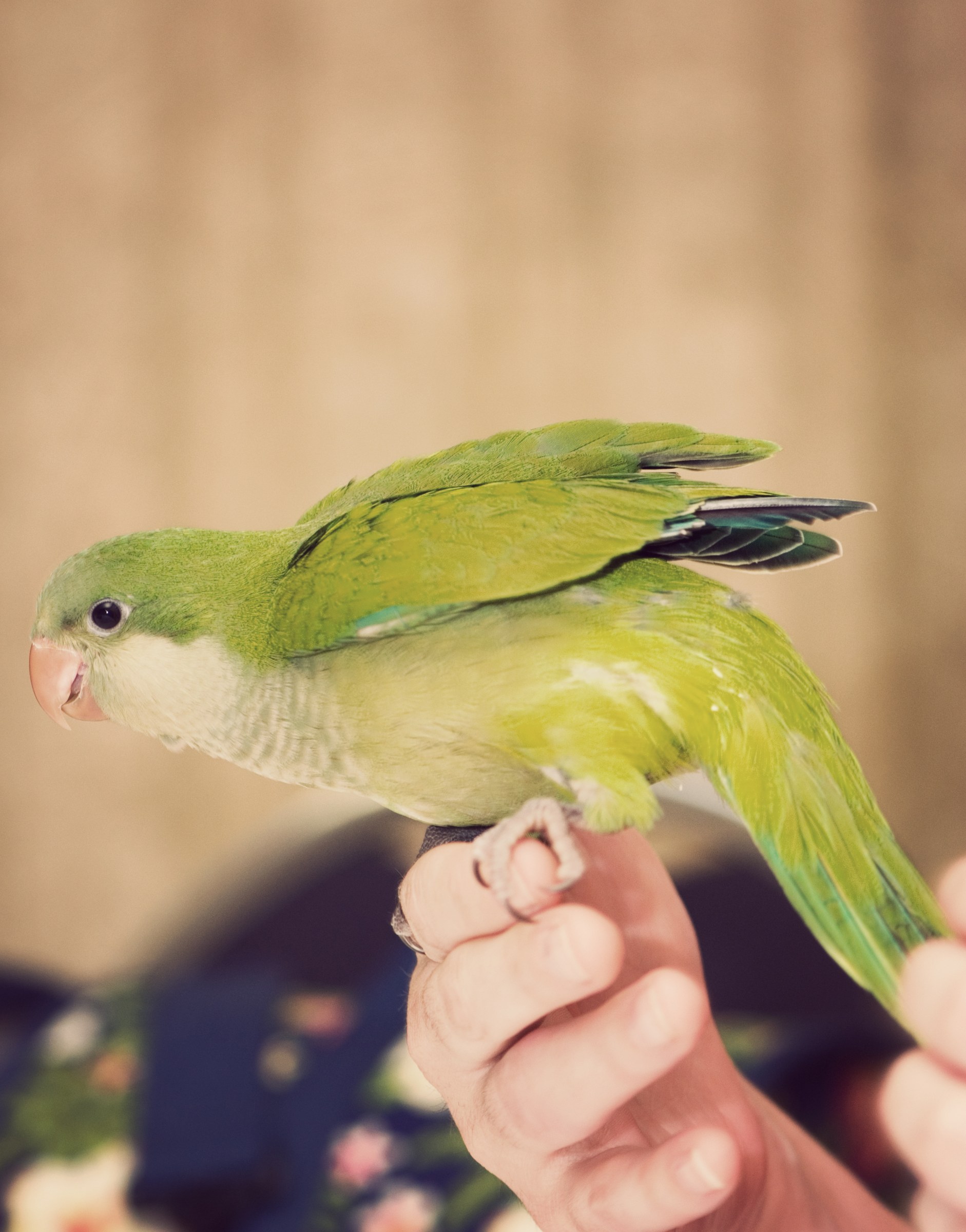

What if your parrot is biting its own feet?
Chewing its own foot is a different question from biting your toes. Do not assume it is the same behaviour or diagnose an infection from the chewing alone. Check for a visible wound, swelling, limping or a sudden change in activity, and contact an avian vet promptly if any is present or the self-chewing continues. The Merck Veterinary Manual's pet-bird injury guidance recommends prompt veterinary advice for limping or unusual behaviour and treats active foot bleeding as an emergency.
Related reading: African Grey Body Language: How to Read Common Signals; African Grey Parrot Care: Housing, Diet and Daily Routine.
Sources & further reading
RSPCA, “Bird Behaviour” (undated), https://www.rspca.org.uk/adviceandwelfare/pets/birds/behaviour — checked 27 September 2026.
RSPCA, “How to Train Your Pet Bird” (undated), https://www.rspca.org.uk/adviceandwelfare/pets/birds/training — checked 27 September 2026.
Laurie Hess, DVM, DABVP, “Injuries and Accidents of Pet Birds”, Merck Veterinary Manual (reviewed May 2026), https://www.merckvetmanual.com/bird-owners/disorders-and-diseases-of-birds/injuries-and-accidents-of-pet-birds — checked 27 September 2026.