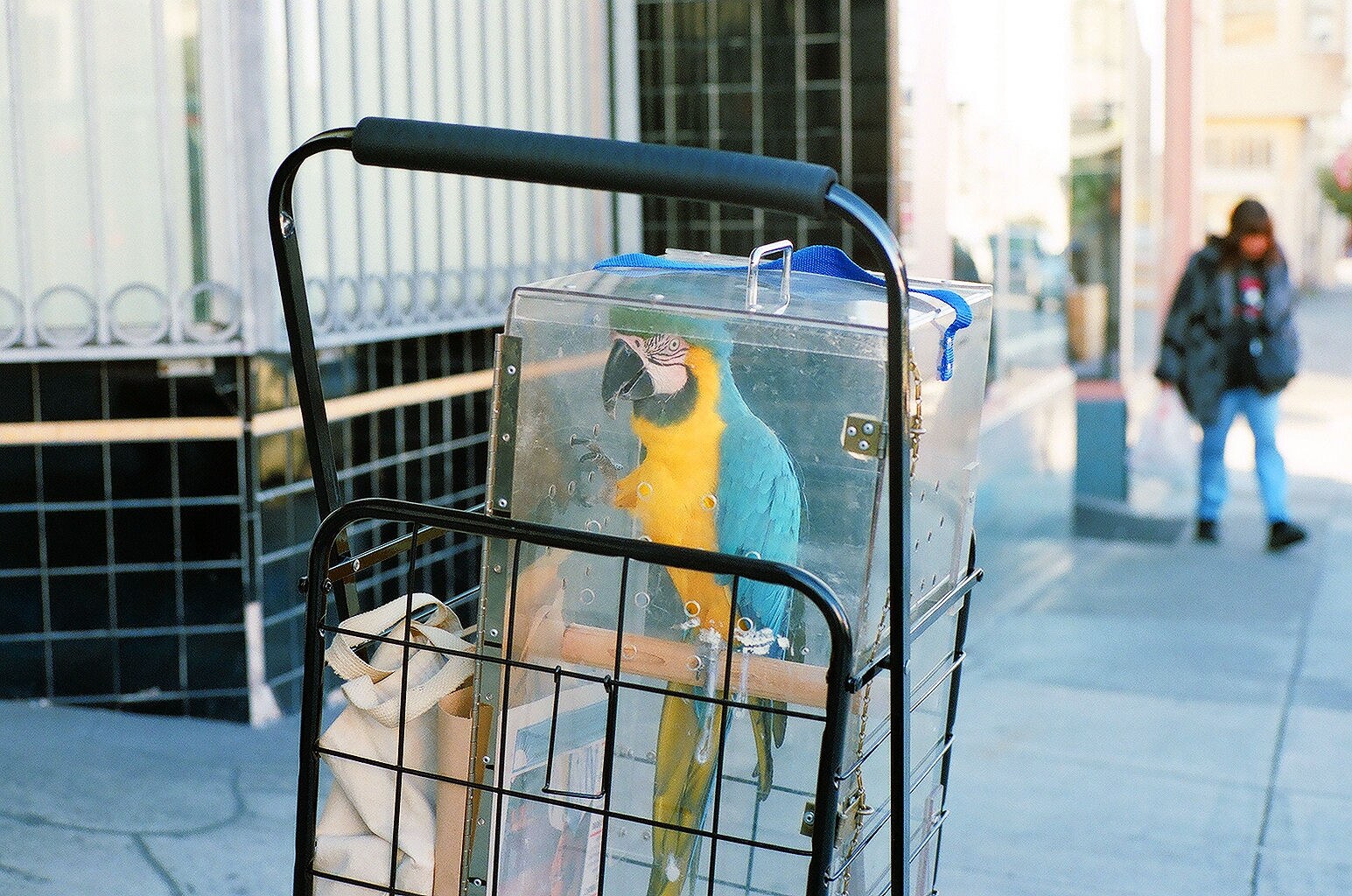
Some parrots seem to enjoy car rides; others find them stressful or become sick. A short practice drive can show whether your bird copes with travel, but a calm trip does not prove it will enjoy a longer one. Get your parrot used to a carrier first, and keep it secured inside while the car is moving, as VCA Animal Hospitals advises.
How can you prepare your parrot for a car ride?
Introduce the carrier at home well before you need to travel. Reward your parrot for approaching and entering it, then gradually practise closing the door and carrying it a short distance. The RSPCA’s bird-training guide recommends taking this slowly and stopping if the bird becomes distressed. Once your parrot is comfortable in the carrier, try a brief local drive. If it repeatedly struggles against the carrier or vomits, pull over safely and end the optional trip. Return to easier carrier practice if it seems frightened; ask an avian vet for advice before another journey if it vomits.
Let your bird choose to enter
Place a familiar food reward inside the open carrier. Let your parrot step in, eat and come out again. Leave the door open until entering and leaving feels routine.
How should a parrot travel in the car?
Use a suitable, escape-resistant bird carrier with a firmly fixed low perch or a grippy lined floor. Secure the carrier so it cannot shift during braking. Remove swings and loose hard toys that could strike the bird. These steps follow the RSPCA’s carrier guidance and VCA’s transport advice. Keep the car comfortably ventilated, away from direct sun or a blast from a heating or cooling vent; warm it first in cold weather. Never leave the bird unattended in a parked car, particularly in warm weather.
“It is never safe for your bird to roam freely in the car while you are driving.”
What about food, water and a longer journey?
Take your bird’s familiar food and fresh water. An open water bowl can spill and soak the bird in a moving carrier, so VCA advises offering water when you stop. Plan stops where you can check the bird and offer water, but keep the carrier closed at the roadside so the bird cannot escape.
For a journey of more than an hour, the RSPCA advises providing moist food in a securely fitted container, unless your vet recommends otherwise. If the trip will be long or your bird has a health condition, ask an avian vet to help you plan its food, water and stops.
What if your parrot seems sick or frightened?
Some birds can become car sick and vomit during a journey, as Lafeber Pet Birds explains. Do not dismiss vomiting as nerves, especially if it continues or the bird also seems unwell. Contact an avian vet before another trip or before giving any remedy. If the journey is for urgent veterinary care, call the practice for guidance rather than delaying necessary treatment.
For a holiday, ask whether the bird actually benefits from coming. If short, prepared journeys repeatedly cause distress, an experienced carer at home may be the better plan. If the route crosses a national border, check the destination and return requirements well before travel; rules vary by country and species.
Related reading: My Cockatiel Flew Away: Will It Come Back? What to Do Now.
Sources & further reading
RSPCA, “How to Train Your Pet Bird”, checked 25 September 2026: https://www.rspca.org.uk/adviceandwelfare/pets/birds/training
Gregory Rich, DVM; Laurie Hess, DVM; Rick Axelson, DVM, VCA Animal Hospitals, “Transporting Your Bird: Car and Air Travel”, checked 25 September 2026: https://vcahospitals.com/know-your-pet/transporting-your-bird
Lafeber Pet Birds, “Parrot nausea” (25 March 2022), checked 25 September 2026: https://lafeber.com/pet-birds/questions/parrot-nausea/