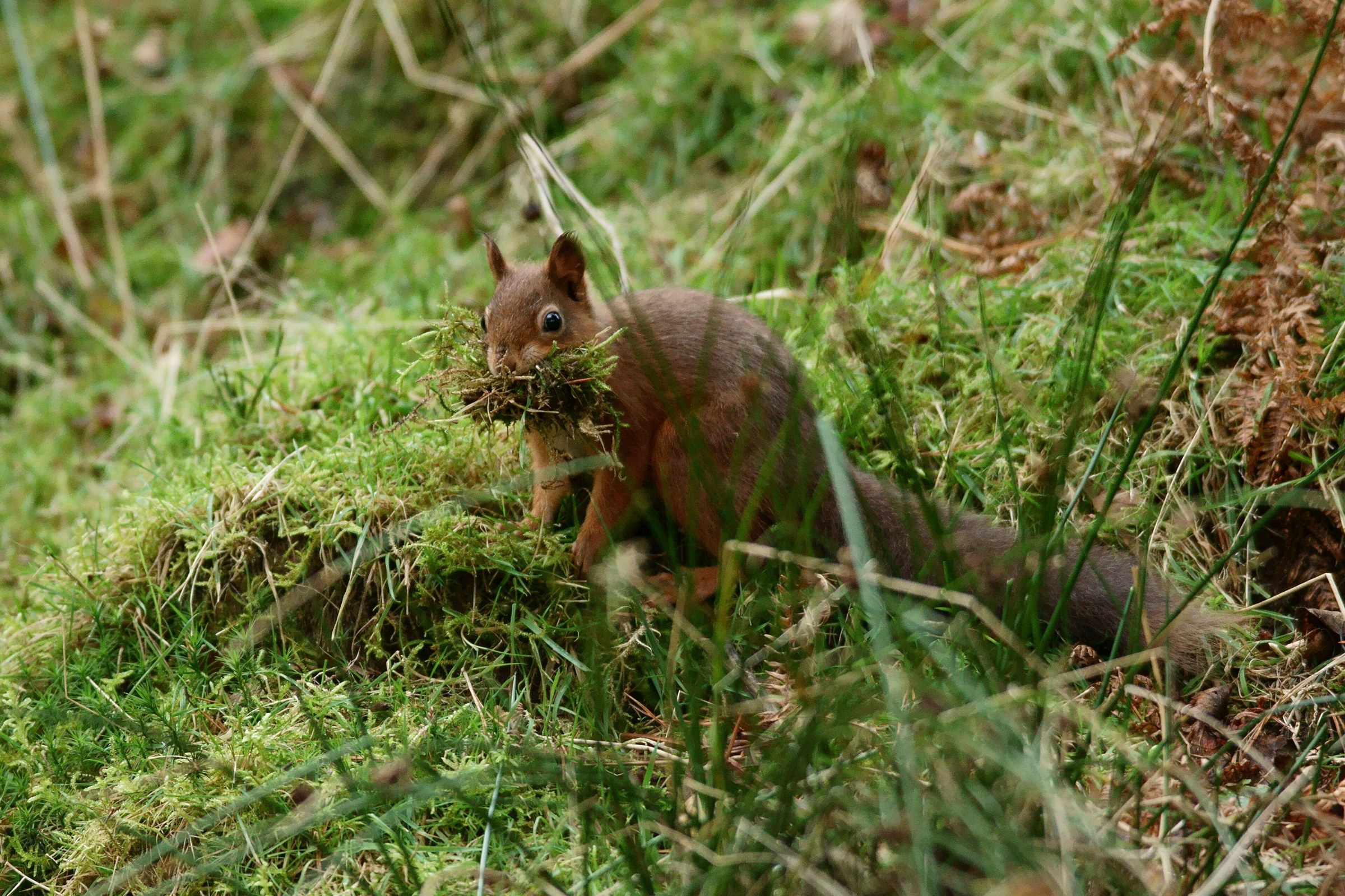
Yes, a squirrel may come back to the same nest. But a drey is not its one permanent home. UK red and grey squirrels can use several shelters, and the same drey may be used at different times. An empty-looking nest is therefore not proof that it has been abandoned. Forest Research’s squirrel survey guide explains why drey counts cannot be treated as a count of individual squirrels.
A drey is the nest a tree squirrel builds among branches, usually from twigs and leaves with a softer lining. Squirrels may also shelter in a hole in a tree. This article concerns red and grey tree squirrels in the UK, rather than ground-dwelling squirrel species elsewhere.
Do squirrels reuse a drey or build a new one?
Both are possible. A drey can last across a season or longer, but a squirrel may also keep more than one available. The Woodland Trust’s drey guide notes that squirrels may adapt a summer nest for winter or leave it and build a more sheltered one. Seeing new twigs or leaves being carried to an old drey suggests it is being maintained; it does not tell you which squirrel built it originally.
“both species will use the same dreys at different times.”
Why might a squirrel change nests?
Seasonal shelter is one reason. A light summer drey may be less suitable in colder, wetter weather, while a tree hole or a more substantial drey offers another option. A female can also move her young if their nest is damaged: the RSPCA’s baby-squirrel guidance describes mothers collecting young and taking them to an alternative nest. That does not mean a mother always returns to a particular drey.
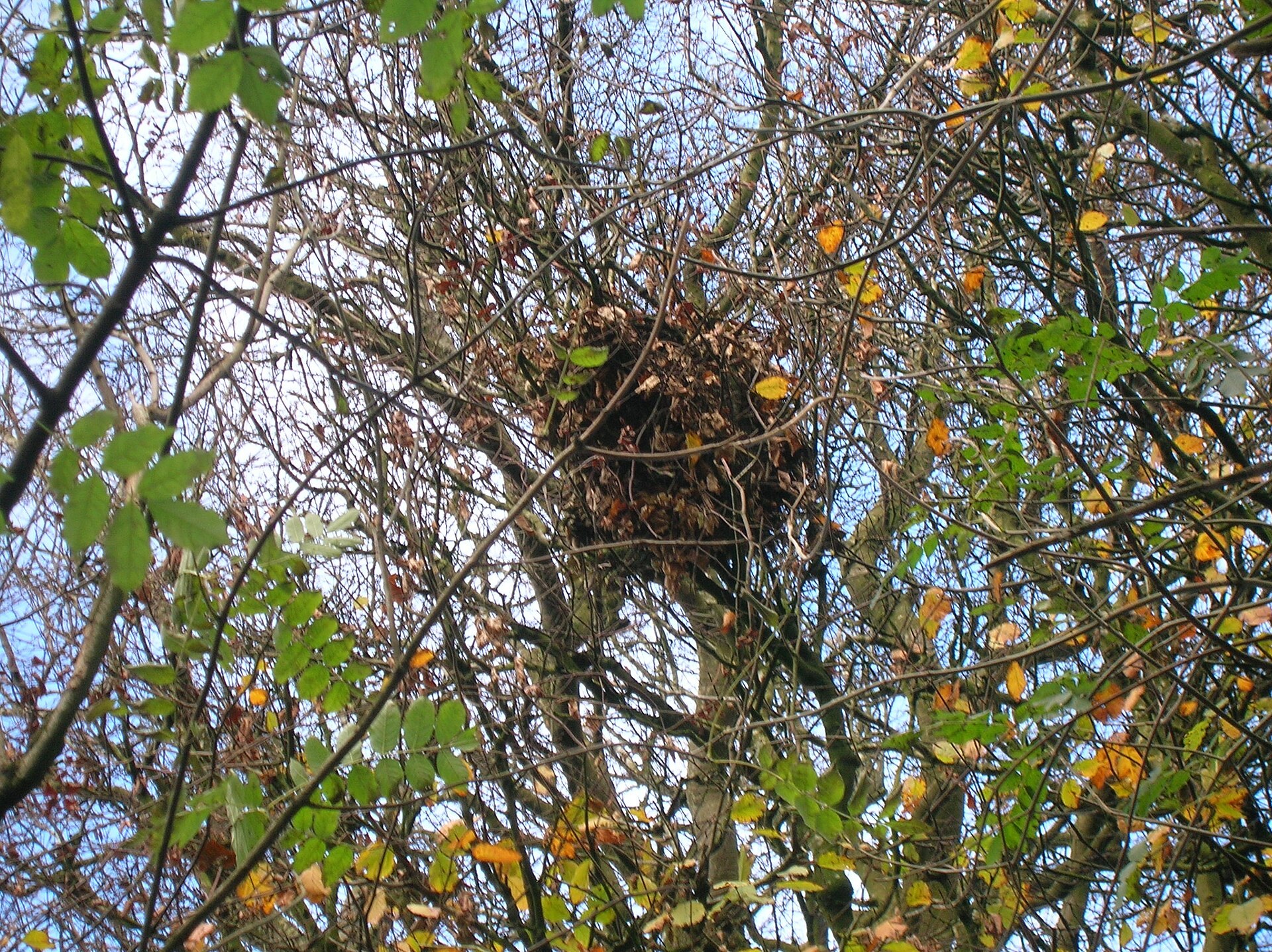

How can you tell whether a drey is being used?
Watch quietly from a safe distance for a squirrel entering or leaving it. The Woodland Trust says this is the surest way to identify a drey in use, because a nest seen from below can be mistaken for a large bird’s nest. Forest Research also cautions that red and grey squirrel dreys look alike. One observation cannot establish whether the same individual returns each night or whether young are inside.
What if the nest is in a tree or loft you need to work on?
Check for nests before pruning or removing a tree, particularly during breeding periods. Do not open or pull apart a drey to see whether it is occupied. If work can wait and you are unsure, leave the nest undisturbed and seek local wildlife advice. For a loft nest, the RSPCA advises waiting until any young have left and are foraging outside before blocking access.
Before tree or loft work: watch from a distance for squirrel activity and young. If you find a young squirrel on the ground, keep pets away and follow the RSPCA’s reunion guidance:
Leave a healthy youngster near where it was found so its mother can collect it; give it no food or water. Watch from a distance for a few hours. Contact a local vet promptly if it is injured or sick, or if its mother has not returned after a few hours. Do not move a healthy young grey squirrel away without expert advice; the RSPCA says wildlife rehabilitators cannot rear and release separated young.
A squirrel may reuse a sound drey, repair it, or move to another. The most useful answer for a nest in your garden is to observe what is happening now, without assuming that a single drey belongs to one squirrel for life.
Related reading: What Time Do Squirrels Wake Up? A UK Guide to When to Watch; Red vs Grey Squirrels: How to Tell Them Apart in the UK.
Sources & further reading
Forest Research, Practical techniques for surveying and monitoring squirrels (October 2009); Woodland Trust, Squirrel nests: where and how do they build them? (15 September 2025); RSPCA, Baby Squirrels and How to Keep Squirrels Out of Your Garden (publication dates not stated). All checked 25 September 2026. Links beside the relevant claims identify each source.