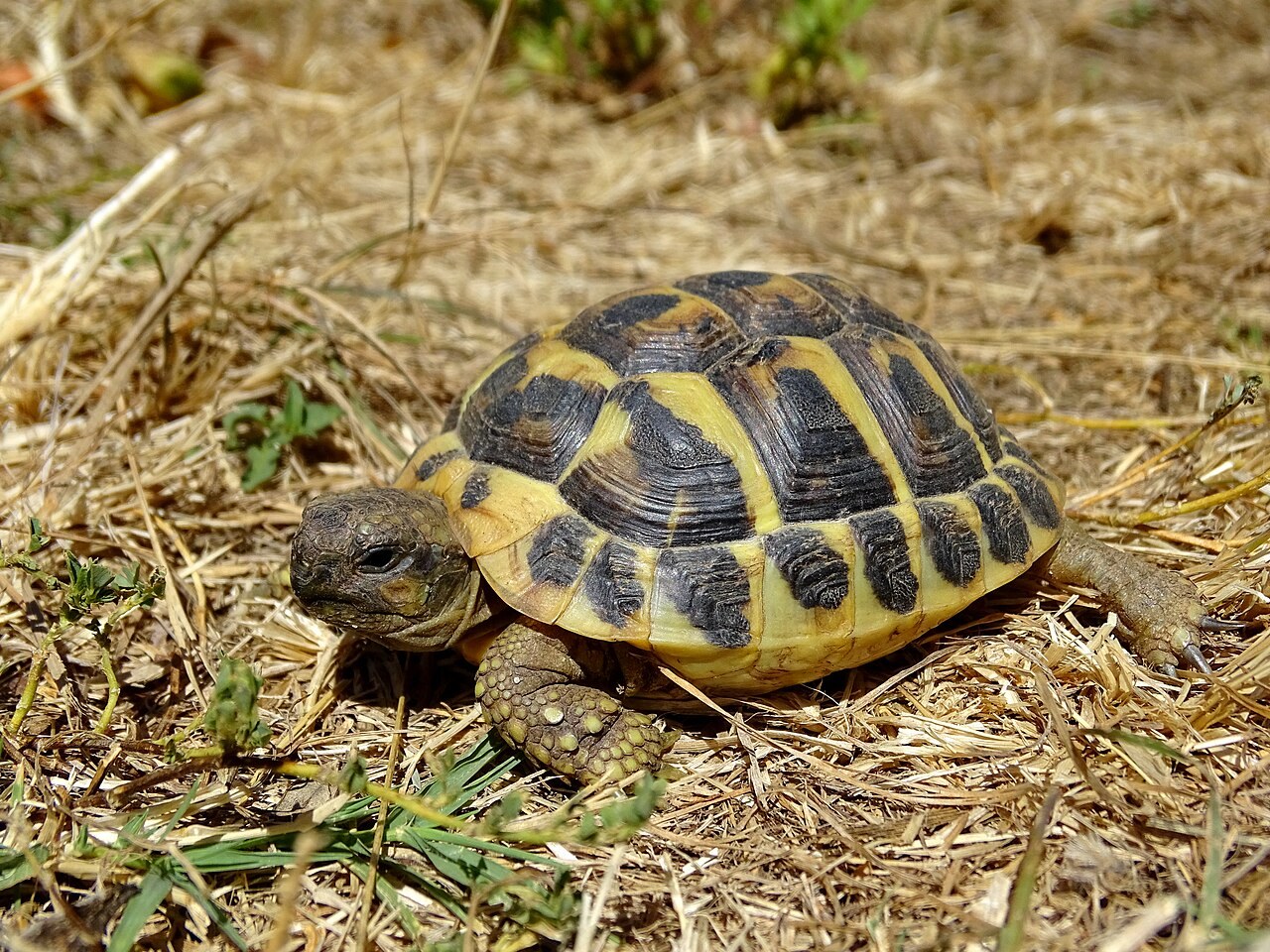
A tortoise kept alone is not automatically lonely. For commonly kept spur-thighed, Hermann’s, marginated and Horsfield’s tortoises, the RSPCA’s care guidance generally favours keeping one tortoise on its own unless the enclosure is very large. We cannot tell from a single behaviour exactly what a tortoise feels, so buying it a companion is not the first answer to a welfare worry.
Before you add another tortoise
Check the species, enclosure and health of the animal you already have. A second tortoise needs its own suitable space if the two cannot live together safely. Ask a reptile vet or experienced species-specific rescue for advice before attempting a group.
Why being alone can be the right choice
Tortoises meet others to mate and may interact when space allows, but that does not mean a pet needs a permanent companion. In the four species covered by its guide, the RSPCA warns that males may butt shells or bite females’ legs, while larger males can keep smaller tortoises away from food. Hermann’s tortoises may be more social than the others in that guide, so species matters; there is no safe rule that every tortoise should live alone or that every pair will get along.
“Unless their enclosure is very large, these tortoises are best kept alone as they are naturally solitary and territorial in the wild.”
Does following you mean it wants a friend?
A tortoise approaching you or moving around its enclosure may be seeking food, warmth, a route out or something else. That behaviour alone cannot establish loneliness or affection. Look at the whole pattern: appetite, activity, body condition, temperature, lighting and whether the tortoise can hide and move freely. A sudden change deserves more attention than a familiar routine.
If your tortoise repeatedly pushes at the boundary, do not label it “bored” and add another tortoise. Check whether the enclosure is appropriate for its species and size, offers basking and cooler areas, and has safe places to retreat. The RSPCA’s guide recommends both indoor and outdoor accommodation for the species it covers, with room to move and shelter; specific arrangements depend on the species and UK weather.
When behaviour calls for a vet
Reduced appetite, unusual inactivity or a marked change in behaviour can be signs of illness as well as a husbandry problem. The British Chelonia Group’s veterinary guidance notes that these signs can be subtle. Speak to a reptile-experienced vet if they persist or appear suddenly, and seek prompt help for visible injury or breathing difficulty. Do not assume that a sick tortoise simply misses company.
Can two tortoises ever live together?
Sometimes, with the right species, enough space and close monitoring. Cohabitation is a housing decision, not a treatment for presumed loneliness. Watch for shell butting, biting and one animal keeping another away from food. Separate them if these problems occur and get species-specific advice before trying again. If you cannot provide separate accommodation, do not add another tortoise.
The practical answer is to meet the needs of the tortoise you have. A well-planned enclosure, suitable heat and light, food, water, shelter and veterinary care matter more than a companion chosen on guesswork.
Related reading: Why Does My Tortoise Bite Me? Causes and What to Do.
Sources & further reading
RSPCA, care guide for spur-thighed, Hermann’s, marginated and Horsfield’s tortoises (checked 25 September 2026): https://www.rspca.org.uk/documents/1494939/7712578/Spur-thighed%2C%20Hermann%27s%2C%20marginated%20and%20Horsfield%27s%20tortoises%20%28PDF%20124KB%29/a072c67f-ebce-a7cf-542c-c7a4061182f8?download=true&version=3.0
British Chelonia Group, Assessment and Management of the Health of Pet Chelonia (checked 25 September 2026): https://archive.britishcheloniagroup.org.uk/testudo/v6/v6n4ward