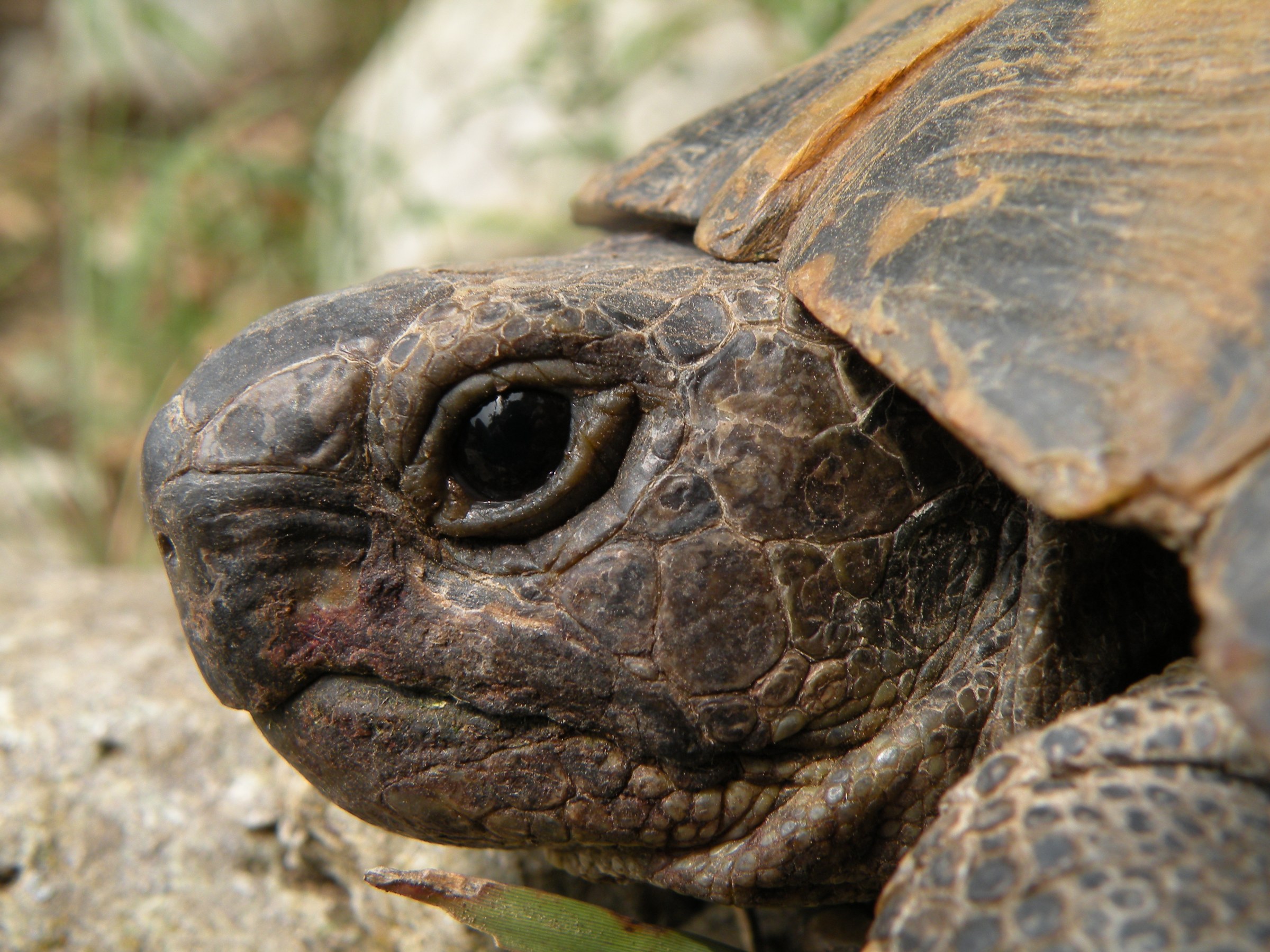
A pet tortoise may bite when your hand is close to food or when it is startled during handling. A bite alone cannot reveal its motive. Notice exactly what happened just before it nipped, then change that situation rather than assuming it is “aggressive”. This guide is for people keeping tortoises in the UK; housing examples below concern commonly kept Mediterranean species.
Start with the moment before the bite
Stop offering food from your fingers. Put the next meal down without your hand near the tortoise’s mouth, and note whether the nipping stops. If it happens during handling instead, give the tortoise more space and review how you pick it up.
Did it happen while you were feeding it?
Food is the first context to check. The US Centers for Disease Control and Prevention (CDC) warns that a reptile handled only for feeding may learn to associate a hand with food. It recommends feeding with tongs rather than from your hand. Keep fingers clear of the beak and watch whether changing the feeding routine changes the behaviour. That observation is more useful than guessing that the tortoise is “hungry” or “aggressive”.
“Feed your reptile with tongs. Don't give them food from your hand.”
Did it bite when you approached or picked it up?
A surprised reptile may bite out of fear, according to the CDC. Let your tortoise see you approach and avoid putting fingers in front of its mouth. The RSPCA’s care sheet for spur-thighed, Hermann’s, marginated and Horsfield’s tortoises says an animal unused to handling may pull its head and legs into its shell when disturbed. If lifting is necessary, hold either side of the shell and support the body underneath. Avoid repeated handling simply to test whether it will bite again.
Is another tortoise involved?
If the nipping happens when animals share space, watch their interactions as well as your own. The RSPCA says these commonly kept species are usually best housed alone unless the enclosure is very large; males may butt shells or bite females’ legs. A bite directed at another tortoise is a welfare problem, especially if one animal cannot retreat or feed. Separate animals that are injuring each other and ask a reptile-experienced vet to review their housing. Do not add female tortoises to “calm” a biting male.
When should you call a vet?
If biting is a new, repeated change with no clear feeding or handling trigger, or your tortoise is also eating less, unusually inactive, wheezing or has discharge around its nose or mouth, contact a reptile-experienced vet. The RSPCA lists alertness, normal breathing and a clean nose and mouth among signs to check. Behaviour alone cannot diagnose the cause; a vet can assess the animal and its species-specific care.
What if the bite broke your skin?
A tortoise bite can be painful and may break skin. If that happens, wash the wound promptly with soap and warm water, pat it dry and cover it with a clean dressing, following NHS advice on animal bites. Seek NHS 111 advice if the bite is on a hand, foot, face or head, if it becomes hot, swollen or painful, or if you have not had a tetanus vaccine in the last 10 years. Go to A&E if the wound is large or deep or bleeding will not stop. Wash your hands after handling the tortoise or its enclosure too.
The next step: change one likely trigger, such as hand-feeding, and observe what happens. If the behaviour continues or the tortoise seems unwell, get species-specific veterinary help rather than changing temperatures or adding companions as an experiment.
Related reading: Do Tortoises Get Lonely? Should Your Pet Have a Companion?.
Sources & further reading
CDC, “Reptiles and Amphibians” (13 January 2026; checked 25 September 2026): https://www.cdc.gov/healthy-pets/about/reptiles-and-amphibians.html
RSPCA, care sheet for spur-thighed, Hermann’s, marginated and Horsfield’s tortoises (undated PDF; checked 25 September 2026): https://www.rspca.org.uk/documents/1494939/7712578/Spur-thighed%2C%20Hermann%27s%2C%20marginated%20and%20Horsfield%27s%20tortoises%20%28PDF%20124KB%29/a072c67f-ebce-a7cf-542c-c7a4061182f8?download=true&version=3.0
NHS, “Animal and human bites” (reviewed 27 October 2025; checked 25 September 2026): https://www.nhs.uk/conditions/animal-and-human-bites/