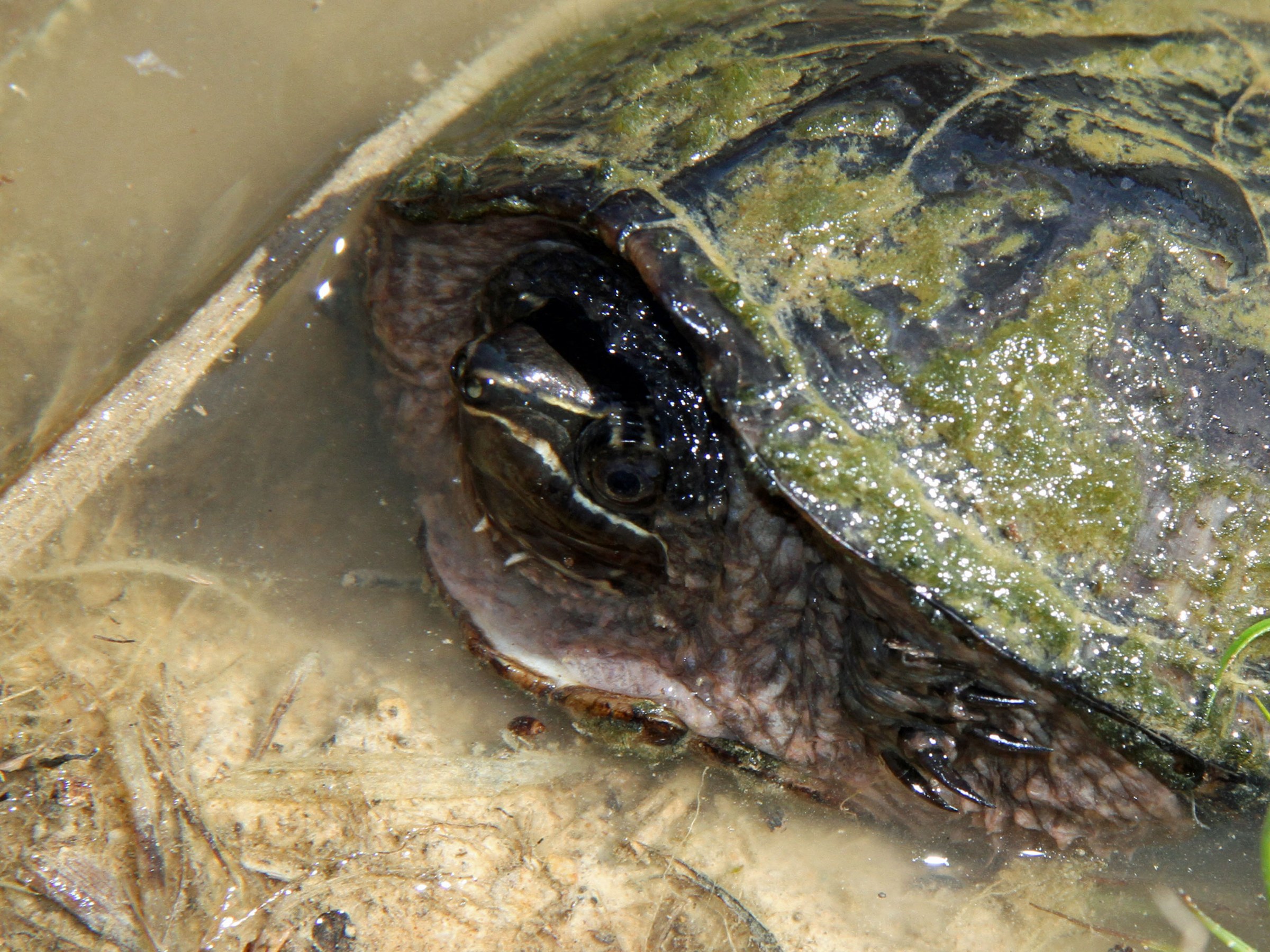
Some turtle species remain relatively small as adults, but a “dollar turtle” label does not tell you how large an animal will grow. Common musk turtles and Eastern mud turtles are small examples. A tiny hatchling, however, is not proof of a tiny adult, and a small turtle still needs substantial care.
This guide helps prospective keepers assess size and commitment. The species examples are North American; legal guidance is labelled separately for the United States and England and Wales.
What does “dollar turtle” actually tell you?
Treat the phrase as a description to question, not a species identification or an adult-size guarantee. Ask for the turtle’s common and scientific names before choosing an enclosure. “Musk turtle”, “mud turtle” and “slider” are not interchangeable care instructions.
Plan for the adult before choosing the youngster. Ask the keeper or rescue to identify the species, explain its expected adult size and provide a suitable care plan. If those answers are missing, pause the purchase rather than choosing a tank from the turtle’s current size.
Which turtles stay relatively small?
These are useful size comparisons, not a recommendation to buy either species. Figures describe shell length rather than an outstretched head-to-tail measurement; typical ranges are not guaranteed maximums.
The common or Eastern musk turtle is Sternotherus odoratus; the Eastern mud turtle is Kinosternon subrubrum. These exact names matter when researching care.
Common musk turtle
About 2–4½ inches (5–11.5 cm), in the Missouri Department of Conservation’s guide.
Eastern mud turtle
About 2¾–4 inches (7–10 cm), in Maryland’s species profile; its recorded maximum is 4⅞ inches (about 12.4 cm).
A small turtle can still be a long commitment: the Missouri guide reports a lifespan of up to 30 years for the common musk turtle. And “usually small” does not mean every individual stays below four inches, as the Eastern mud turtle’s recorded maximum shows.
Compare those with a red-eared slider. VCA’s veterinary guide to owning aquatic turtles gives adult male sliders an average shell length of 7–9 inches (18–23 cm), and females 10–12 inches (25–31 cm). A small slider is therefore a poor choice if limited adult space is your main constraint.
How do musk and mud turtle care needs differ?
Compare how the enclosure will be used, as well as its size. Chicago Exotics Animal Hospital’s common musk turtle guidance describes a strongly aquatic species and recommends underwater hiding places and access to a dry area. A musk turtle setup therefore needs usable underwater space and shelter, not just open water.
The Eastern mud turtle’s natural habitat includes shallow, slow-moving, heavily vegetated water, and it also travels onto land, particularly for nesting, according to Maryland’s profile linked above. That is natural-history evidence, not a complete captive-care plan. When discussing an Eastern mud turtle with a rescue or reptile-experienced vet, ask specifically about suitable water depth, easy access out of the water and land or nesting provision.
Neither example is automatically the easier pet. Compare complete care plans for the exact species and life stage before deciding which enclosure you can provide; do not substitute instructions for a different kind of mud turtle.
Does a small turtle need a small tank?
Shell size is only one part of enclosure planning. VCA’s housing guidance, which uses red-eared sliders as its example, covers swimming room, a dry basking area, heating, UVB lighting and clean water. It recommends planning for growth rather than repeatedly replacing an undersized tank.
Do not copy a slider’s water depth, temperatures or feeding routine to another species without checking. Ask a reptile-experienced vet to review the exact animal’s enclosure and diet. A filter also does not remove the need for water changes and cleaning.
Our practical suggestion is to price the whole setup before the animal: adult enclosure, lighting and replacement lamps, heating, filtration, food, electricity and veterinary care. Then decide who will maintain it and provide care during holidays. This is a more useful test of suitability than the purchase price.
What should a small turtle eat?
Small size does not mean simple feeding. VCA’s aquatic turtle feeding guidance stresses dietary variety and explains that feeding frequency depends on age and size. It uses the red-eared slider as its main example, so its proportions should not be copied automatically to every small species.
For common musk turtles, the Chicago Exotics guide linked above describes a mainly animal-based diet, including invertebrates and commercial turtle pellets, with some plant foods. Ask a reptile-experienced vet to help choose foods, portions, feeding frequency and any calcium or vitamin supplements for your exact turtle. One food or one generic schedule is not a complete feeding plan.
Are small turtles suitable pets for children?
Small size does not make a turtle a safe handling pet. The US Food and Drug Administration explains:
“Turtles might have Salmonella germs on their bodies even when they appear healthy and clean.”
Its advice is to keep reptiles out of homes with children under five or people with weakened immune systems. Wash hands after contact with turtles or their equipment, keep them away from food-preparation areas, and do not clean their habitats in household sinks or baths. Their water and surroundings can also carry germs.
What rules should you check before getting one?
United States: the FDA guidance linked above explains the federal restriction on selling turtles with shells under four inches long as pets. Do not assume an adult of a naturally small species is exempt because it has finished growing. Check state and local wildlife rules as well before acquiring an animal.
England and Wales: all subspecies of Trachemys scripta, including red-eared sliders, appear on the government’s invasive animal list. Keeping, selling, breeding and releasing listed animals are restricted, with specific exemptions. Long-standing owners and prospective adopters should check their circumstances with the relevant authority rather than assuming ordinary pet-sale rules apply.
Those rules do not cover every jurisdiction or every turtle species. Confirm the scientific name, lawful origin and local requirements before committing. Never release an unwanted pet into the wild; seek advice from a reptile rescue or the relevant wildlife authority about a lawful rehoming route.
What should you decide before committing?
Use this short planning checklist:
Identity: can the seller or rescue identify the species and explain its adult requirements?
Space: can you accommodate the adult enclosure, rather than just a starter tank?
Care: have you budgeted for equipment, routine maintenance and a reptile-experienced vet?
Household: is keeping a reptile compatible with everyone’s health needs?
Legality: have you checked acquisition and keeping rules where you live?
Common musk and Eastern mud turtles are examples of relatively small species, but neither is a pet that can be chosen on size alone. Choose the species whose adult needs you can meet, rather than relying on a promise that it will stay “dollar-sized”. Before getting one, obtain a dedicated care guide for its exact species and have the proposed setup and diet checked by a reptile-experienced vet.
Related reading: Do Turtles Need a Heat Lamp? Indoor Terrapin Setup.
Sources & further reading
Missouri Department of Conservation: Wild Guide: Eastern Musk Turtle (1 June 2026). Maryland Department of Natural Resources: Eastern Mud Turtle species profile (undated). Gregory Rich, Laurie Hess and Rick Axelson, VCA Animal Hospitals: Owning Aquatic Turtles (30 April 2024) and Housing Aquatic Turtles (29 April 2024). US FDA: Pet Turtles: A Source of Germs; GOV.UK: Invasive non-native (alien) animal species: rules in England and Wales (current pages checked 24 September 2026). All eight sources checked 24 September 2026 and linked beside relevant claims. Size ranges are guidance, not individual guarantees; legal rules are location-specific. Additional care sources: Erica Mede, CVT, Chicago Exotics Animal Hospital, Musk Turtle Care (Sternotherus odoratus), undated; Gregory Rich, Laurie Hess and Rick Axelson, VCA Animal Hospitals, Feeding Aquatic Turtles (29 April 2024). Both checked 24 September 2026. Maryland’s habitat description is natural-history evidence, not a captive enclosure specification.