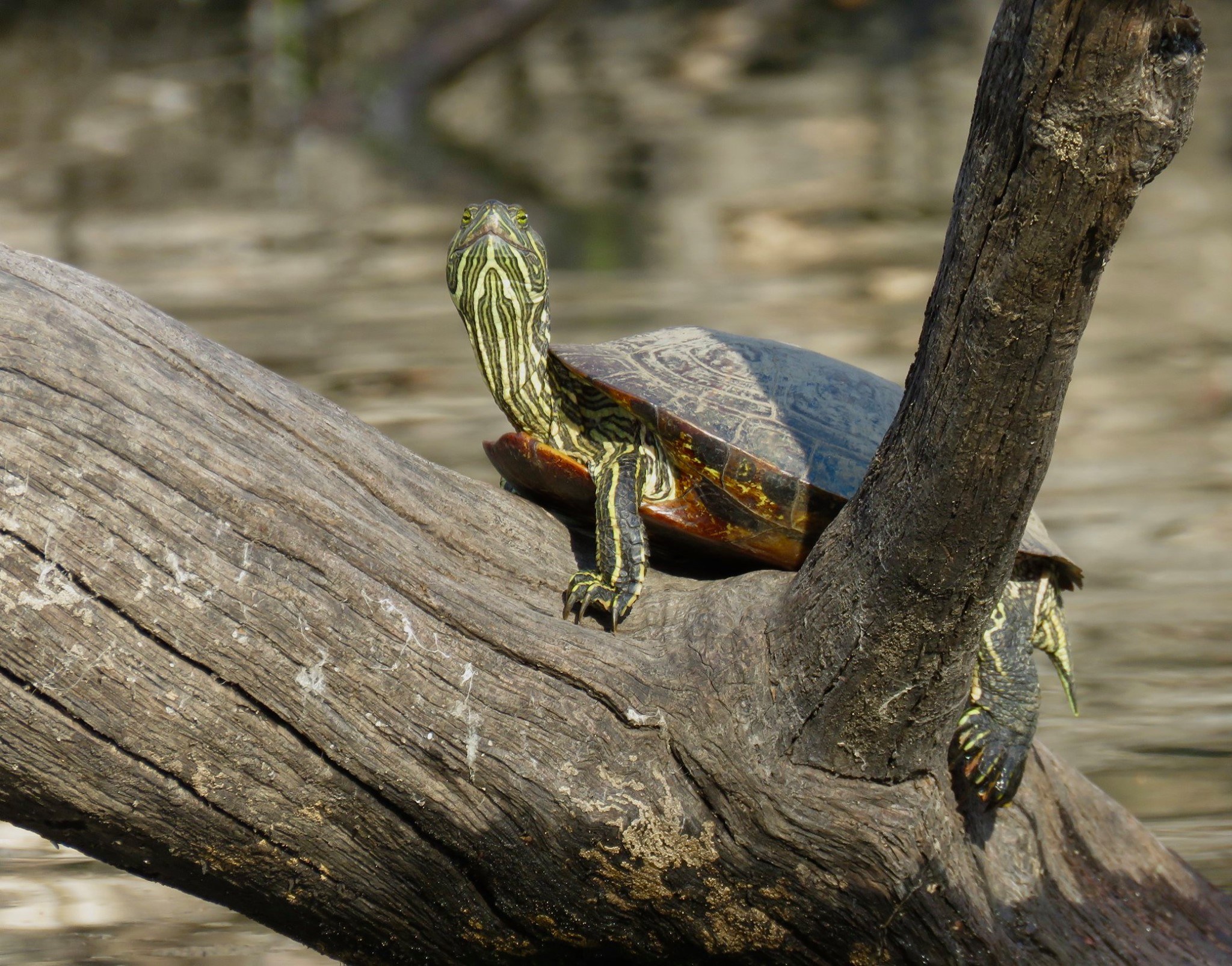
Indoor aquatic turtles such as pond terrapins need a warm, dry basking place. A heat lamp is the usual way to provide it. They also need suitable UVB lighting and correctly heated water; a heat bulb alone does not do all three jobs. This guide uses UK RSPCA pond-terrapin guidance as its main example. Box turtles, tortoises and other species need their own care plan, so confirm your animal’s identification before using any temperature figure.
What does the heat lamp do?
Terrapins use their surroundings to warm and cool their bodies. A lamp over a fully dry platform makes one warm basking area while a cooler part of the enclosure lets the animal move away from the heat. The platform must hold the whole turtle and be easy to reach from the water. A lamp that warms only a small part of the shell, or heats the entire tank evenly, does not provide that choice. The RSPCA describes this as a temperature gradient; VCA Animal Hospitals' aquatic-turtle housing guide also calls for a dry landing place, heat and UV light.
How to set up the basking area
Build the dry area first. Fit a stable platform and ramp at one end of the tank, with room for the whole animal to leave the water. Keep a cooler area available.
Mount and guard the lamp. Point a reptile heat lamp down at the dry platform. Keep the fixture out of reach of the turtle and splashing water; guard the heat source and use a thermostat. Place its probe where the animal can reach, as the RSPCA advises.
Measure, then adjust. For the pond terrapins covered by the RSPCA guide, adjust until the basking zone measures 30–35°C. Check with a digital or infrared thermometer at turtle level, and measure the cool area separately. Follow the bulb and fixture maker’s safe-distance instructions. Choose lamp output by the measured result, not a universal wattage or fixed height.
Heat and check the water separately. Use a guarded aquarium heater with a thermostat and a waterproof thermometer. The RSPCA gives about 25°C for hatchlings, decreasing to 22°C for adults in its pond-terrapin guide. Ask a reptile vet for the range suited to another species or an animal with health needs.
Keep the tank away from radiators, draughts and direct sun, which can change readings.
Test the setup before your turtle arrives
Run the complete enclosure before moving in the terrapin. Measure the basking zone and water with separate thermometers, then adjust the thermostat until the readings match the care range for that species and age.
Heat and UVB are different
A normal heat bulb supplies warmth, but it does not replace a suitable UVB source. UVB lets reptiles make vitamin D3, which helps them use calcium. Put the UVB light over the basking side with a shaded area elsewhere. For the pond terrapins in its guide, the RSPCA specifies a 7–12% UVB reptile lamp over about two-thirds of the tank and says to follow the lamp maker’s distance guidance. UVB output falls over time, so monitor and replace the lamp as its maker instructs. Glass and plastic can block useful UVB; do not put either between the UVB lamp and the animal. A combined heat-and-UVB product needs both functions checked separately.
What happens at night?
Use a timer to turn the lights off at night; the RSPCA suggests a 12-hour day and 12-hour night for its pond-terrapin setup. Keep the water within the appropriate range using the separate guarded heater. In a warm home, the basking lamp can be off overnight. If the enclosure becomes too cold, ask a reptile vet how to provide safe night-time heat without leaving a bright lamp on.
What should you check each day?
Read the basking, cool-area and water temperatures with separate thermometers. Check that the lamp, guard, thermostat probe and ramp remain secure and that the turtle can get fully dry. If readings drift, inspect the equipment and room conditions before changing a bulb. A turtle that stops eating, becomes unusually inactive, has a soft shell or otherwise seems unwell needs prompt advice from a reptile vet. Do not raise the basking temperature as a treatment on your own.
Thermostats are not always accurate, so you must check the temperatures at least once a day.
Related reading: Red-Eared Slider Water Temperature: Hatchlings, Adults and Basking; Cloudy Turtle Tank Water: What to Check and How to Fix It.
Sources & further reading
RSPCA, “How to care for a terrapin” (undated; checked 27 September 2026): https://www.rspca.org.uk/adviceandwelfare/pets/other/terrapin
VCA Animal Hospitals, Gregory Rich, Laurie Hess and Rick Axelson, “Housing Aquatic Turtles” (undated; checked 27 September 2026): https://vcahospitals.com/foster/know-your-pet/turtles-aquatic-housing