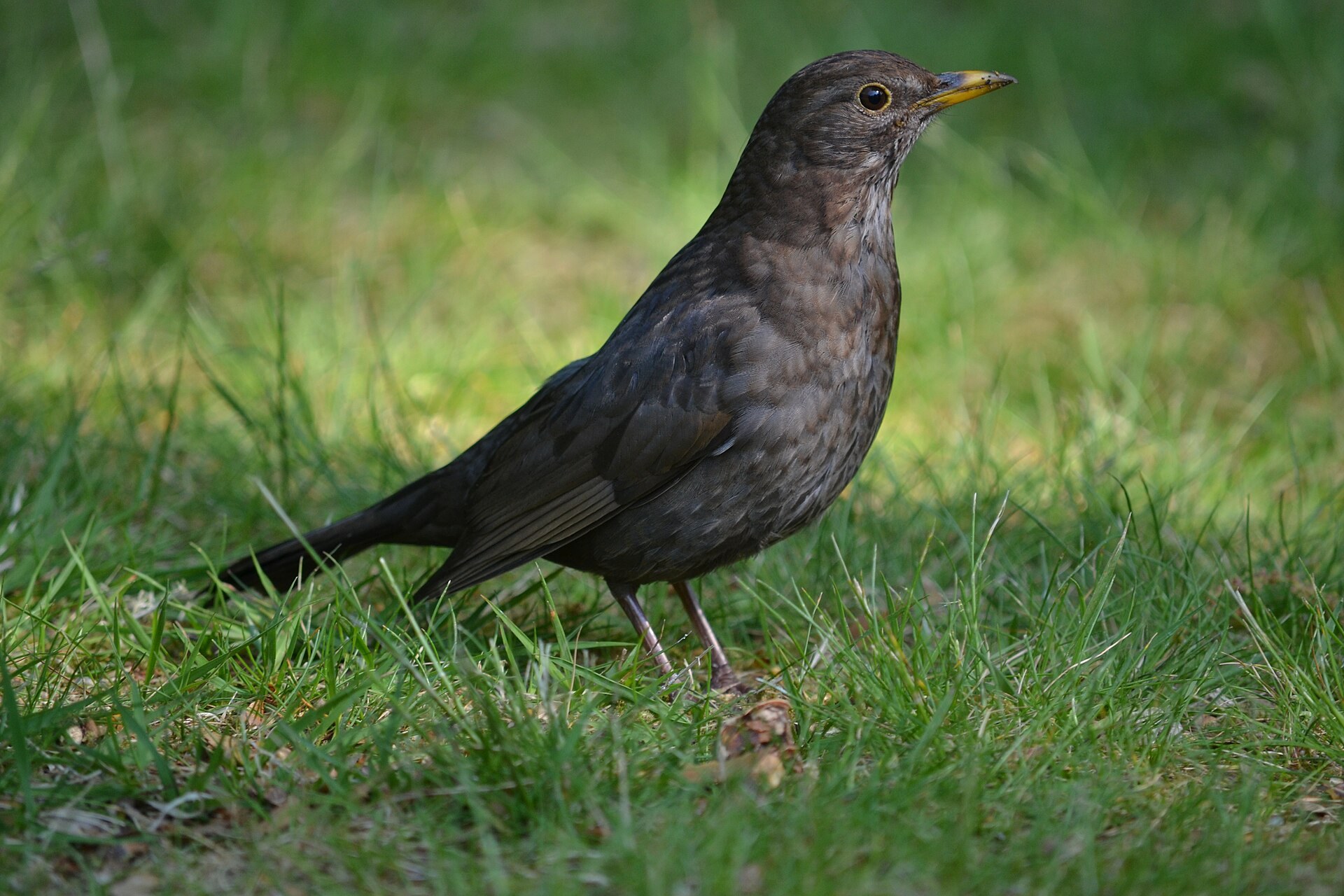
You put food out for a blackbird, and a pigeon gets there first. Can you feed one without feeding the other? There is no guaranteed pigeon-free method, but you can give the blackbird a better chance: offer a little food when it is present, watch what happens, and stop if pigeons repeatedly take it. The RSPB specifically recommends small amounts of mealworms scattered on the ground for birds including blackbirds.
Try a three-step blackbird feeding routine
Wait for the blackbird. Choose a ground patch you can watch, away from places where a cat could hide. Scatter a small amount of mealworms while the bird is visiting, rather than leaving food out all day.
Watch who gets the food. If pigeons arrive first, do not add a larger pile. Try another time or position on a different day. This is a practical test, not a promise that pigeons will stay away.
Clear and move the spot. Remove uneaten mealworms by dusk and clear old food or droppings. Change the feeding position regularly. The RSPB’s current UK guidance advises moving feeding sites weekly to limit contaminated debris.
“Our advice is that it’s safe to scatter mealworms on the ground.”
Would a pigeon guard help?
It might. The RSPB’s feeder guide says a ground-feeder guardian can help keep larger birds such as pigeons from taking the food. But check the particular guard in your garden: some openings may also keep blackbirds out. Use it only if a blackbird can enter and leave freely. Set it over a brief mealworm offering on the ground, with clear sightlines so a cat cannot wait unseen nearby. Avoid a ground tray or bird table; the RSPB’s newer disease guidance advises against flat-surfaced feeders.
If pigeons take every offering
Pause the supplementary feeding instead of putting out more. Help blackbirds forage naturally with a leaf-litter patch or bird-friendly plants, then try a small supervised offering another day if you wish.
Will changing the food keep pigeons away?
Do not rely on any particular food to select blackbirds alone. Mealworms are recommended here because the RSPB says blackbirds eat them and they can be scattered briefly on the ground, not because they repel pigeons. The RSPB advises against scattering other foods on the ground, which may remain uneaten and attract rodents. It suggests natural food sources such as crab apple, holly, ivy and leaf litter for blackbirds to explore.
Does the season change what you should offer?
Yes, in the UK. The RSPB currently advises pausing seeds and peanuts from 1 May to 31 October, while small amounts of mealworms can be offered year-round. From 1 November to 30 April, a wider range of foods can be offered in suitable hanging feeders. Keep flat-surfaced feeders out of the routine in every season, and clear mealworms scattered on the ground by dusk.
Related reading: Bird feeders for small birds only: what actually works?; Do Blackbirds Return to the Same Garden? How to Tell.
Sources & further reading
RSPB, “Our latest guidance on feeding garden birds” (24 July 2026), checked 25 September 2026: https://web-cdn.rspb.org.uk/whats-happening/news/how-to-help-garden-birds
Charlotte Ambrose, RSPB, “Ask an RSPB Expert special: All about bird feeding”, checked 25 September 2026: https://www.rspb.org.uk/birds-and-wildlife/ask-an-rspb-expert/all-about-bird-feeding
RSPB Shop, “Bird feeders buying guide”, checked 25 September 2026: https://shopping.rspb.org.uk/INTERSHOP/web/WFS/RSPB-rspbUK-Site/en_GB/-/GBP/ViewContent-Start?PageletEntryPointID=birdfeeders