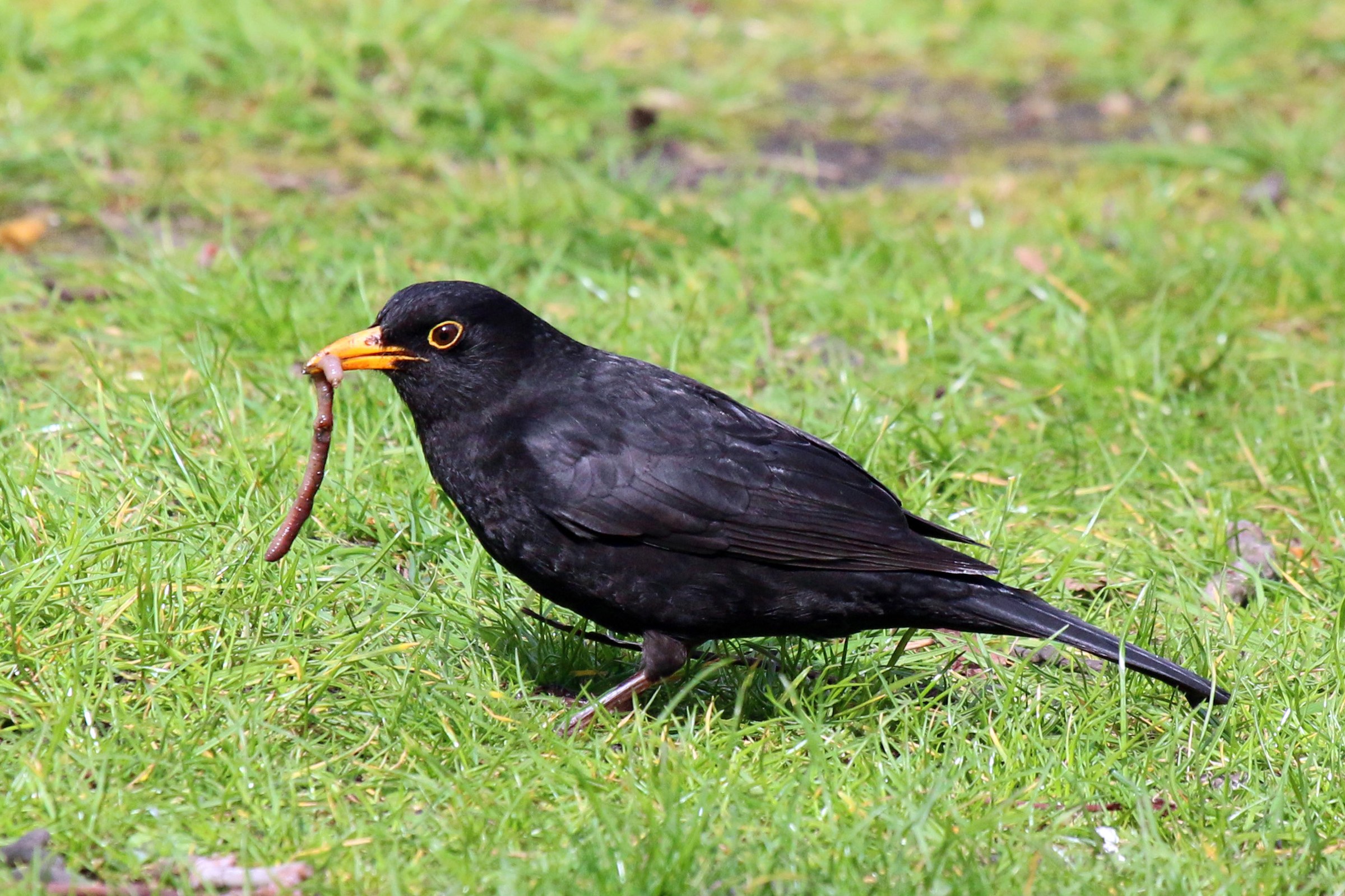
A ground feeder is a shallow tray or platform used to offer food at, or just above, ground level. The same phrase can describe birds that search for food on the ground. Those two meanings matter: a blackbird can be a ground-feeding bird without needing a feeding tray.
Before using a feeding tray: current UK guidance advises avoiding flat feeding surfaces because contaminated food can collect there. The advice also changes which foods to offer by season. Read the RSPB's current guidance, checked 23 September 2026.
“Choose hanging feeders over flat feeders.”
Ground feeder, bird table or hanging feeder: what is the difference?
A ground feeder usually has a low rim around a tray, with a solid or mesh base. It sits directly on the ground or on short legs. Frames may be wood, metal or plastic; some have a removable tray, roof or surrounding cage.
Equipment | How to recognise it |
|---|---|
Ground tray | An open feeding surface at or just above ground level. |
Raised bird table | A feeding platform on a taller support, sometimes with a roof. |
Hanging tube or mesh feeder | Food is held inside a container, accessed through ports or mesh. |
Check the feeding surface, not just the name. A hanging feeder can still have an open tray underneath. The BTO's advice on flat surfaces includes ground stations and troughs on hanging feeders.
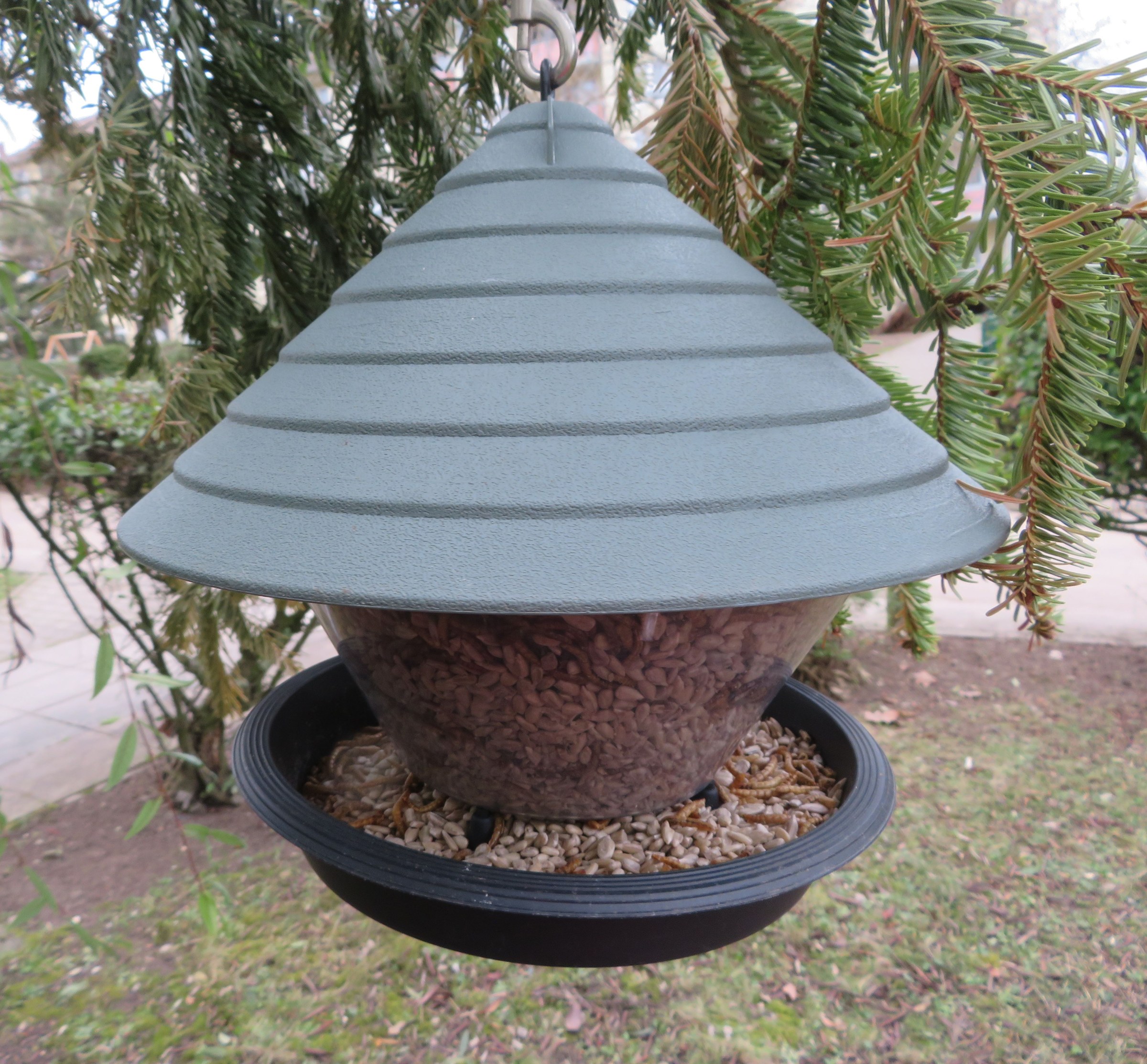

What should you do if you already own a ground feeder?
To follow current UK advice, stop using the flat tray for bird food. Empty it, clean it and store it while you decide how to support birds instead. Dispose of old food where wildlife cannot reach it, following BTO hygiene guidance.
A roof may shelter food, mesh may drain rainwater and a cage may restrict access. None is an established exemption from the advice to avoid flat feeding surfaces. Our practical recommendation is to change the feeding arrangement rather than assume an accessory removes the risk. The RSPB's feeder guide also advises stopping use of bird tables and other flat surfaces.
Which garden birds feed on the ground?
Watch the ground as well as the branches. Familiar UK examples include:
Blackbirds: often hop across lawns and turn over leaves. Adult males have black plumage, an orange-yellow bill and a yellow eye-ring; females are brown. Identification follows the RSPB blackbird guide.
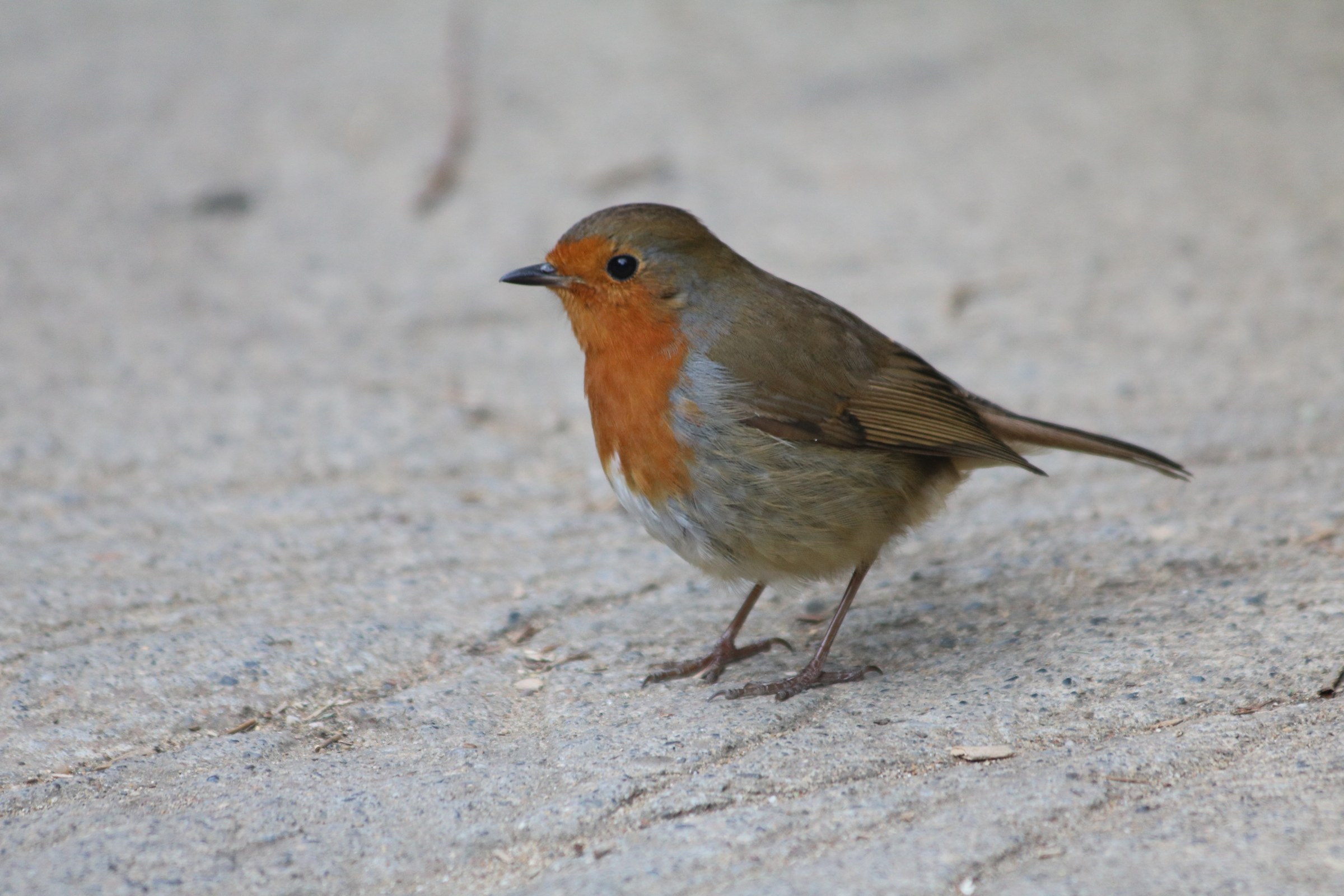
Robins: adults have an orange-red face and breast, while juveniles are mottled brown. The RSPB robin guide notes that they may follow gardeners to catch unearthed worms and grubs.
Dunnocks: small, grey-and-brown birds that can easily be overlooked as they move close to cover. Take care before assuming every small brown visitor is a sparrow.

Seeing a bird on the ground tells you where it is looking for food, not that it needs a permanent pile of food there. This article concerns UK garden birds; feeding hedgehogs, pets or livestock needs separate, species-specific advice.
Why has advice about feeding trays changed?
Shared feeding places can help disease pass between birds. Trichomonosis, a disease caused by a parasite, is a particular concern for finches. The RSPB explains that infected saliva can contaminate food and water. A feeder that looks tidy is not necessarily free of infection.
The BTO's evidence review summary explains why seasonal changes and feeder design both matter. Precautions can reduce risk, but cannot remove it entirely. The advice may evolve as research continues.
How can you help without a feeding tray?
Make room for natural food
Leave some fallen leaves beneath shrubs, retain suitable seed heads and put a small log or stick pile in a sheltered corner. These create places for birds to search for food. Where space allows, plants such as ivy and crab apple can add food and cover. Choose plants to suit your garden and check their suitability around children and pets. The RSPB's natural-food planting guide explains these options.
What food can you offer, and how much?
There is no single scoop size for every garden. Start with a small amount, observe what is eaten and reduce the next portion if food remains. The RSPB's answers on feeding in moderation give these limits:
Food | When and how |
|---|---|
Mealworms | Small amounts year-round, in a suitable mealworm feeder or lightly scattered. Eat or clear by dusk that day. |
Suitable suet or fat balls | Year-round in an appropriate hanging feeder. No more than seven days uneaten; remove sooner if spoiled. |
Seeds and peanuts | 1 November–30 April in suitable feeders. Offer only what is eaten within one or two days. Pause from 1 May–31 October. |
Those are upper limits, not reasons to leave deteriorating food outside. The RSPB's practical advice recommends soaking dried mealworms to help chicks eat them, warns that some fat products spoil in heat, and says to avoid salted food and nylon food bags. For warm weather, check the suitability stated on the suet product.
Where should you put food for birds?
For hanging feeders, the RSPB recommends positioning them beyond cats' reach, roughly a couple of metres from thick cover, and away from overhead roosts. Move feeders weekly and clear the ground beneath them.
For a small scattering of mealworms, choose a patch where you can see and retrieve leftovers. As a practical precaution, avoid putting food beside a hiding place used by cats; if cats regularly hunt there, choose another way to help birds, such as planting for natural food. Do not assume that raising a tray slightly makes the site secure.
Will ground feeding attract rats or squirrels?
It can: accessible food may be eaten by animals other than the birds you intended to feed. Clear leftovers and spillages, and keep stored food in a rodent-resistant container. These are part of the RSPB's advice on unwanted visitors. If rats repeatedly take the food, our practical recommendation is to pause that feeding arrangement and remove the accessible supply.
For squirrels at hanging feeders, a correctly fitted baffle or suitable guardian can limit access. Position matters: nearby branches and fences can provide another route. The RSPB explains the different squirrel-deterrent designs. These measures are not a guarantee, do not solve disease transmission, and should not be treated as proof that a ground tray is safe from cats.
Cleaning and signs of disease
Clean and disinfect feeding equipment weekly, using a suitable product according to its instructions. Rinse it thoroughly and let it dry before reuse. Keep dedicated brushes outside and away from food preparation; wear gloves and wash your hands afterwards. Clear waste from beneath feeders. These steps follow BTO hygiene guidance.
If you suspect disease, the BTO advises stopping feeding for at least two weeks after the last unwell bird was seen, and leaving bird baths empty until no further sick or dead birds are seen. Follow its sick-bird guidance and reporting information before restarting.
A simple garden observation checklist
Before buying equipment, try this short observation exercise. It is an editorial suggestion, not a scientific survey:
Watch for ten minutes. Note which birds use the lawn, leaf litter, shrubs and any existing feeders.
Record behaviour. Are they turning leaves, searching grass or waiting for another bird to move? Write “unidentified” when you are unsure of a species.
Choose one improvement. For example, retain a patch of leaf litter or add a suitable plant instead of another feeding station.
Look again on another day. Record what you see without assuming your change caused it. Weather, season and nearby activity can all differ.
A useful starting point is the habitat you already have: understand how birds use it, then make a small, maintainable improvement.
Two common ground-feeding questions
Can I scatter bird food directly on the ground?
The RSPB's specific ground-feeding answer allows a small scattering of mealworms, cleared by dusk. It advises against scattering other foods because they can remain longer and attract rodents. This is not a general recommendation to spread seed or kitchen scraps.
Do ground-feeding birds need a feeding tray?
No. “Ground-feeding” describes where a bird forages. You can help by providing habitat and natural food: see the planting and leaf-litter suggestions above. A tray is not a requirement for a bird-friendly garden.
Related reading: How to Attract Birds to a Ground Feeder Safely; How to attract birds to your garden: five practical tips.
Sources and editorial notes
UK guidance checked on 23 September 2026. Originally published 1 January 2021; substantially revised for current feeding guidance and UK scope. No organisation named here has reviewed or endorsed this article.
RSPB: Our latest guidance on feeding garden birds — 24 July 2026.
BTO: Seasonal feeding frequently asked questions — guidance introduced April 2026; page update date not stated.
BTO: Good hygiene practice — page date not stated.
RSPB: The science of bird feeding — 31 March 2026.
RSPB: Top garden plants to grow for birds — 13 January 2026.
Additional practical guidance: Ask an RSPB Expert: All about bird feeding (Charlotte Ambrose; page date not stated), plus the RSPB feeder and squirrel-deterrent guides named above. Photograph sources and licences appear with each image.