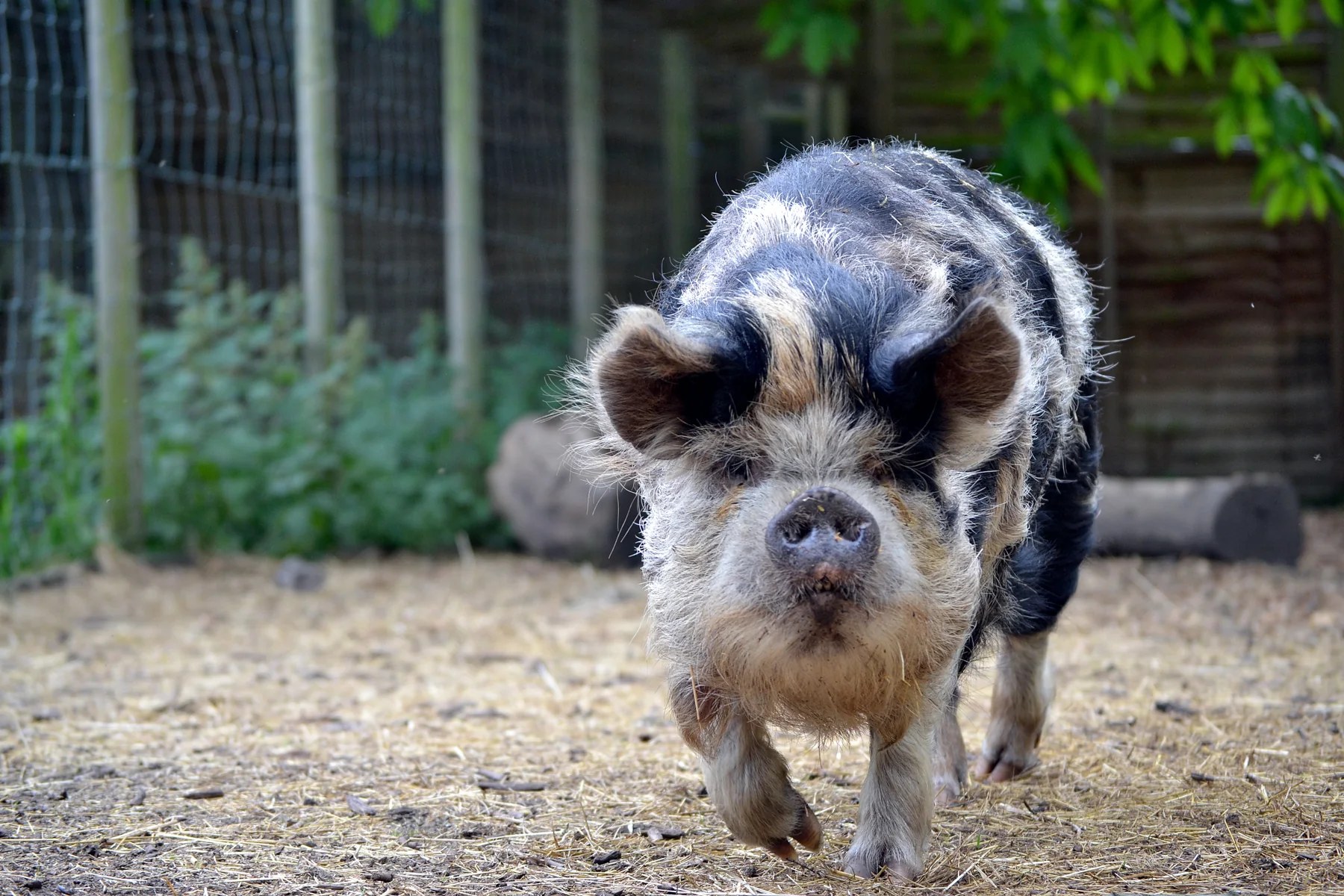
Kunekune pigs are grazers: good-quality pasture can supply much, and sometimes all, of their food while it is growing. But grass is not automatically a complete ration. When grazing is poor, or a pig needs more than the pasture provides, add a suitable pig feed and adjust it to the animal’s age, growth and body condition. Fresh, clean water must always be available. This is the approach in the British Kunekune Pig Society’s feeding guidance.
Can a Kunekune live on grass alone?
Sometimes, if the pasture is plentiful and nutritious enough. The breed society says Kunekunes being reared for meat can grow on good pasture without supplementary feed while the grass is growing. That does not mean every lawn, paddock or season will provide enough. Look at the grass available and the pig’s condition, not just whether it appears keen to eat. If grazing is sparse or growth or condition is poor, discuss an appropriate supplement with the breeder, a pig-experienced vet or a livestock feed supplier.
The same guidance describes pig pellets or nuts, with feeds suited to different life stages. Young pigs need particular care with nutrition. The society’s husbandry guide also notes that nursing sows can need substantially more food. Do not apply an adult grazing-only plan to piglets or nursing sows: ask a pig-experienced vet or breeder for a suitable feeding plan. Introduce any change of feed gradually, starting with what the breeder has been feeding.
What if the pasture runs out?
When grass is sparse or unavailable, use suitable supplementary pig feed rather than assuming a bare paddock will sustain the pigs. The breed society suggests grass nuts or soaked alfalfa nuts as grass-based feed options, and hay or high-dry-matter haylage alongside feed. Match the amount and type to each pig’s condition and stage of life, and introduce changes gradually. These are practical options, not a fixed winter ration for every Kunekune.
Daily feeding check: Is there enough usable pasture? Is each pig maintaining a healthy condition? Is its feed appropriate for its age and needs? Is clean drinking water continuously available? Adjust the plan when the grass or the pig changes.
How much feed should you give?
There is no safe one-size-fits-all scoop count. The breed society publishes rough supplementary feed amounts for pigs being raised for meat, but these are not a fixed prescription for every Kunekune, especially a companion pig. Pasture quality, growth and body condition all matter. Measure what you give, review the pig’s condition regularly and ask a pig-experienced vet if it is losing condition or becoming overweight.
“Some pigs will do better than others on the same amount of food and the amount given should be adjusted accordingly.”
Can they eat fruit and vegetables?
Yes, as additions to a suitable feeding plan. The breed society mentions carrots, apples, pears and cabbage, while warning that some treats can be fattening. Keep them modest so they do not displace the food the pig needs. In the UK, source produce carefully: joint government guidance says fruit and vegetables grown outside the kitchen may be fed if they have never entered a kitchen and have not contacted material of animal origin.
What must you never feed in the UK?
Do not feed kitchen scraps or catering waste to pigs, including pet Kunekunes. The ban includes food from vegetarian kitchens because it could be contaminated with animal products. A leftover apple from your kitchen is therefore different from an apple picked outside and kept out of the kitchen. If the origin or handling of a food is uncertain, leave it out and use suitable pig feed instead. See the UK government’s explanation of the rule.
For a simple starting point, think good pasture, suitable supplementary pig feed when needed, modest lawful produce and constant clean water. Then adapt the amounts to the pig in front of you.
Related reading: Can Goats and Pigs Live Together? Housing and Feeding; How Often Do Mini Pigs Poop? Toileting and Warning Signs.
Sources & further reading
British Kunekune Pig Society, “Raising for meat” (undated; feeding and water sections), checked 25 September 2026: https://www.britishkunekunesociety.org.uk/raising-for-meat/
Animal and Plant Health Agency, Defra, Welsh Government and Scottish Government, “Pig keepers warned not to feed kitchen scraps to pigs due to African swine fever risk” (18 December 2017), checked 25 September 2026: https://www.gov.uk/government/news/pig-keepers-warned-not-to-feed-kitchen-scraps-to-pigs-due-to-african-swine-fever-risk
Defra, Code of practice for the welfare of pigs (England only; 2023), checked 25 September 2026: https://www.gov.uk/government/publications/pigs-on-farm-welfare/caring-for-pigs
British Kunekune Pig Society, “Pig Husbandry” (undated; lactating sow and piglet feeding section), checked 25 September 2026: https://www.britishkunekunesociety.org.uk/pig-husbandry/