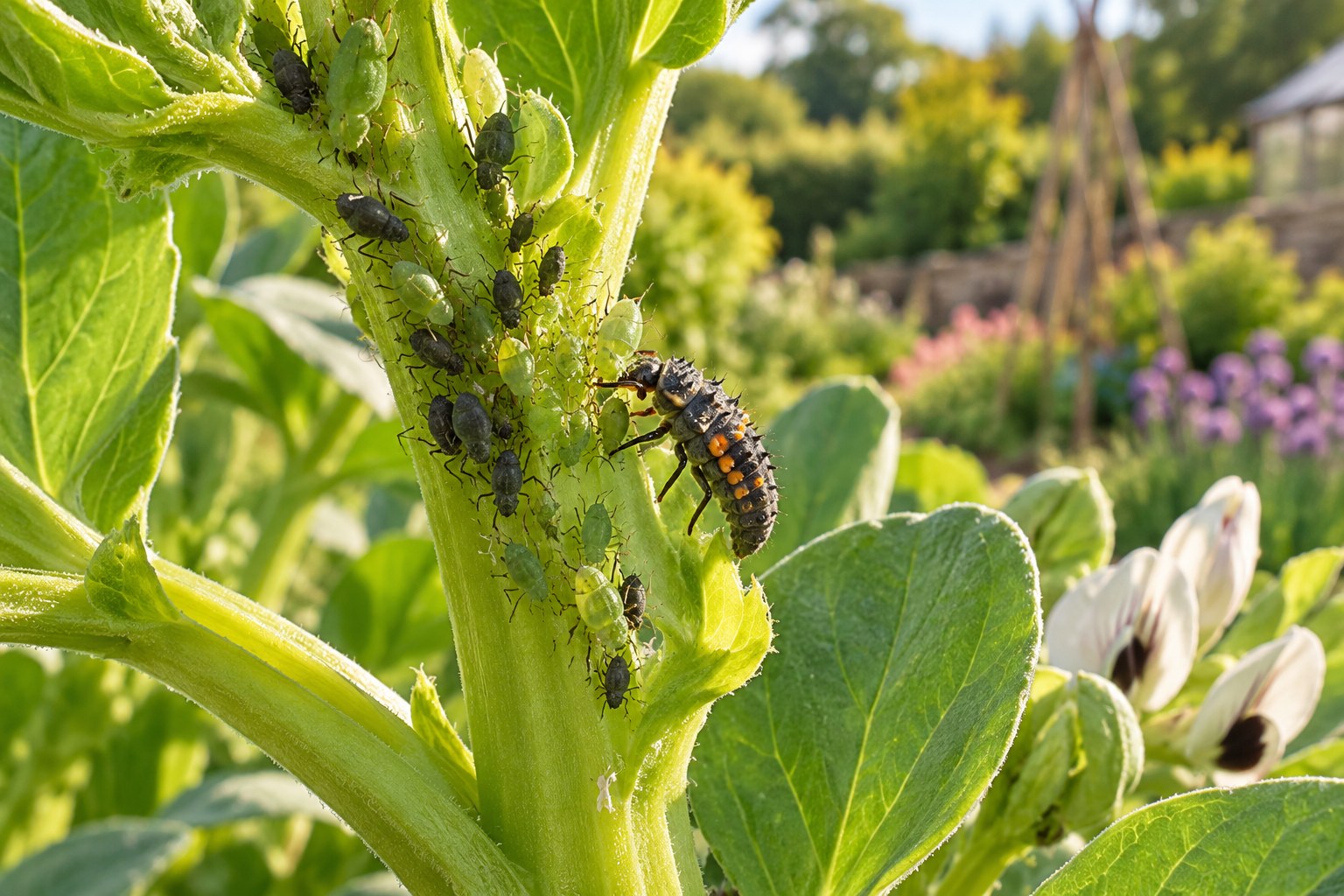
Ladybirds, hoverfly larvae and lacewing larvae are aphid hunters you may find on a UK garden plant. Tiny parasitoid wasps also help, although they do not eat aphids in the same way. Before you clear a cluster of greenfly or blackfly, look for the less familiar young predators among them. They may already be at work.
Which hunters should you look for first?
Ladybirds: many species eat aphids both as adults and as larvae. The larva looks nothing like the familiar rounded beetle: it is long, dark and often marked with orange or pale patches. Some have a bristly or spiny outline. A dark, moving larva on an aphid-covered shoot is worth a closer look before you brush it off. Not every ladybird species eats aphids, and spots alone are not a reliable way to identify one. The RHS guide to aphid predators describes this variation.
Hoverflies: the striped adult visits flowers for nectar and pollen. It is the young of some species, not the flying adult, that eat aphids. Look among the colony for a small, legless, tapered larva, often greenish or almost see-through. It can be easy to miss against a stem. Roughly four in ten British hoverfly species have aphid-eating larvae, so a hoverfly in the garden is encouraging but does not prove that its young are feeding on your plant.
Lacewings: an adult green lacewing has delicate, net-like wings. Its larva is a small, active hunter with curved jaws. Some larvae even carry the empty skins of their prey on their backs, which can make them look like bits of debris. Adult lacewing diets vary by species; do not assume every green adult is eating aphids.
What are the pale, swollen aphids?
If one aphid looks unusually round, papery and tan or brown, it may be an aphid “mummy”. A tiny parasitoid wasp lays an egg in an aphid; its developing young feed inside, eventually leaving the empty, swollen shell. The wasp is too small for most gardeners to notice, but the mummy can reveal that it has been there. This is a different kind of natural control from a larva hunting openly along a stem. A few pale aphids are a clue, not a promise that the whole colony will disappear.
Check the growing tip before acting
Turn over a few affected leaves and inspect the soft new growth. If you find predator larvae or swollen aphid mummies, leave that part of the plant for now and check it again over the next several days. Keep an eye on the plant's new leaves as well as the aphid count.
Should you leave the aphids alone?
Often, yes, if the plant is growing well and the aphids are confined to a few shoots. Aphids appear early in the season and their predators may arrive later. Leaving a modest colony gives those predators food. The balance is easiest to judge from the plant: fresh leaves and buds that are opening normally are reassuring; badly distorted new growth or a spreading colony calls for a closer check. The RHS notes that predators often reduce colonies by early to mid-summer, but timing varies with the garden and season.
“Aphids are a key part of many food chains and a healthy garden ecosystem.”
If a valued young plant is struggling, you do not have to wait indefinitely. Check first for larvae, then remove aphids by hand from the worst affected shoot rather than treating every plant. This follows the Wildlife Trusts' chemical-free gardening advice. Recheck the new growth afterwards. This lets you respond to damage while leaving other colonies available to the insects that use them.
How can you make the garden better for aphid hunters?
Give adult hoverflies flowers to visit as well as aphids for their young. Open, accessible flowers such as yarrow, dill or alyssum can fit among vegetables or in a small border. The Wildlife Trusts' insect-friendly gardening guide lists these as plants visited by hoverflies and also describes the value of ladybirds and lacewings. A mix of flowers across the growing season is more useful than one brief flush.
Avoid broad insecticide use around an aphid colony: it can harm the hunters too. Leave some flowering and sheltered areas rather than clearing every stem at once. You cannot guarantee a particular predator will settle in, but you can make the garden more hospitable and give it a chance to catch up. If you have only a patio or a few containers, our guide to wildlife-friendly plants for pots and small gardens offers planting ideas that fit the space.
Sources & further reading
- Royal Horticultural Society, RHS Advice Team. “Aphid predators”, undated. Checked 30 September 2026 — Read source
- The Wildlife Trusts. “Insect-friendly gardening”, undated. Checked 30 September 2026 — Read source
- The Wildlife Trusts. “Chemical-free organic gardening”, undated. Checked 30 September 2026 — Read source