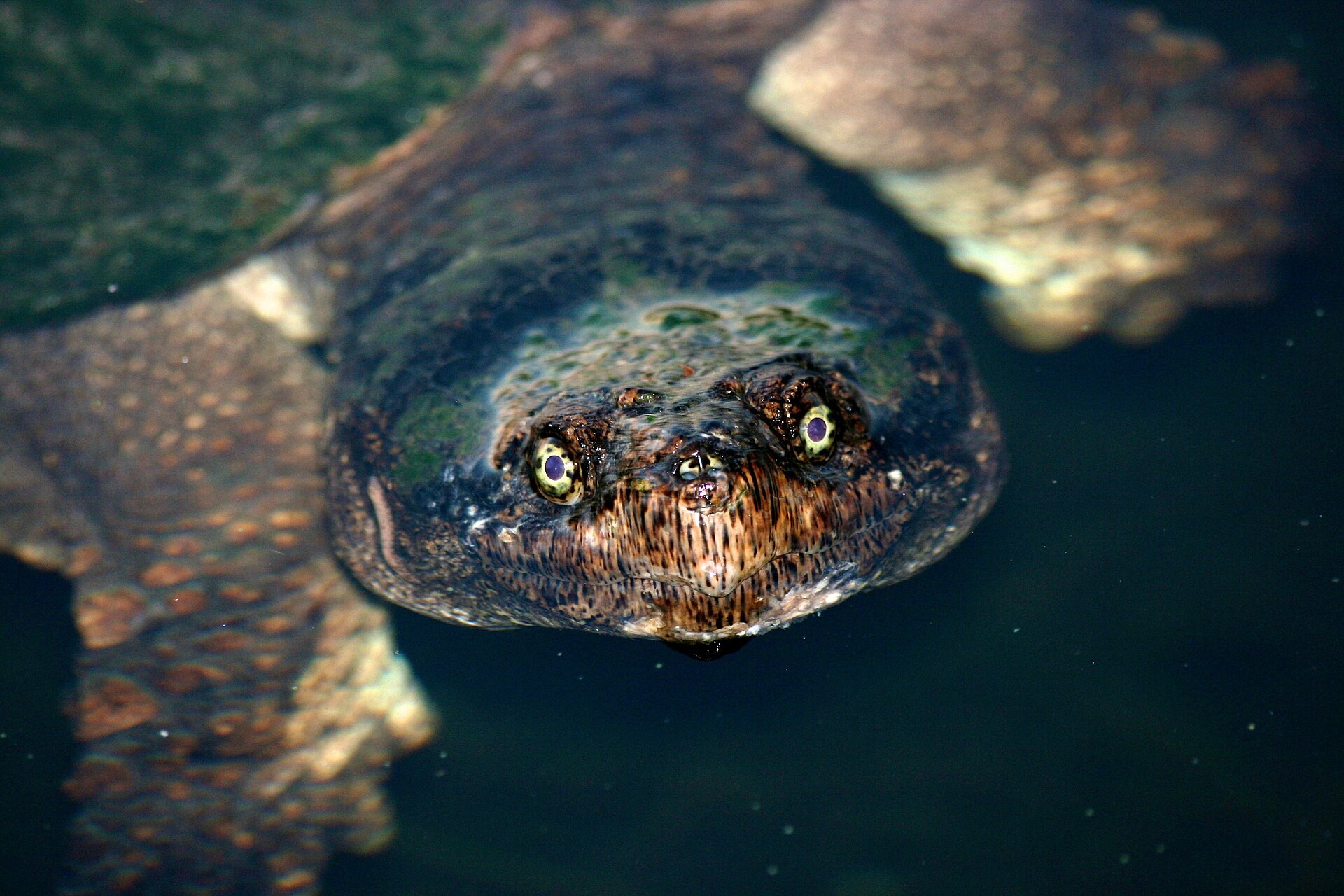
Yes, turtles can drown. They breathe air, even when they spend much of their lives swimming. A turtle that cannot reach the surface may run out of air. A pet aquatic turtle can become trapped in its tank; a sea turtle can be held underwater by fishing gear. Both need access to air.
If your pet turtle is underwater and unresponsive: Remove it from the water, place it somewhere secure and dry, and call a reptile vet immediately. Tell the vet how you found it and follow their instructions.
How can a turtle drown if it can swim?
Swimming does not give a turtle gills. It must still be able to reach air. In a pet enclosure, look for a route to the surface that is blocked by equipment, décor or a poorly fitted platform. A weak or ill animal also needs urgent veterinary assessment; do not assume it can manage a setup it previously used without difficulty. The RSPCA’s slider terrapin guidance calls for swimming space, a dry basking area with a ramp and prompt veterinary advice about health concerns.
Wild sea turtles face a different hazard: NOAA Fisheries explains that turtles caught in trawl nets may drown because the nets prevent them from surfacing.
“Sea turtles need to surface to breathe.”
— NOAA Fisheries, Gearing Up
Does time underwater tell me a turtle is drowning?
No single time limit works for every turtle. For sea turtles, NOAA Fisheries says active animals surface every few minutes, while resting animals can remain underwater for as long as two hours. These are sea-turtle observations, not a safe breath-hold test for a pet slider. Watch whether your own turtle can reach the surface and is moving normally. If it is trapped, weak or unresponsive, get veterinary help.
How can I make an aquatic turtle’s tank safer?
For pet slider terrapins, provide enough clean water to swim and a dry basking place the turtle can reach by a secure ramp, as the RSPCA advises. Check the route from the water to the surface and basking area after moving rocks, hides, filters or platforms. Remove gaps where the turtle could become wedged. Watch how your own turtle swims and climbs; seek reptile-vet advice if it struggles or its behaviour changes. Simply making all aquatic turtle water shallow is not a substitute for a suitable species-specific enclosure.
What if my pet turtle is motionless underwater?
Take it out promptly and contact a reptile vet as an emergency. Keep it out of the water while arranging care and describe any entrapment, time found submerged and changes in movement. Do not pump its legs, pull its neck or try other home resuscitation manoeuvres unless a reptile vet directs you. A motionless turtle needs professional assessment; do not decide it is dead from appearance alone. The RSPCA recommends urgent veterinary contact for concerns about a terrapin’s health.
Related reading: How Long Do Red-Eared Sliders Sleep? What Is Normal; Red-Eared Slider Water Temperature: Hatchlings, Adults and Basking.
Sources & further reading
RSPCA, “How to care for a terrapin” (date not stated; checked 25 September 2026): https://www.rspca.org.uk/adviceandwelfare/pets/other/terrapin
NOAA Fisheries, “Gearing Up: Turtle Excluder Devices Strengthen Fisheries and Help Recover Sea Turtle Populations” (26 November 2025; checked 25 September 2026): https://www.fisheries.noaa.gov/feature-story/gearing-turtle-excluder-devices-strengthen-fisheries-and-help-recover-sea-turtle
NOAA Fisheries, “Fun Facts About Terrific Sea Turtles” (checked 25 September 2026): https://www.fisheries.noaa.gov/national/outreach-and-education/fun-facts-about-terrific-sea-turtles