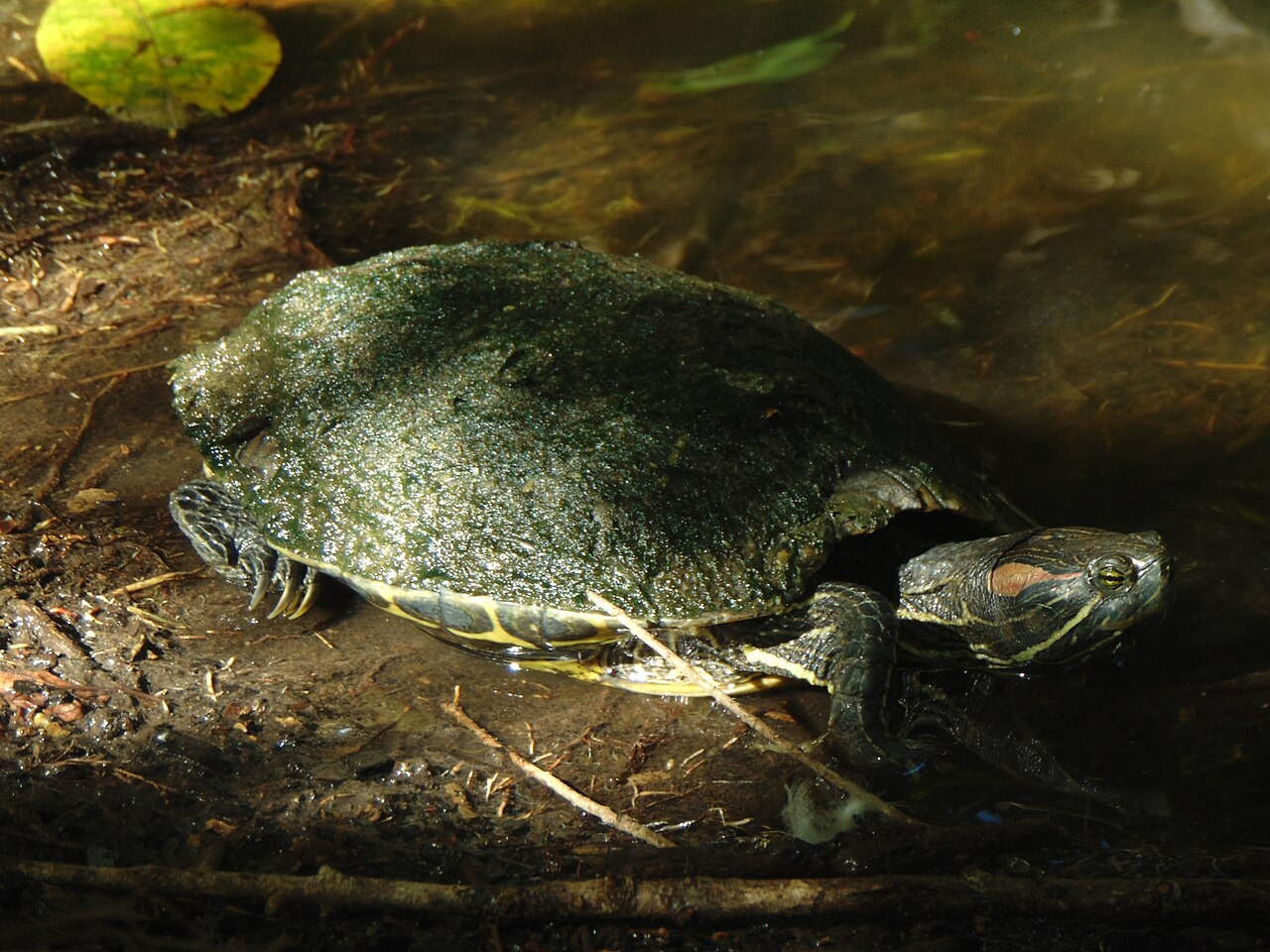
Red-eared sliders usually rest at night, but there is no verified nightly hour target such as four to seven hours. If yours stays still for much of the dark period, look at what happens when its lights come on: does it swim and bask as usual, and is its appetite normal? Those changes tell you more than a stopwatch.
If extra rest is new: Note when it began, measure the water temperature and check that daytime lights turn off at night. Watch for poor appetite, altered swimming or breathing trouble. Contact a reptile-experienced vet if the change persists or another sign appears.
Where do red-eared sliders sleep?
A still slider in the water can look alarming if you have only seen it active in daylight. The Missouri Department of Conservation records two nighttime resting positions in the wild:
“At night, red-eared sliders will sleep while resting on the bottom or floating on the water's surface.”
— Missouri Department of Conservation, Red-Eared Slider
Resting in water can therefore be normal, but one motionless moment does not prove a pet is asleep or well. A dry basking area should still be available. Watch its daytime activity over several days so you recognise a real change in its usual pattern.
What helps a pet slider rest normally?
Give it a clear day and night. Chicago Exotics Animal Hospital advises a light cycle of about 12 hours of daylight and 12 hours of darkness for red-eared sliders. Keep the daytime UVB and basking area appropriate for the turtle, but let the enclosure become dark at night. Twelve hours of darkness is an enclosure routine, not a claim that the turtle sleeps for twelve hours.
Also check the basics that affect its overall behaviour: usable swimming water, an easily reached dry basking place, filtration and measured water temperature. The veterinary care guide covers these habitat needs. If a heater or filter fails, correct the setup; do not infer a specific sleep disorder from one unusual evening.
When should you worry about extra rest?
A sudden change matters more than a guessed sleep total. VCA Animal Hospitals’ veterinary guide lists lethargy and loss of appetite as broad illness signs in aquatic turtles. Nasal discharge, wheezing, open-mouth breathing or floating tilted to one side are particular warning signs that call for prompt veterinary assessment. They may have several causes; a keeper cannot diagnose the problem by counting sleeping hours.
If your turtle is still, but later swims, basks and eats as it normally does, keep observing its usual pattern. If it remains unusually inactive, stops eating or shows breathing trouble, arrange a reptile vet assessment promptly. Do not dismiss a marked change as normal winter slowing without veterinary advice.
Related reading: Red-Eared Slider Water Temperature: Hatchlings, Adults and Basking; Can Turtles Drown? Risks, Prevention and What to Do.
Sources & further reading
Missouri Department of Conservation, “Red-Eared Slider”, checked 25 September 2026: https://mdc.mo.gov/discover-nature/field-guide/red-eared-slider
Chicago Exotics Animal Hospital, “Red Eared Slider Care”, checked 25 September 2026: https://www.exoticpetvet.com/red-eared-slider-care.html
VCA Animal Hospitals, “Common Diseases of Aquatic Turtles”, by Gregory Rich DVM, Laurie Hess DVM and Rick Axelson DVM, checked 25 September 2026: https://vcahospitals.com/vitality/know-your-pet/turtles-aquatic-diseases