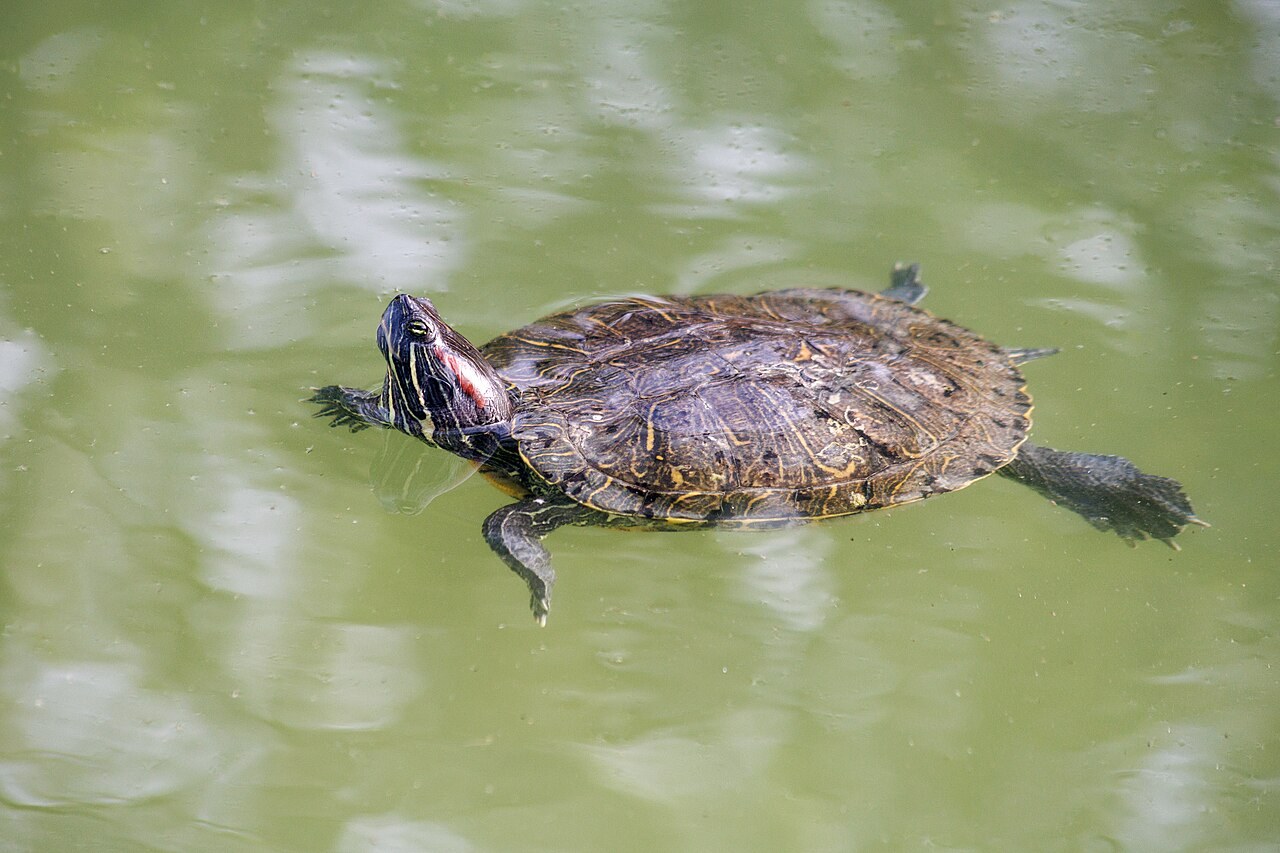
For an indoor red-eared slider, aim for water around 25°C (77°F) for a hatchling, reducing to about 22°C (72°F) for an adult. The dry basking area is warmer: 30–35°C (86–95°F). These are the RSPCA’s recommendations for pond sliders, a group that includes red-eared sliders. Measure the water and basking surface separately; a heater’s dial does not tell you the actual temperature.
Why is the basking area warmer than the water?
Sliders use their surroundings to warm and cool themselves. They need swimming water and a fully dry platform under a guarded heat lamp, with a cooler place to move to. Heating all the water to the basking temperature removes that choice. Keep the basking platform large enough to support the whole turtle, with easy access from the water.
How do you check the temperatures?
Put a waterproof thermometer in the swimming water and read it where the turtle spends time, away from direct contact with the heater.
Use a digital or infrared thermometer at turtle level on the dry basking area after the lamp has warmed it. Check the cooler area too.
Compare the readings with the age-appropriate water setting and the basking range above. Check daily, especially after changing equipment or moving the tank.
Thermostats are not always accurate, so you must check the temperatures at least once a day.
What if the water is too cool or too warm?
First confirm the water reading with the waterproof thermometer. The RSPCA advises a guarded aquarium heater with an inbuilt thermostat and a heat lamp over the dry area. Check the heater and probe position, then adjust the control and remeasure the water rather than trusting the number on the dial. Keep the tank away from draughts, radiators and direct sun, which can change the temperature.
Before bringing a slider home
Set up the tank, heater, lighting and filter two weeks before the turtle arrives, as the RSPCA advises. Use that time to confirm the water and basking temperatures with separate thermometers and to spot any heater or room-temperature problem.
What if your slider is unwell?
Do not assume an inactive or non-feeding turtle is simply too cold. Check and record the water and basking temperatures, then contact a reptile vet if the turtle is unusually inactive, stops eating or shows other signs of illness. The MSD Veterinary Manual describes several reptile diseases and notes that inadequate temperature control can contribute to poor health. A vet can advise on care for an ill turtle; the normal tank settings are not a treatment plan.
What about an outdoor pond?
These figures describe a managed enclosure. The RSPCA says adult sliders can be kept in a secure outdoor pond only with appropriate heating and lighting. Outdoor water changes with the weather, so measure the actual conditions and seek species-specific advice before moving a turtle outside.
Related reading: How Long Do Red-Eared Sliders Sleep? What Is Normal; Do Turtles Need a Heat Lamp? Indoor Terrapin Setup; Cloudy Turtle Tank Water: What to Check and How to Fix It.
Sources & further reading
RSPCA, “Caring for a terrapin”, current online guidance (checked 25 September 2026): https://www.rspca.org.uk/adviceandwelfare/pets/other/terrapin
Stephen J. Divers, MSD Veterinary Manual, “Disorders and Diseases of Reptiles”, full review August 2020, updated June 2026 (checked 25 September 2026): https://www.msdvetmanual.com/all-other-pets/reptiles/disorders-and-diseases-of-reptiles