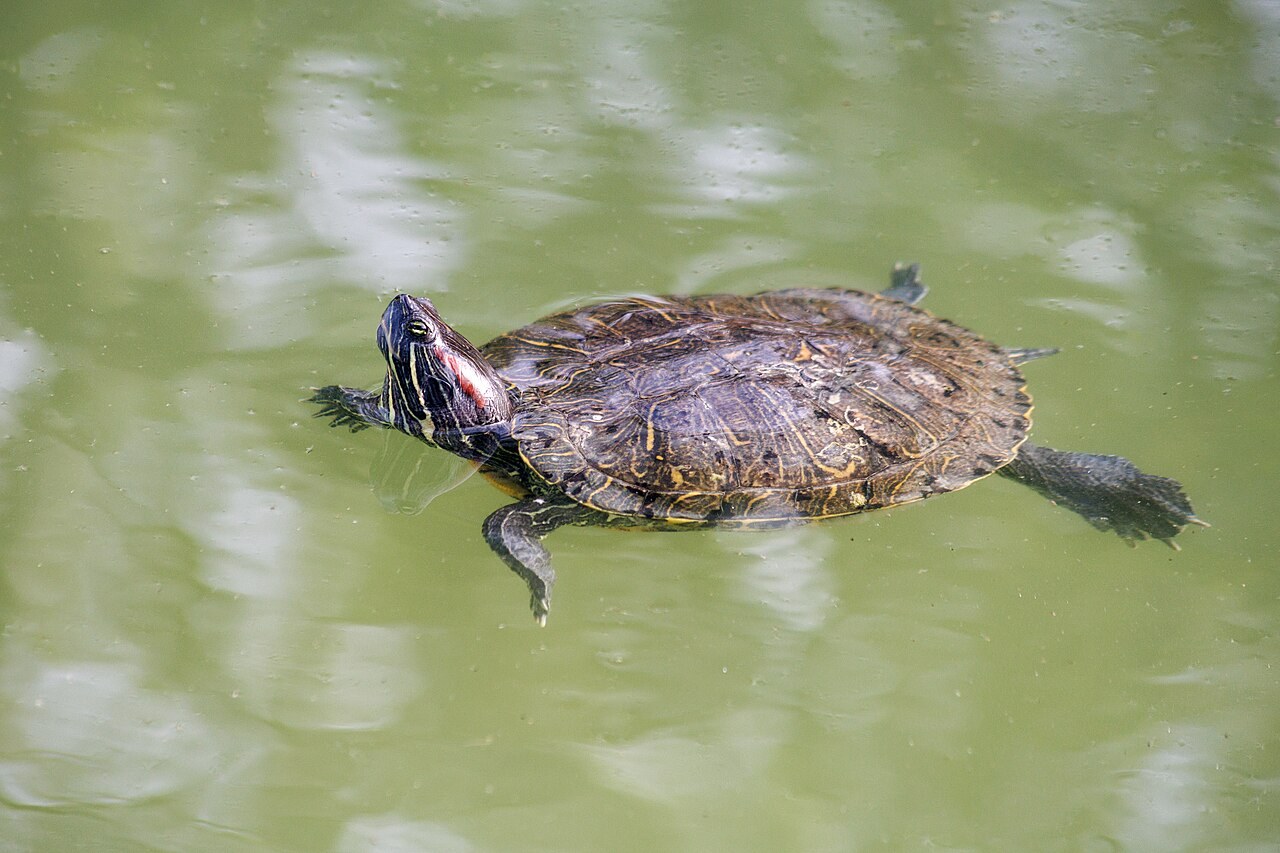
Cloudy turtle tank water needs a water-quality check before a cosmetic fix. Food, waste and disturbed substrate can make water look murky, but appearance cannot tell you whether ammonia or nitrite is high. Test both. If either is raised, make a partial water change with dechlorinated water and test again rather than waiting for the cloudiness to disappear. This guide is for captive freshwater aquatic turtles such as red-eared sliders; follow species-specific advice for your turtle.
First, check the water your turtle is swimming in
Use freshwater test kits for ammonia and nitrite, especially in a new tank or after filter problems. The RSPCA’s terrapin care guide says to test often. For high readings, it advises changing half the water daily and continuing to test until conditions improve. Use a suitable dechlorinator for replacement tap water and avoid a sudden temperature change.
Clear-looking water can still fail a water test. Equally, a little visible cloudiness does not identify a specific cause. Let the test results and what you find in the tank guide your next step.
Three steps to tackle the cloudiness
1. Remove food and settled waste
Net out uneaten food after feeding and siphon loose debris from the bottom during a water change. Check under decorations where food can collect. The RSPCA identifies overfeeding and food left to rot as major causes of poor terrapin water quality. If you keep substrate, avoid small stones or gravel that a turtle could swallow; the RSPCA warns these can cause a blockage.
2. Check the filter without stripping it
Confirm that the pump is running and water is flowing through the media. Clear obvious blockages. If the sponge is clogged, swish it in water removed from the tank, as the RSPCA recommends. A working biological filter supports helpful bacteria that break down waste, so routinely replacing all its media at once can undermine that process. Follow the filter maker’s instructions for any media that must be replaced.
3. Change some water, then test again
Partial water changes remove dissolved waste as well as some suspended material. For routine care, the RSPCA recommends changing 20% of a slider’s water weekly, with dechlorinated replacement. If readings are high, use its more frequent half-water-change guidance above and keep testing. A water change does not by itself “restart” a mature filter. Keep the established filter media working, and look for the cause if poor results return.
What if a new tank stays cloudy?
A new setup may not yet have a stable biological filter. Do not assume a temporary haze is harmless or wait for it to clear while ammonia or nitrite remains high. Continue testing, maintain the filter and change water according to the readings. If high waste levels persist, the RSPCA advises considering a stronger filter. The PetMD aquatic turtle care sheet also recommends regular water testing and a filter suited to the tank. Review tank size and maintenance too. If your turtle is not eating, has sore eyes or seems unwell, seek advice from a reptile vet rather than treating the water’s appearance as a diagnosis.
Keep a short water log
Write down the date, ammonia and nitrite results, how much water you changed, and whether the filter was flowing. Test again after the change. Repeated high readings point to an ongoing setup or maintenance problem even if the water begins to look clearer.
You’ll also need to ensure that the water is low in wastes called ammonia and nitrite
Related reading: How to Make Tap Water Safe for Turtles; Red-Eared Slider Water Temperature: Hatchlings, Adults and Basking.
Sources & further reading
RSPCA — “How to Care for a Terrapin” (undated), https://www.rspca.org.uk/adviceandwelfare/pets/other/terrapin (checked 27 September 2026).
Melissa Witherell, DVM — “Aquatic Turtle Care Sheet”, PetMD (published 27 September 2024), https://www.petmd.com/reptile/aquatic-turtle-care-sheet (checked 27 September 2026).