For a captive freshwater aquatic turtle, drinking-quality tap water can usually be used for a tank change after you treat the replacement water with a suitable dechlorinating conditioner and bring it close to the tank’s temperature. Use the product’s instructions for the amount of new water you are adding. A filter and a clean-looking tank do not replace this preparation. This guide concerns aquatic pet turtles such as sliders; check species-specific advice for other turtles.
How do you prepare tap water for a turtle tank?
Plan a partial change. Remove the amount your tank needs as part of its maintenance routine. For slider terrapins, the RSPCA care guide recommends changing 20% of the water weekly. Test ammonia and nitrite too; high readings call for more frequent changes and continued testing, not just a fixed schedule.
Treat the new water. Put the replacement tap water in a clean, dedicated container. Choose an aquarium conditioner whose label covers the disinfectant in your supply, follow its dose and mixing instructions, and treat the water before it enters the tank. PetMD’s aquatic turtle care sheet calls for a turtle-safe conditioner and dechlorinated new water.
Match the temperature and refill. Check the new water against the existing tank water with a thermometer, then add it without a sudden temperature shift. Restore normal filter flow after the change and check that the turtle can reach its usual swimming and basking areas.
Can you just leave tap water out overnight?
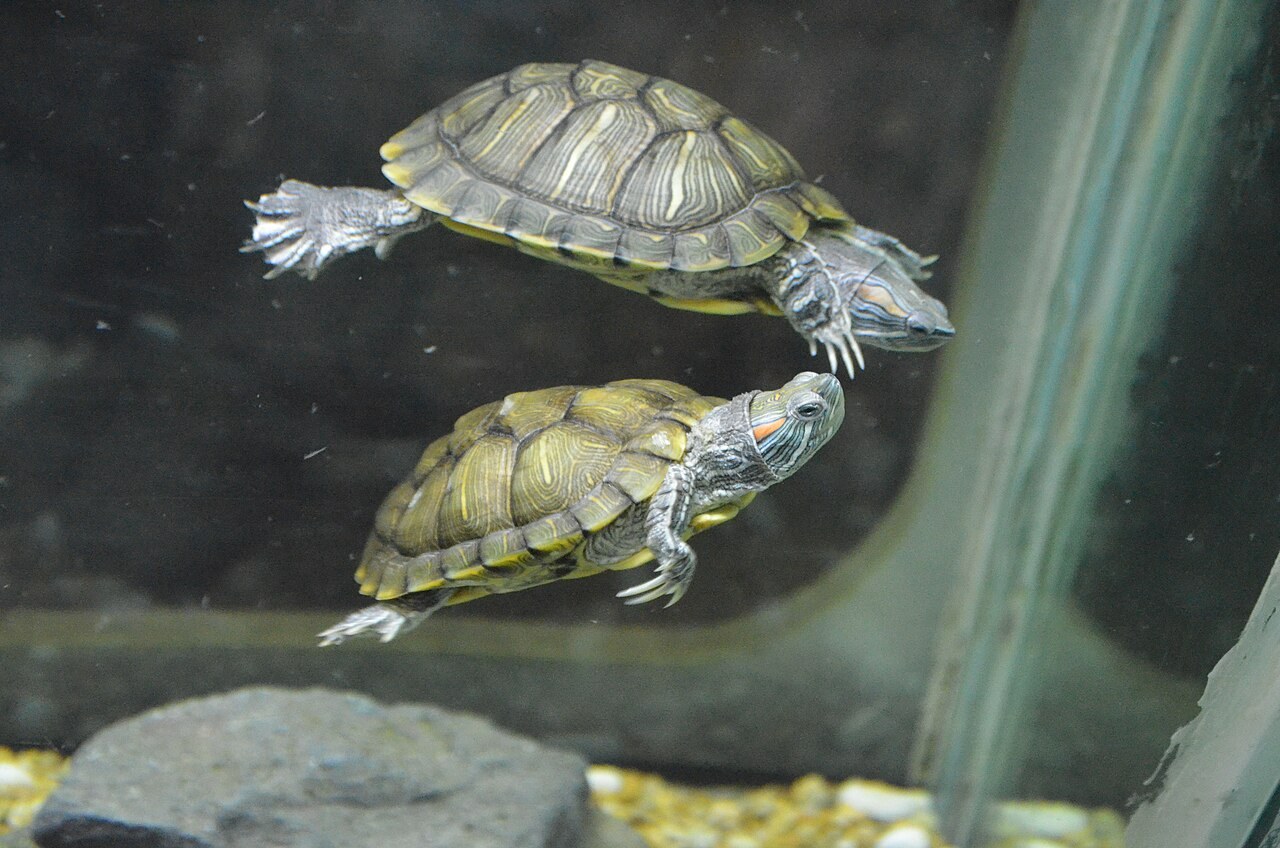
New water should be dechlorinated before adding it to the turtle’s habitat
Do not rely on a 24-hour wait or sunlight as a universal substitute for a conditioner. Water supplies may use chlorine or longer-lasting chloramine. The US Environmental Protection Agency’s monochloramine guidance says that leaving water at room temperature does not remove monochloramine. It also says boiling does not remove it. A product labelled to treat both chlorine and chloramine avoids having to guess which disinfectant is present. Follow its instructions rather than assuming that time or a sunny windowsill has made the water ready.
Does the tank filter make new tap water safe?
A turtle tank’s filter helps control waste after the water is in the enclosure. It should not be treated as a substitute for preparing replacement tap water. The RSPCA advises adding a dechlorinating product when replacing water and notes that a well-set-up filter supports beneficial bacteria. When its sponge needs cleaning, swish it in removed tank water rather than untreated tap water.
Conditioner also does not remove all the problems that can build up in a lived-in tank. Test ammonia and nitrite regularly, remove uneaten food and keep up with partial changes. If your turtle has swollen or closed eyes, stops eating or becomes unusually inactive, seek advice from a reptile vet; those signs need more than a change of water.
When the disinfectant is unclear
Check your water supplier’s current treatment information. If you cannot confirm whether the supply contains chloramine, choose a conditioner labelled for both chlorine and chloramine, and follow its dose for the replacement water. Do not use standing overnight as the only treatment.
Related reading: Cloudy Turtle Tank Water: What to Check and How to Fix It; Can Turtles Drown? Risks, Prevention and What to Do.
Sources & further reading
RSPCA — “How to Care for a Terrapin” (undated), https://www.rspca.org.uk/adviceandwelfare/pets/other/terrapin (checked 27 September 2026).
Melissa Witherell, DVM — “Aquatic Turtle Care Sheet”, PetMD (published 27 September 2024), https://www.petmd.com/reptile/aquatic-turtle-care-sheet (checked 27 September 2026).
US Environmental Protection Agency — “How can I remove monochloramine from my drinking water?” (24 February 2009), https://www.epa.gov/sites/default/files/2015-09/documents/how-can-i-remove-monochloramine-from-drinking-water.pdf (checked 27 September 2026).