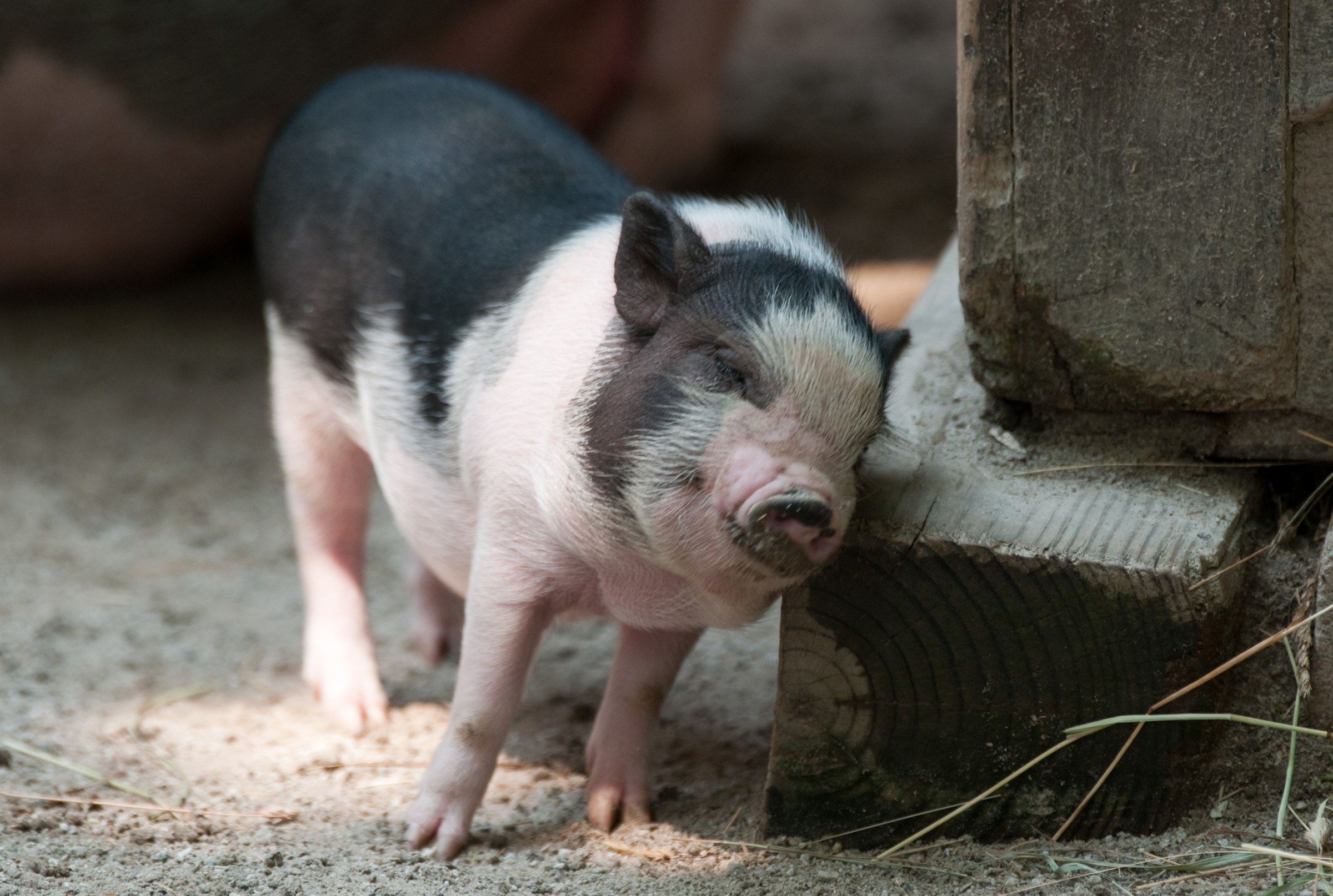
To reduce a mini pig’s squealing, first work out what is causing it. Check for pain or illness, remove avoidable frightening situations and make sure its daily needs are met. For a healthy pig with a predictable food-related habit, reward a calm alternative behaviour. Scolding or trying to silence every call is not a useful starting point.
This guide concerns companion mini pigs, using veterinary advice for miniature and pot-bellied pigs alongside UK welfare guidance. The aim is a comfortable, manageable pig; no method can promise a silent pet.
What should you check first?
A sudden change in vocalisation deserves attention, especially with other signs of illness. The Merck Veterinary Manual’s pot-bellied pig guidance identifies several situations requiring veterinary help:
Lameness with squealing or other vocalisation: seek immediate veterinary care; a fracture is possible.
Repeated or prolonged straining to urinate or pass droppings, or blood in urine: arrange a prompt examination.
Difficulty breathing or marked unresponsiveness: contact your vet urgently, including when overheating is suspected.
Do not label these signs “stress” and simply leave the pig to settle. If the squealing is new, persistent or unexplained, or your pig also seems unwell, speak to a pig-experienced vet before beginning behaviour training. Our guide to mini-pig toileting and warning signs explains what to record when output changes.
How do you identify the trigger?
Pigs use different sounds in different situations. Veterinary behaviour guidance describes vocalisations associated with fear, excitement and territorial behaviour; a wagging tail is not a reliable promise that a pig is happy.
Our practical suggestion is to record the whole episode:
Before: was food being prepared, someone approaching, another animal nearby or handling starting?
During: was the pig moving towards something, trying to get away, guarding a resource or having difficulty moving?
After: what did the person do, and what changed for the pig?
A short video can help your vet understand the context. Do not provoke another episode to obtain one. Use this record to choose the next step, rather than assigning a fixed meaning to the pitch or loudness alone.
Why does my pig squeal when picked up?
“Mini-pigs do not like to be restrained and will likely struggle and scream loudly when restraint is attempted.”
If lifting or restraint triggers the noise, reconsider whether that handling is necessary. For ordinary interaction, let the pig approach at ground level. For essential lifting, hoof care or examination, ask your vet to demonstrate a suitable handling plan. Avoid repeated forced cuddling as a way of making the pig “get used to it”.
New visitors should give the pig space to approach rather than crowding or reaching for it. If contact appears painful, arrange a veterinary assessment.
How can you reduce squealing around meals?
Check the feeding plan before treating the noise as a learned habit. Veterinary nutrition guidance for miniature pigs recommends a balanced ration, divided into at least two meals daily, with fresh water always available. High-energy treats need limits because these pigs readily become overweight. Ask your vet to check the ration and body condition if you are unsure.
Once health and feeding needs are covered, a practical application of reward-based training is:
Start away from meal preparation, when your pig is relaxed. If it knows no cue, wait for it to stand at its feeding place and immediately reward that action with a small part of its planned food allowance.
Repeat a few short practices. Once the pig readily goes to the spot, add a consistent cue such as “place”; reward it as soon as it reaches the spot.
Use the cue before normal meals. Reward the pig for going to the spot, then serve the planned meal.
Valarie V. Tynes’s Merck guidance supports teaching cued behaviours and rewarding appropriate responses. It also warns that yelling, slapping and other aversive methods can increase fear and aggression.
Agree the response before mealtime. Give every carer the same cue and reward plan. Reward the chosen action when it happens, rather than giving extra food for a squeal. Keep normal meals on schedule; do not withhold needed food to force silence. If the pig becomes distressed, pause the training and reassess the cause.
Could boredom or lack of company be involved?
Review the whole day, not just the noisy moment. Tynes’s guidance recommends daily exercise and opportunities to explore and root. Provide suitable activity for the individual pig; exhausting it is not a behaviour plan.
The RSPCA’s pet-pig advice recommends at least two compatible pigs living together. If your pig lives alone, discuss companionship and introductions with an experienced rescue or vet. Another pig is a welfare consideration, not a guaranteed cure for squealing; introductions need planning.
For noise associated with your departure, review companionship, care and the environment. Our article on planning time away from mini pigs covers reliable care arrangements. Simply moving a noisy pig outside does not establish that its needs are covered.
What if the squealing continues?
Keep the trigger record and ask your vet for help with persistent behaviour, particularly if there is fear, charging or biting. VCA recommends veterinary help for aggressive behaviour. Keep visitors and children away from an unsafe interaction rather than trying to test the pig’s tolerance.
Review whether the episodes become less frequent or intense and whether the pig seems more comfortable. There is no reliable number of days in which every pig will improve. A plan that only suppresses noise while leaving pain or fear unresolved needs changing.
Related reading: What Does It Mean When a Pig Nudges You?.
Sources & further reading
Gregory Rich, DVM, and Laurie Hess, DVM: Behavior of Mini-Pigs, VCA Animal Hospitals (updated 6 March 2024). Valarie V. Tynes, DVM, DACVB, DACAW: Management of Miniature Pet Pigs and Feeding and Nutrition of Miniature Pet Pigs, Merck Veterinary Manual (both reviewed November 2022; updated September 2024). D. Bruce Lawhorn, DVM, MS: Disorders and Diseases of Potbellied Pigs, Merck Veterinary Manual (reviewed July 2020; updated September 2024). RSPCA: Caring for pet pigs (undated). All checked 25 September 2026, with links beside the relevant guidance. The trigger record and mealtime example are editorial applications of these care and training principles, not a tested programme or a guarantee of silence.